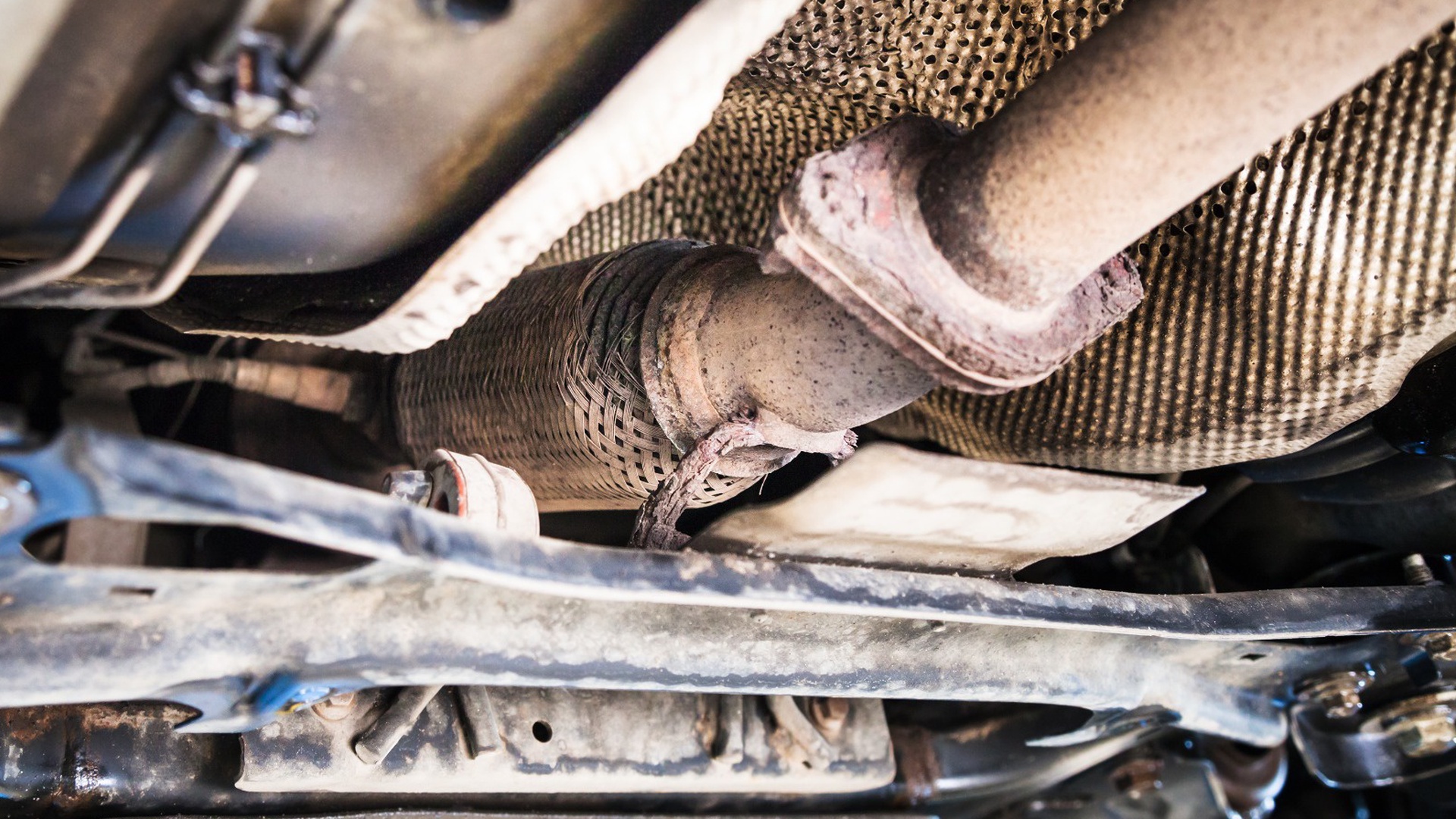
A worn-out catalytic converter is more than a discarded car part. Its ceramic or metallic core contains platinum, palladium, and rhodium metals that can be recovered, refined, and sold back into industrial markets. That scrap flow has become a major source of platinum group metals (PGMs), reducing reliance on mines concentrated in South Africa and Russia. But the size of the "urban mine" depends on more than the number of old cars on the road. Vehicles must be retired, their converters collected, and the metal economically recovered. Recent estimates suggest open-market recycling supplies about one-fifth of annual platinum, around one-third of palladium, and roughly three-tenths of rhodium. Spent autocatalysts provide most of that recycled metal. The figures make recycling indispensable to PGM supply, but they do not mean scrap can expand quickly whenever mine production falls short.
The distinction between open-loop and closed-loop recycling matters. In open-loop recycling, a dismantler sells a used converter into the scrap trade; a refiner recovers its metals and sells them to new buyers. Market reports generally count that output as secondary supply. In closed-loop recycling, an industrial customer retains ownership of a spent process catalyst and has its metal refined for reuse. That metal reduces the customer's need to buy fresh PGMs, but it usually doesn't appear as a new supply on the open market.
Using the open-market definition, 2024 estimates put recycled platinum at about 1.5 million troy ounces, compared with roughly 5.6 million ounces from mining. That implies a secondary share of around 21%. Palladium recycling was estimated at 3.1 million to 3.4 million ounces, compared with about 6.6 million mined ounces, a share of roughly 32% to 34%. For rhodium, estimates of approximately 0.29 million to 0.34 million recycled ounces, alongside 0.67 million to 0.71 million mined ounces, imply a share near 30% to 34%. These are estimates, not a single universally agreed tally. Johnson Matthey, the World Platinum Investment Council (WPIC), and its data provider Metals Focus use different market boundaries and forecasts. Johnson Matthey's estimates, for example, put the 2024 secondary shares at somewhat lower levels: about 19.5% for platinum, 30% for palladium, and 29% for rhodium. The consistent conclusion is that scrap supplies a substantial fraction of these three markets, with palladium particularly dependent on recycling.
The first reason is simple: decades of autocatalyst use have placed large quantities of PGMs into the global vehicle fleet. As cars and trucks reach the end of their lives, their converters become a potential source of supply. Tightening emissions rules have also required effective catalysts in newer vehicles. Although manufacturers continually work to reduce metal use or substitute one PGM for another, some later generations of vehicles carry valuable metal loadings. Their eventual retirement will feed future recycling, often a decade or more after manufacture. Economics and resource security reinforce that trend. PGMs occur at low concentrations in mined ore, while spent converters contain much richer concentrations of recoverable metal. Recovering existing metal can avoid much of the energy use and environmental burden associated with mining and processing fresh ore, though the benefit depends on collection routes and refining methods. Recycling also gives vehicle-consuming regions a source of PGMs closer to home, helping diversify supply away from a small number of mining countries.
Policy can support collection, too. End-of-life vehicle rules, formal dismantling systems, and better tracking of valuable components can make it less likely that converters disappear into poorly documented scrap channels. Such measures improve access to metal already in circulation; they cannot, however, bring forward a converter from a car that is still being driven.
The largest constraint is timing. Recyclers cannot process converters until vehicles are retired. When households keep cars longer because replacement vehicles are expensive or financing is costly, scrappage slows. Weak new-car sales can also leave a smaller cohort of vehicles to reach end-of-life years later. Recycling supply therefore follows the history of vehicle sales and ownership, not simply today's PGM prices or demand. Prices create a second constraint. A converter is a compact, valuable item, and the route from dismantler to refiner involves many independent businesses. When palladium and rhodium prices fall, some collectors hold material rather than sell at an unattractive price. As a result, metal theoretically available from scrapped vehicles may take months or years to appear in reported secondary supply. Higher prices can draw out inventories, but that response is neither immediate nor unlimited.
Recovery itself requires specialist capacity. PGMs are dispersed through a catalyst washcoat bonded to a ceramic or metallic substrate. Refiners must accurately sample and assay mixed scrap, then separate tiny quantities of precious metal from the much larger bulk material. Industrial smelting is effective, but it requires capital, high temperatures, and further chemical refining. Rhodium is especially difficult to recover completely, while contaminants and newer substrate materials can complicate processing. These costs help explain why a valuable converter is not the same as refined metal ready for delivery.
Finally, the source of scrap will change as the vehicle fleet changes. Battery-electric vehicles have no exhaust catalyst, so widespread adoption will eventually reduce the flow of new autocatalysts entering service. Existing combustion-engine vehicles and hybrids, which still require emissions control, will continue to generate scrap for many years. Demand for PGMs may also shift toward hydrogen technologies and other industrial uses, whose products will require different collection and recovery systems. Autocatalyst recycling is thus a vital second pillar of PGM supply, not a limitless reserve. Its current contribution is roughly one-fifth to one-third of the annual open-market supply, depending on the metal and years of vehicle manufacture, collection, and refining investment. Increasing that contribution will depend as much on getting retired converters into reliable recycling channels as on improving the chemistry used to recover their metals.
Turning scrap into supply starts with collection. For businesses holding spent catalytic converters or other PGM-bearing materials, a buyer is the first link in that chain. Phoenix Refining buys these materials, helping move valuable platinum, palladium, and rhodium from end-of-life products back toward recovery and reuse. Recycling cannot create more scrap than the vehicle fleet produces, but keeping material in the recovery chain helps maximize an increasingly important source of PGM supply.