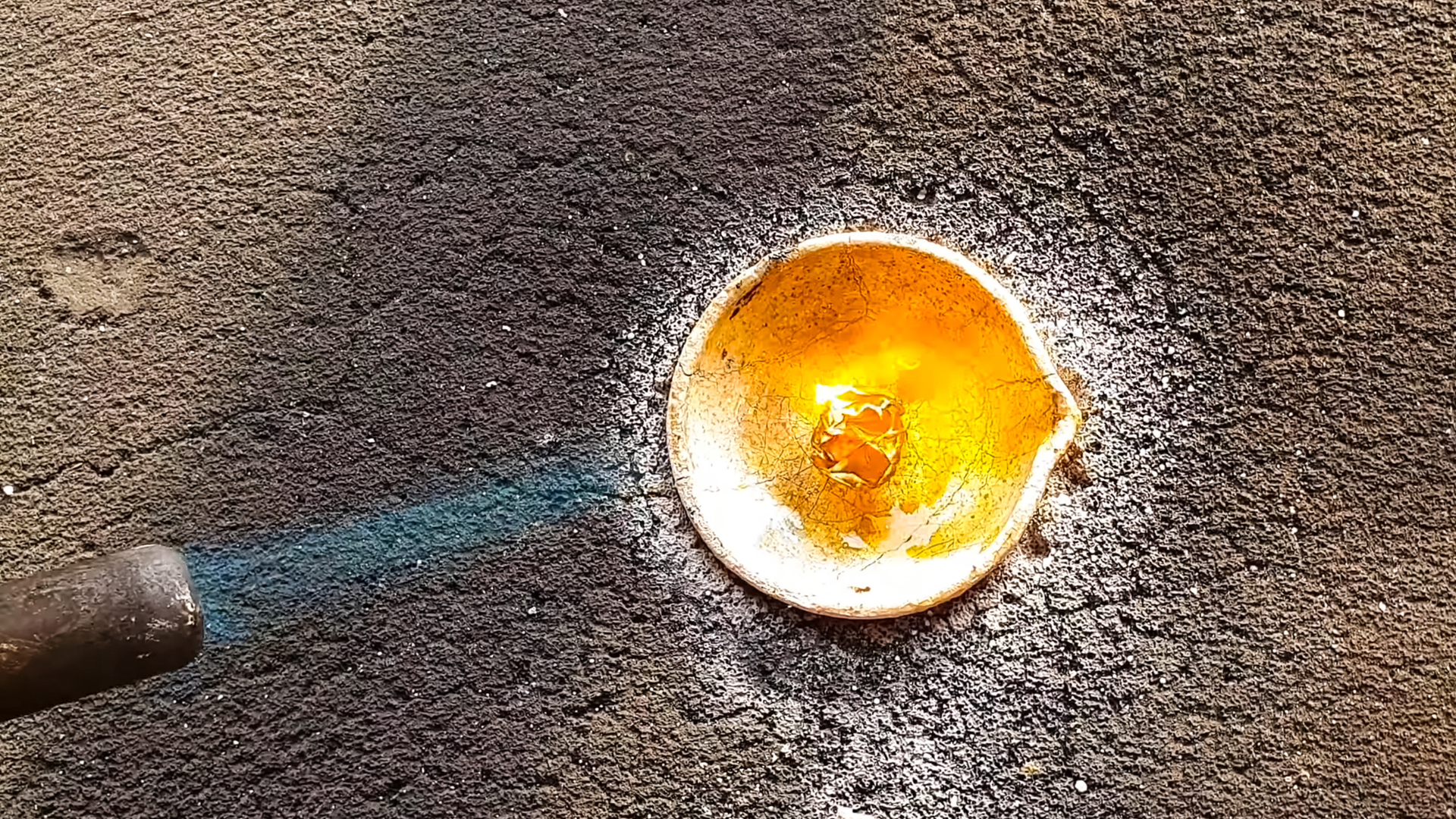
Burkina Faso has made significant progress in reforming its economy and gaining greater control over its natural resources by opening its first national gold refinery, RAFFINOR-BF, in Ouagadougou. The facility is more than an industrial investment; for the government led by Captain Ibrahim Traoré, it signals that gold, which has hitherto been exported raw and refined abroad, should now generate more value, employment, revenue, and strategic strength within Burkina Faso.
Gold underpins Burkina Faso's economy, accounting for an estimated 94 percent of its export revenues. For many years, the country followed a pattern shared by many resource-rich African states: it mined gold locally but exported it as doré, a semi-refined blend of gold, silver, and other metals. Foreign facilities, mainly in Europe, Switzerland, and the Middle East, handled the final refining, testing, certification, and a large share of the profits. The decision to establish a domestic refinery therefore marks a departure from this long-standing pattern of dependence.
RAFFINOR-BF is located in the Ouaga 2000 area of the capital and was built with state support through the Société Nationale des Substances Précieuses, or SONASP, along with involvement from the domestic private sector. The facility's cost is said to have exceeded 11 billion CFA francs, equivalent to about $19 million.
The refinery is intended for converting raw doré gold into high-purity bullion, with a purity level of up to 99.99 percent. It includes a foundry, advanced assaying laboratories, secure storage vaults, administrative offices, and a jewelry manufacturing unit to support other local industries. Its initial processing capacity is estimated at 164 tonnes annually, with long-term plans to expand to as much as 515 tonnes. This matters because it exceeds Burkina Faso's current annual gold production. The government is therefore not building the refinery solely to meet domestic needs; instead, it aims to establish Ouagadougou as a potential regional gold-refining center for Mali, Niger, and other West African countries. The refinery is also expected to create about 100 direct skilled jobs, along with thousands of indirect jobs in transportation, security, engineering, laboratory services, maintenance, and jewelry production.
Before establishing RAFFINOR-BF, Burkina Faso had to export its gold in unrefined form. Because doré bars are not standard bullion, buyers usually had to test the gold abroad to determine its final value. As a result, there was an opportunity for underreporting, price manipulation, tax evasion, and incorrect trade invoicing. Studies cited by the Extractive Industries Transparency Initiative estimate that illicit financial flows from Burkina Faso's mining sector reached hundreds of millions of dollars in certain years, with gold accounting for the largest share of those losses.
The government plans to reduce these weaknesses by processing and certifying gold domestically. When gold is refined to 99.99 percent bullion, authorities can verify its purity and quantity locally, better understand the value of gold leaving the country, and strengthen their capacity to collect taxes and royalties. The refinery could also assist Burkina Faso in setting up more robust traceability standards; by being able to record where the gold is produced, who sells it, and how it is processed, it may become easier to prevent illegal exports and to reassure legitimate buyers that Burkinabè gold has not been used to finance armed groups or criminal networks.
The Traoré government is pursuing a broader resource-nationalism policy that includes the refinery. In 2024, Burkina Faso introduced a new mining code that strengthens the state's control over the country's mineral resources. Under the amended law, the government's mandatory free-carried interest in new mining projects increased from 10 percent to 15 percent, and it can also obtain an additional 30 percent share in mining enterprises. As a result, Burkina Faso can exert greater influence over mining companies and take a larger share of profits without depending entirely on foreign operators.
The government has also secured stronger preemptive rights in selling mining assets. It can intervene if foreign companies try to transfer their mining licenses, shares, or strategic assets to other investors. Most importantly, the new code mandates that mining companies process part of their minerals locally. As a result, RAFFINOR-BF gains a local market, and companies find it harder to export unrefined gold. The reforms also reduce tax and customs exemptions during mining activities and shorten mining licenses. Although foreign investors have raised concerns that these measures might create uncertainty, the government maintains that Burkina Faso should receive a fairer share of the wealth its resources produce.
Artisanal and partly mechanized mining plays a key role in Burkina Faso's gold economy, providing income for about 700,000 to one million people, especially in poor rural areas with few employment opportunities. The artisanal mining sector has, on the other hand, also been used by smuggling networks and armed groups, who have reportedly imposed taxes on miners, asked for protection payments, and made use of gold-smuggling routes to finance weapons, fuel, and recruitment.
Previous efforts to solve this problem usually involved imposing bans and restrictions on artisanal mining. Such measures sometimes made the situation less secure because they removed people's means of earning a living and intensified resentment against the government. The present administration is taking a different course. Through SONASP, the government is trying to buy gold directly from artisanal miners at fair, competitive prices, with mining cooperatives and regulated buying centers offered as alternatives to smugglers and armed groups.
Government data shows that this strategy has achieved significant results. In the first six months of 2026, SONASP said it obtained 29 tonnes of gold from artisanal and semi-mechanized operations, as compared with about 26 tonnes from industrial mines during the same period. The gold can be forwarded to RAFFINOR-BF for refining, certification, and storage; thus, the refinery serves as the final stage in a state-controlled supply chain meant to reduce smuggling, weaken terror financing, and bring rural miners into the formal economy.
The refinery in Burkina Faso is likewise linked to the broader political and economic objectives of the Alliance of Sahel States (AES), a grouping consisting of Burkina Faso, Mali, and Niger. Recently, these three countries have aimed to reduce their dependence on France, ECOWAS, and traditional Western institutions.
The AES has established new defense and development arrangements, including the Confederal Investment and Development Bank; the bank will use member-state-raised resources to finance projects in infrastructure, agriculture, energy, food security, and regional industry.
Achieving this goal through gold refining is especially important because refined bullion is easier to value, store, and trade and may even be used as a reserve asset. Several analysts think expanding regional refining capacity could support the longer-term aim of reducing reliance on the CFA franc and developing a more independent monetary system. Burkina Faso's refinery might one day process gold from Mali and Niger, helping establish a regional mineral-processing network that keeps more wealth within the Sahel rather than shipping raw materials to Europe, Dubai, or other foreign centers.
We cannot be sure the refinery will succeed, since Burkina Faso is still experiencing serious insecurity, with armed groups attacking in several areas. Likewise, the mining sector risks seeing investment fall if foreign companies conclude that the country's new regulations are too risky.
To sell its refined gold widely on international markets, RAFFINOR-BF must uphold high technical standards, ensure transparent management, provide reliable security, and maintain credible supply-chain controls. Doubts also remain about whether the refinery can secure enough gold to operate at or near full capacity, especially as insecurity disrupts mining operations and transport routes.
The opening of RAFFINOR-BF represents a significant point in Burkina Faso's economic strategy. The refinery is not just a factory; it symbolizes a broader initiative to keep more value from the country's mineral resources, bring artisanal mining under formal regulation, reduce illicit trade, and strengthen national control over the gold industry. By refining gold domestically, Burkina Faso aims to create jobs, increase tax revenues, reduce smuggling, and build reserves that can help achieve its broader regional objectives. The project also reflects the Traoré government's political outlook, which holds that national sovereignty is impossible without economic independence. For many years, Burkina Faso has exported its gold in raw form, while a large share of the profits has gone elsewhere. Now, with RAFFINOR-BF, the government wants to ensure the country not only mines its mineral wealth in Burkina Faso but also refines, values, and controls it there.