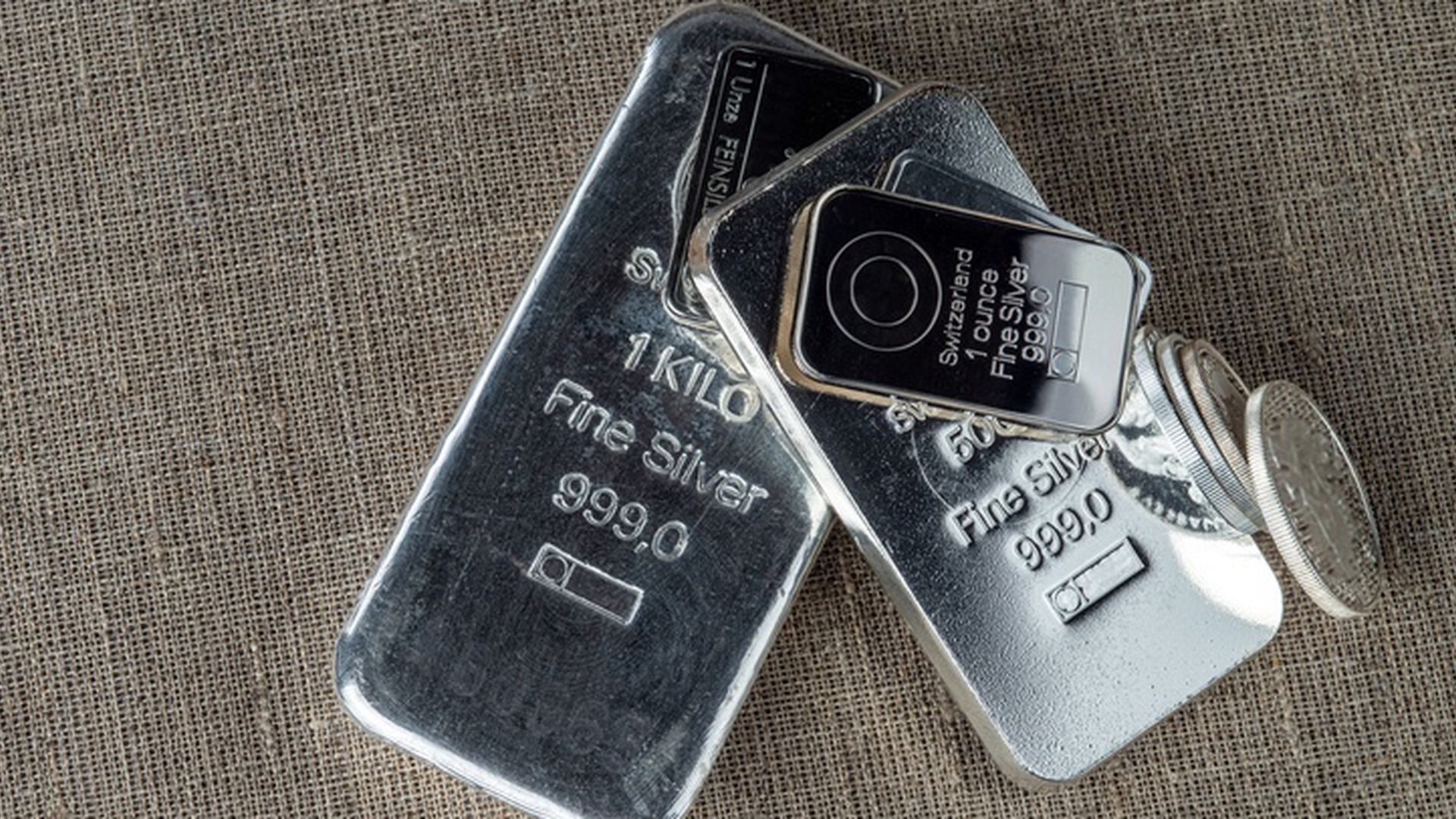
China’s silver imports exploded in March 2026, rising 78% from the previous month to about 836 tonnes in what has become one of the most consequential commodity market shocks of the year. Far from being a simple burst of speculative buying, the surge reflected the collision of industrial urgency, retail investment demand, structural supply shortages, and geopolitical maneuvering in an already fragile global silver market. By the end of the first quarter, China had imported roughly 1,626 tonnes of silver, the highest first-quarter total on record. The March figure alone stood 173% above the country’s 10-year March average of about 306 tonnes. In practical terms, one country absorbed an extraordinary share of the world’s available refined silver supply in just three months, tightening an already deficit-ridden market and exposing how thin physical inventories had become in London and New York.
The March jump did not come out of nowhere. January and February had already been unusually strong, with combined imports above 790 tonnes, an eight-year high for the opening months of the year. But March marked a decisive escalation from elevated buying into outright scramble mode.
The scale matters because the global silver market is not especially large. Annual refined supply typically runs around 9,000 to 10,000 tonnes. China’s first-quarter intake, therefore, represented a massive draw on global physical availability, particularly in a market already operating in structural deficit. Gold imports rose too, reaching 162 tonnes in March, the highest monthly level since March 2024. That parallel move suggests broad precious-metals accumulation rather than a narrow silver-only event.
The most immediate trigger for the March silver rush was Beijing’s decision to eliminate long-standing export tax rebates for solar products. China dominates global solar manufacturing, controlling more than 80% of the world’s solar panel production capacity. Solar remains one of the most silver-intensive industries, consuming about 20% of annual global silver supply because the metal is essential in photovoltaic cells for its unmatched electrical conductivity. For years, Chinese solar exporters benefited from a 9% VAT export rebate. On January 9, 2026, Beijing announced that the rebate would be eliminated effective April 1, 2026. Battery-related rebates were also put on a phase-down schedule, dropping from 9% to 6% starting April 1, with full elimination set for January 1, 2027.
That policy change compressed months of expected production into a few frantic weeks. Since the rebate depended on the customs export date, manufacturers had a strong incentive to push as much product as possible out the door before April 1. To do that, they needed immediate access to large amounts of physical silver paste. This front-loading effect became a key reason for the March import spike. Solar producers, along with firms in electronics and EV-related industries, reportedly paid premiums of 8% to 12% over spot prices to lock in supply. Delivery times, once measured in two to four weeks, reportedly stretched to 12 to 16 weeks, a clear sign of strain in the physical market. The result is likely to ripple beyond China. Analysts expect global solar module prices to rise 5% to 10% in the wake of the rebate removal, at least in the near term.
Industrial buying explains the timing of the surge, but retail demand helps explain its depth. China’s economy entered 2026 under significant pressure. While headline GDP forecasts remained relatively solid, underlying conditions were weaker. The property sector, long the core engine of household wealth, remained in a prolonged downturn. Consumer confidence was subdued, domestic demand weak, and deflationary pressure persistent as industrial capacity outpaced local consumption. In that environment, Chinese households increasingly turned to physical precious metals as a store of value. Gold was the first choice, but as prices surged and forecasts pointed toward even higher levels, many smaller investors were priced out. Silver bars became the affordable alternative.
That substitution dynamic has precedent. During the 2010–2011 precious metals rally, silver sharply outperformed gold as investors shifted into the cheaper monetary metal. A similar pattern emerged again in late 2025 and early 2026. The gold-to-silver ratio illustrates the move. After peaking at an extreme 105:1 in April 2025, it compressed to roughly 57:1 to 61:1 by April 2026, moving below the long-term historical average of 70:1. That sharp compression indicates silver was no longer being treated as a neglected secondary asset. It had become the preferred lower-cost refuge for investors seeking protection from financial instability. Silver’s appeal lies in its dual role. It is both a monetary metal and a critical industrial input. In early 2026, those two demand streams hit at once: factories needed silver for production, while households wanted it for savings. That combination overwhelmed the available supply.
The import surge landed in a market that was already structurally undersupplied. According to the World Silver Survey 2026, the silver market entered its sixth consecutive annual supply deficit. The projected shortfall for 2026 is 46.3 million ounces, up 15% from the 40.3 million ounce deficit recorded in 2025. Since 2021, the market has drawn down an extraordinary 762 million ounces from above-ground inventories to bridge the supply-and-demand gap. Analysts describe that level of depletion as having no modern precedent.
Mine production has not responded meaningfully. The main reason is structural: roughly 70% of global silver output comes as a byproduct of mining for lead, zinc, and copper. That means supply decisions are driven mostly by base-metal economics rather than silver prices. Even with silver prices moving above $80 an ounce in early 2026, output remained constrained. Primary silver mines account for only about 30% of total production, and they face their own pressures, including lower ore grades, rising diesel costs, and regulatory or royalty burdens. Mexico, the world’s largest silver producer, has also experienced operational challenges that helped push North American mine output to decade lows in 2025. Recycling has increased, reaching 193.9 million ounces in 2024, a 12-year high, but even that rise has not been enough to close the gap.
One of the clearest signs of market stress was the widening gap between silver prices in China and those in Western trading centers. In March 2026, silver on the Shanghai Gold Exchange traded around $95.60 an ounce, compared with roughly $84.00 on the LBMA benchmark in London. That nearly $12 gap represented a premium of about 14.15% for silver inside China. This is significant because the Shanghai market is closely tied to physical delivery. In contrast, Western pricing hubs such as COMEX and the LBMA are far more influenced by futures and over-the-counter paper trading. The premium signaled that physical silver in China was worth materially more than silver priced through Western benchmark systems.
Such a disparity inevitably triggered arbitrage. Traders and bullion banks had every incentive to source silver from London or New York and move it east to capture the premium. That flow accelerated the drain on already-stressed Western vaults. Registered COMEX silver inventories fell 61%, from 201 million ounces in September 2025 to 79.27 million ounces by April 2026. London vaults also came under heavy pressure.
The October 2025 squeeze had already weakened the market.
The March 2026 shock did not strike a healthy market. It hit a system that had already shown major cracks months earlier. In October 2025, London experienced a severe physical liquidity squeeze. Headline vault stocks still appeared large, but much of the metal was tied up in physically backed exchange-traded products. By the end of September 2025, such products accounted for 83% of London inventories, leaving only 17% as genuine free-floating supply. At the same time, concerns over possible US tariffs had already pulled about 225 million ounces out of London and into CME vaults from late 2024 through early October 2025. As available metal tightened, silver lease rates spiked to 39%, compared with the normal sub-1% level.
That episode made clear that the era of effectively unlimited physical silver liquidity was over. So when China’s March buying spree hit, it slammed into a market that had already lost most of its cushion.
The silver story in 2026 is not just about supply and demand. It is also about control. Effective January 1, 2026, China imposed strict new export controls on refined silver, limiting export authority to only 44 approved companies and requiring each to maintain an annual production capacity of at least 80 tonnes. Given China’s control of an estimated 60% to 70% of global silver refining capacity, these rules amount to a major consolidation of state influence over global silver flows. If China were to materially reduce silver exports, the consequences could be severe. Analysts estimate that a 50% cut in Chinese outflows could remove roughly 5,000 tonnes a year from global supply, a move that would sharply worsen the existing deficit and hit manufacturers worldwide. Washington has taken notice. In a historic shift, the USGS added silver to the US Critical Minerals List for the first time. That move reflects recognition that silver is essential not just for investment products and jewelry, but for solar technology, EVs, electronics, military systems, aerospace, and communications. With the US importing 67% to 80% of its silver supply, the strategic vulnerability is obvious.
China’s 78% jump in silver imports in March 2026 was the product of multiple forces arriving at once: a Beijing policy shift that forced solar manufacturers into panic procurement, a retail move into silver as households were priced out of gold, and a global market already weakened by years of deficit and inventory drawdowns. The event exposed just how fragile the silver supply chain has become. With six straight years of deficits, depleted Western inventories, inflexible mine supply, and growing geopolitical control over refining and exports, silver is no longer behaving like a secondary precious metal. It is increasingly being treated as a strategic resource.
That has major implications for investors, manufacturers, and governments. As long as physical premiums in China remain elevated, the world continues to electrify, and monetary uncertainty persists, silver is likely to remain one of the most volatile and contested commodities in the global market.