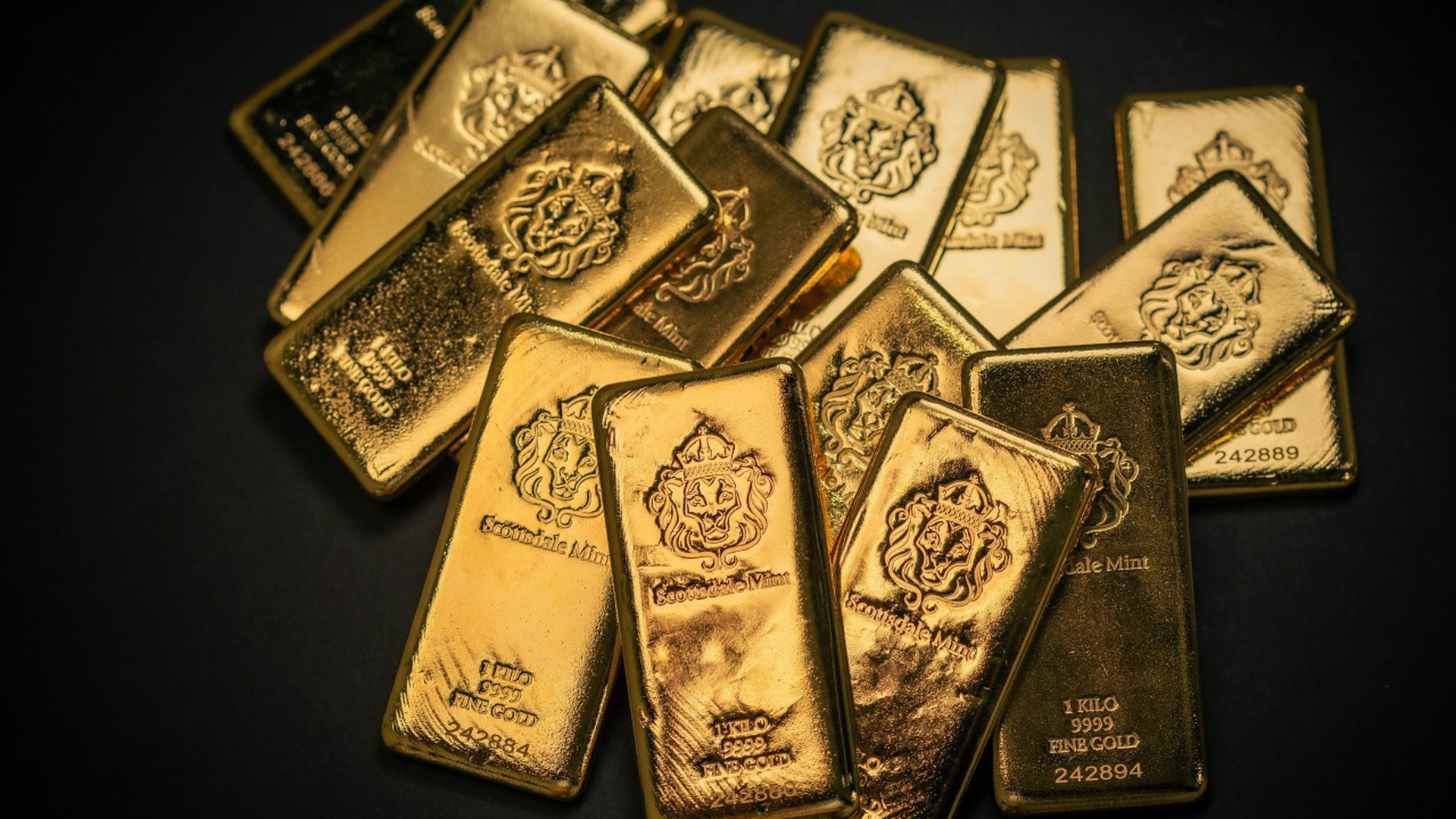
China’s gold imports jumped to their highest monthly level in more than two years in May, underscoring the resilience of bullion demand in the world’s largest gold-buying market even as prices retreated from record highs and visible domestic demand showed signs of cooling. According to customs data released Saturday, China imported about 163 tonnes of gold in May, the strongest monthly inflow since March 2024. In the first five months of 2026, imports reached approximately 692 tonnes, representing an increase of about 76% compared to the same period a year earlier.
The surge comes despite a sharp pullback in gold prices, which have fallen by around a quarter from the record highs reached in January. That rally had been fueled in part by strong Chinese consumer buying, while more recent weakness has reflected a stronger dollar, inflation concerns linked to the war in the Middle East, and selling from some emerging-market holders. Yet the latest trade figures suggest Chinese appetite for bullion has not collapsed. Instead, demand appears to be shifting across channels from traditional jewelry consumption toward investment products, physical bars, and institutional holdings.
Analysts say demand for physical gold bars and gold-linked accumulation plans has been central to the import surge. These accumulation products allow investors to buy gold incrementally, lowering the barrier to entry for households looking to build exposure to bullion over time. Song Jiangzhen, a researcher at the Guangzhou Southern Gold Market Academy, said these retail investment channels have helped support imports even as broader domestic demand has moderated.
China also introduced a new system for gold import licenses on June 1, easing some restrictions for certain banks. That change may have distorted May’s figures, as banks could have rushed to use existing import quotas before the new system took effect. Still, the scale of the imports has raised questions in the market. Official central bank purchases have been relatively modest compared with total import volumes, and Shanghai Gold Exchange withdrawals, a key gauge of wholesale demand, recently weakened sharply.
China’s central bank continued to add gold to its reserves in May, but the reported increase was far smaller than the country’s total import volume. The People’s Bank of China raised its official gold reserves by 320,000 troy ounces, or about 9.95 tonnes, in May, according to the State Administration of Foreign Exchange. That brought China’s official gold holdings to 74.96 million troy ounces, equal to about 2,331.52 tonnes. It marked the 19th consecutive month of reported bullion purchases by the PBoC.
China’s broader foreign exchange reserves also rose, reaching $3.4422 trillion at the end of May, up $31.7 billion, or 0.93%, from April. That was the highest level since November 2015, keeping reserves above $3.3 trillion for a tenth straight month. SAFE attributed the increase to factors including movements in the dollar and gains in global asset prices, while also pointing to China’s underlying economic momentum. Export strength has been another support: China’s foreign trade in the first four months of 2026 rose 14.9% year-on-year to $2.39 trillion, with exports up 11.3% to $1.37 trillion and imports up 20% to $1.01 trillion.
Even so, the gap between May’s 163 tonnes of imports and the central bank’s roughly 10 tonnes of reported reserve increase has led to speculation that gold is being absorbed through other channels, such as commercial banks, private investors, industrial users, or possibly unreported official accumulation.
The import surge looks especially striking when compared with recent domestic market indicators. Gold withdrawals from the Shanghai Gold Exchange fell to 63.5 tonnes in May, the lowest since February 2020, during the first wave of the Covid-19 outbreak. That was roughly half the level recorded in March.
At the same time, Chinese gold exchange-traded funds have seen outflows after a period of intense inflows. According to Gelonghui Finance, 14 gold ETFs recorded combined net outflows of more than RMB 10 billion, or about $1.48 billion, for the month ending June 3. The shift suggests that some investors who had aggressively bought gold during the rally may now be taking profits or reassessing the “buy the dip” strategy amid higher volatility. Industry professionals told Gelonghui that short-term price swings may continue, but the medium- and long-term case for gold as a strategic allocation remains intact.
The latest cooling in ETFs and exchange withdrawals follows a period of exceptional strength in China’s gold market. Recent World Gold Council data showed that the Shanghai Benchmark Gold Price PM rose 6.9% in April, its fifth straight monthly gain, while the LBMA Gold Price PM rose 6%, marking four consecutive months of gains. Chinese gold ETFs recorded their strongest month on record, adding RMB 49 billion, or $6.8 billion, equivalent to about 65 tonnes of gold.
Total assets under management for Chinese gold ETFs rose to RMB 158 billion, while holdings climbed to 203 tonnes, both record highs at the time. Gold futures activity also surged, with average daily trading volume on the Shanghai Futures Exchange doubling month-on-month to a record 859 tonnes.
Wholesale demand also rebounded during that period, with jewelers, banks, and other market participants withdrawing 153 tonnes of gold from the Shanghai Gold Exchange in April, up 27% month-on-month and 17% year-on-year. The local gold price premium averaged $37 per ounce, well above the prior month’s $2 per ounce, reflecting stronger physical demand. That strength was attributed to investor buying, trade tensions, declining local bond yields, and restocking by jewelers ahead of the Labor Day holiday. However, the subsequent slowdown shows how quickly Chinese gold demand can shift when prices stabilize or fall, geopolitical fears ease, or investors move to lock in gains.
Despite short-term fluctuations, global central bank demand remains one of the most important pillars supporting gold. Goldman Sachs estimates that central banks purchased 59 tonnes of gold in April, with China’s PBoC estimated to have bought 24 tonnes. While the pace of central bank purchases has moderated to around 50 tonnes per month on three-month and 12-month moving-average bases, Goldman continues to view official-sector diversification into gold as a structural trend.
The bank remains bullish on gold, citing central bank diversification as the main long-term driver of its constructive price outlook. Goldman assumes central banks will continue accumulating around 50 tonnes per month in 2026 and 40 tonnes per month in 2027.
A World Gold Council survey supports that view: a record 45% of 76 central banks surveyed between February and May said they expected to increase their gold reserves over the next 12 months, while about 90% expected global official gold reserves to rise.
Another possible destination for some of the imported gold is inventory building ahead of new Asian clearing systems. Bloomberg reported that at least four of the 11 banks involved in Hong Kong’s new gold clearing system have begun importing large 400-ounce gold bars ahead of the mechanism’s planned launch in July. In London, banks and sovereign entities commonly trade these London Good Delivery bars, but in Asia, where kilobars dominate, they are less common.
Hong Kong is seeking to establish itself as a major Asian bullion trading hub, while Singapore has announced plans to launch its clearing mechanism by the end of the year. Singapore’s system is expected to align with London Good Delivery standards for large bars as well as kilobar delivery and settlement standards used by major exchanges in Chicago and Shanghai. Both cities are trying to capture growing Asian demand for gold as investors continue to view bullion as a long-term store of value despite recent price weakness.
Looking ahead, we expect Chinese jewelry demand to remain subdued in tonnage terms as the market enters its seasonal off-period following the Labor Day holiday. High prices have also weighed on jewelry consumption, although recent price declines may offer some support. Investment demand may cool in the near term due to profit-taking, range-bound price action, and reduced trade tensions. But the longer-term outlook remains supported by several factors: lingering geopolitical risks, concerns over global inflation and interest rates, gold’s strong multi-year performance, and growing institutional interest from Chinese insurers and other long-term investors.
For now, China’s gold market presents a paradox. Imports are near multi-year highs, while official central bank additions, ETF flows, and exchange withdrawals look far less dramatic. The discrepancy suggests that bullion is moving through less-visible channels, including banks, private accumulation products, OTC markets, and new regional clearing infrastructure. What is clear is that China’s appetite for gold remains significant, even if the form of that demand is changing.