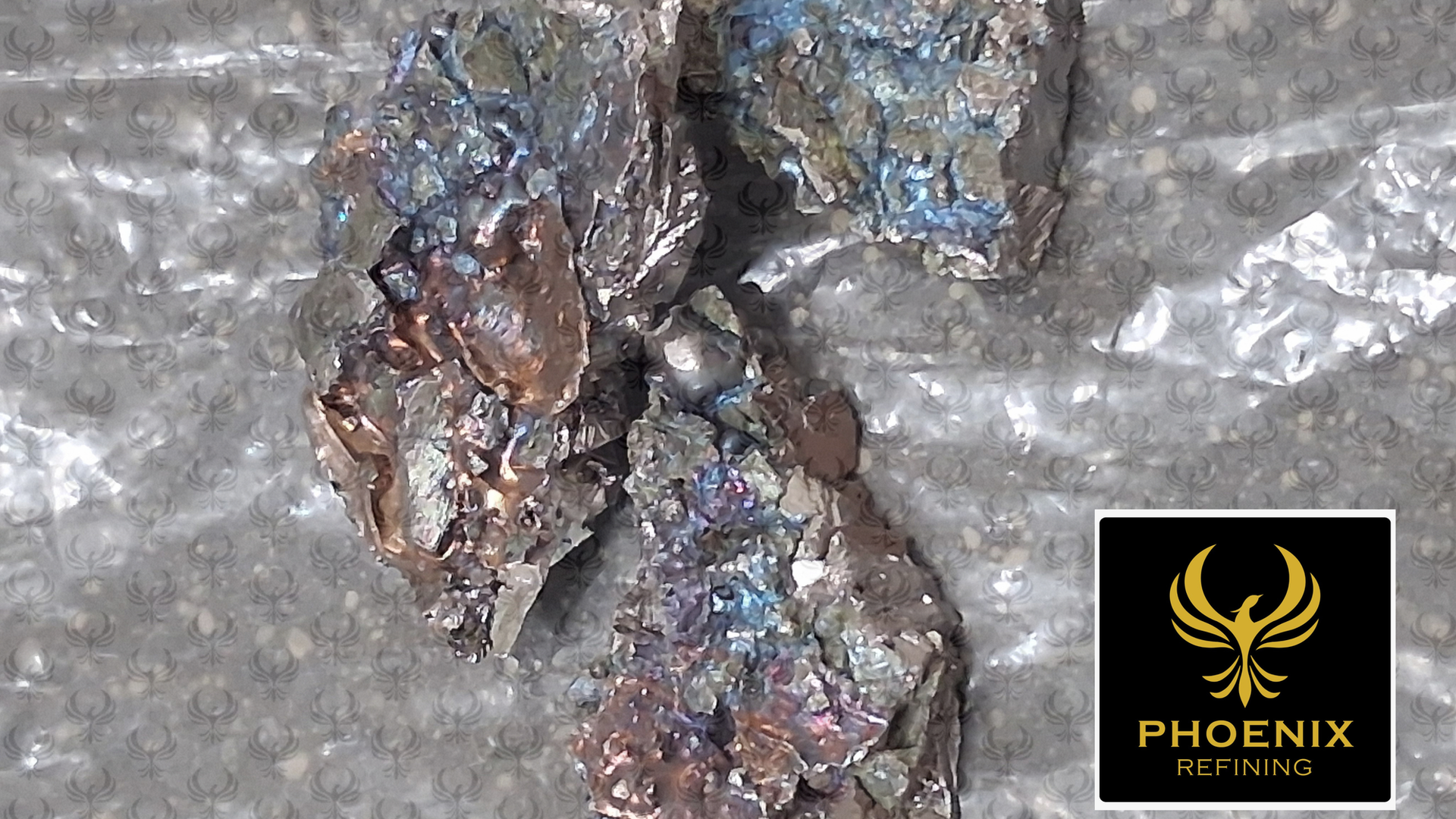
Iridium crucibles are one of the most valuable consumable parts used in high-temperature oxide crystal-growth processes. With an extremely high melting point of about 2,446 °C, along with high mechanical stiffness and resistance to a wide range of aggressive molten materials, they are essential for crystal-growth procedures that exceed the practical limits of platinum-based containers. They are commonly used in Czochralski and other melt-growth techniques to produce oxide single crystals such as sapphire, yttrium aluminum garnet (YAG), and beta-gallium oxide (β-Ga₂O₃).
An iridium crucible is not permanent equipment, and its safe service life is eventually limited by factors such as high temperature, thermal cycling, interaction with oxide melts, oxygen potential, residual charge stress, and gradual dimensional changes. When a crucible nears the end of its useful life, the operator must make two closely related decisions: whether it is still mechanically suitable for qualified repair or reuse and how to recover the considerable value of the iridium if it is not. These decisions require more than a visual inspection or a simple scrap quote; they require a justified evaluation of both the metallurgical condition and the available terms for selling the precious metal.
Iridium's high melting point does not mean it is immune to degradation. In practical crystal-growth furnaces, the metal operates near a substantial fraction of its melting temperature, frequently under steep temperature gradients and repeated heating and cooling cycles. Under these conditions, the crucible's mechanical performance depends on its initial fabrication condition, wall geometry, grain structure, atmosphere, melt chemistry, and prior thermal history.
Thermal demand depends heavily on the material. Since sapphire has a melting point of about 2,050 °C, it is a typical example of a high-temperature application using iridium crucibles. YAG melts slightly below 2,000 °C and still results in severe thermal and mechanical conditions. β-Ga₂O₃ melts at approximately 1,820°C but poses a different and especially significant problem: melt chemistry and oxygen must be carefully controlled to prevent oxide decomposition while minimizing damage to the iridium crucible. In growing gallium oxide, oxygen management requires a careful balance. The atmosphere must provide an oxygen potential high enough to stabilize the oxide melt. Still, if oxygen activity is too high at elevated temperatures, it can oxidize iridium and form volatile iridium oxide species. This may cause metal loss and could contaminate the melt with iridium. Published research on β-Ga₂O₃ crystal growth states that this trade-off is a major challenge when iridium crucibles are used.
This means "corrosion resistance" must be regarded as relative, not absolute. Although iridium remains an outstanding material for many high-temperature oxide-growth situations, its performance must be assessed in light of the furnace atmosphere and the particular melt. A crucible that performs well in one oxide process might wear very differently in another.
With a used crucible, the main mechanical issue is not simply whether it has melted or shown visible failure. Instead, the vessel tends to lose its margin due to local wall thinning, creep, distortion, grain growth, cracking, and contamination. The key question then becomes whether the remaining structure can safely hold a dense molten charge while maintaining the shape required for stable heating and crystal growth. Sufficient wall thickness is particularly important, since even a small amount of material loss can greatly affect stiffness and resistance to deformation. Crucibles are made in various sizes based on diameter, capacity, the intended crystal type, alloy specifications, and furnace design. No single wall-thickness limit can safely apply to all iridium crucibles. A standard suitable for a small laboratory crucible may be unacceptable for a large production crucible handling a heavy melt.
Consequently, operators should adopt a condition-based inspection program rather than depend on a general service-hour limit. Relevant observations should include any changes in mass over time, thickness mapping, dimensional measurements, ovality, local bulging, the state of the seams and transition zones, surface contamination, and signs of cracking. Comparing the vessel with its original fabrication drawings and original weight is generally more informative than relying on a general industry estimate. At high temperatures, iridium can also recrystallize and coarsen. The cold-worked or wrought microstructure present after fabrication is not guaranteed to be maintained after long exposure in a crystal-growth furnace. Large grains can influence deformation characteristics and may reduce resistance to both crack initiation and propagation, particularly in regions where thermal stresses concentrate. Grain growth depends on time at temperature, thermal cycling, purity, prior deformation, alloy additions, and the stresses experienced during service. Thermal-expansion mismatch contributes to the problem. During cooling, the solidified oxide charge may adhere to the crucible's inner wall. Iridium and oxide materials such as YAG do not expand and contract at the same rate. This difference in expansion and contraction can impose considerable stress on the crucible and may lead to distortion, cracking, or damage at geometric transitions. The crucible can therefore be damaged during cooldown, even if the high-temperature growth run itself was stable.
A used iridium crucible may still have considerable value, since most of the metal can usually be recovered through specialized precious-metal refining processes. However, you can't judge the true recoverable value by looking at the crucible alone. Layers of alumina, gallium oxide, flux residues, reinforcement materials, weld additions, and contamination with other metals can all affect the amount of payable metal and the refining method. Iridium is particularly challenging to treat chemically, and commercial refining is generally more complicated than ordinary scrap recovery. Refiners may use a combination of alloying, oxidative treatment, chlorination, leaching, dissolution, separation, precipitation, and final purification, depending on the feed material. The specific process flow is kept secret and is dependent on the feed material. For this reason, treat any claims that all crucibles yield the same universal recovery rate or have the same universal refining cost with caution.
The key commercial question isn't a general "recovery rate," but rather the settlement agreement. The owner must know how the material will be weighed, sampled, assayed, and priced; the payable percentage of the assayed iridium; which charges will be deducted; and when the price will be determined. A clean, well-known-composition iridium crucible should not be automatically valued the same way as heterogeneous, low-grade, or mixed-metal PGM scrap. An independent refiner could offer a direct cash settlement, allowing the operator to use the recovered capital as they see fit. Alternatively, the original crucible manufacturer might provide a remake credit, returning the value of the recovered metal as a credit against a new crucible. Either option could be economically viable. The better option will depend on transparency, pricing, lead time, warranty, replacement availability, and the company's need for cash versus replacement capacity.
Remake credits are operationally convenient because they simplify procurement and let you keep your preferred crucible design. The value of the iridium being returned, though, may be included in a single net replacement invoice, making it challenging to assess whether the operator is getting an appropriate credit for the spent vessel or is effectively paying a premium elsewhere in the transaction. A direct refining settlement could increase transparency by incorporating a clear assay report, a payable-metal percentage, itemized charges, and an agreed pricing mechanism. It might also provide more flexibility since the cash received could be used to buy a new crucible from another source, carry out furnace maintenance, support process development, or meet other capital requirements. The drawback is that the operator could face changes in metal prices and might have to wait longer between shipment and final settlement.
The comparison must be based on comparable items. Begin by working out the open-market delivered cost of a new crucible of equivalent specification, taking into account fabrication, freight, insurance, and any differences in lead time or warranty. Then calculate the expected direct-refining proceeds using the actual weight received, the agreed assay method, the payable percentage, the pricing date, and all charges. The direct-refining replacement cost is the new crucible price minus the net refining proceeds.
Compare the fabricator's net remake invoice with that figure. If the fabricator offers a lower all-in cost with an equivalent crucible, an acceptable lead time, and clear metal credit, a remake program could be worthwhile. Direct refining would be the better option if an independent refining settlement results in a higher net value and replacement hardware is available at competitive prices elsewhere. The important point is transparency. Operators must ask for custody and shipping terms, received-weight documentation, provisions for sampling and umpire assay, the payable percentage, assay charges, refining charges, the price benchmark, the price-fixing date, payment timing, and any financing or minimum-lot deductions. Unlike gold, iridium lacks the same universally transparent spot-market structure, so the contractual pricing reference is critical.
The most effective end-of-life program starts well before a crucible fails. Facilities must record each vessel's original weight, dimensions, wall map, specified alloy or purity, repair history, process exposure, furnace atmosphere, and mass loss during observation. Regular inspections can detect thinning, bulging, cracks, and dimensional changes before the vessel reaches a point that requires emergency response. If retirement is necessary, please document the crucible, clean it according to approved procedures, package it carefully, and send it via an insured chain of custody. The operator should retain evidence of the vessel's original identity and record any rings, fittings, or deposits that could influence the assay. A specialist PGM refiner can then determine the actual amount of metal that can be recovered through appropriate sampling and analysis.
Iridium crucibles are expensive because they solve exceptionally difficult crystal-growth problems. Their economic life should not end when they leave the furnace. Careful inspection, disciplined retirement criteria, and a transparent refining or remake arrangement allow crystal-growth operators to protect both process safety and the residual value of a critical high-temperature asset. Phoenix Refining purchases iridium-bearing materials, including decommissioned crucibles and laboratory ware, and offers specialized precious-metal evaluation and recovery services. For facilities seeking an independent way to recover value from spent iridium assets, a documented, assay-based settlement can offer a practical alternative to a bundled replacement credit.