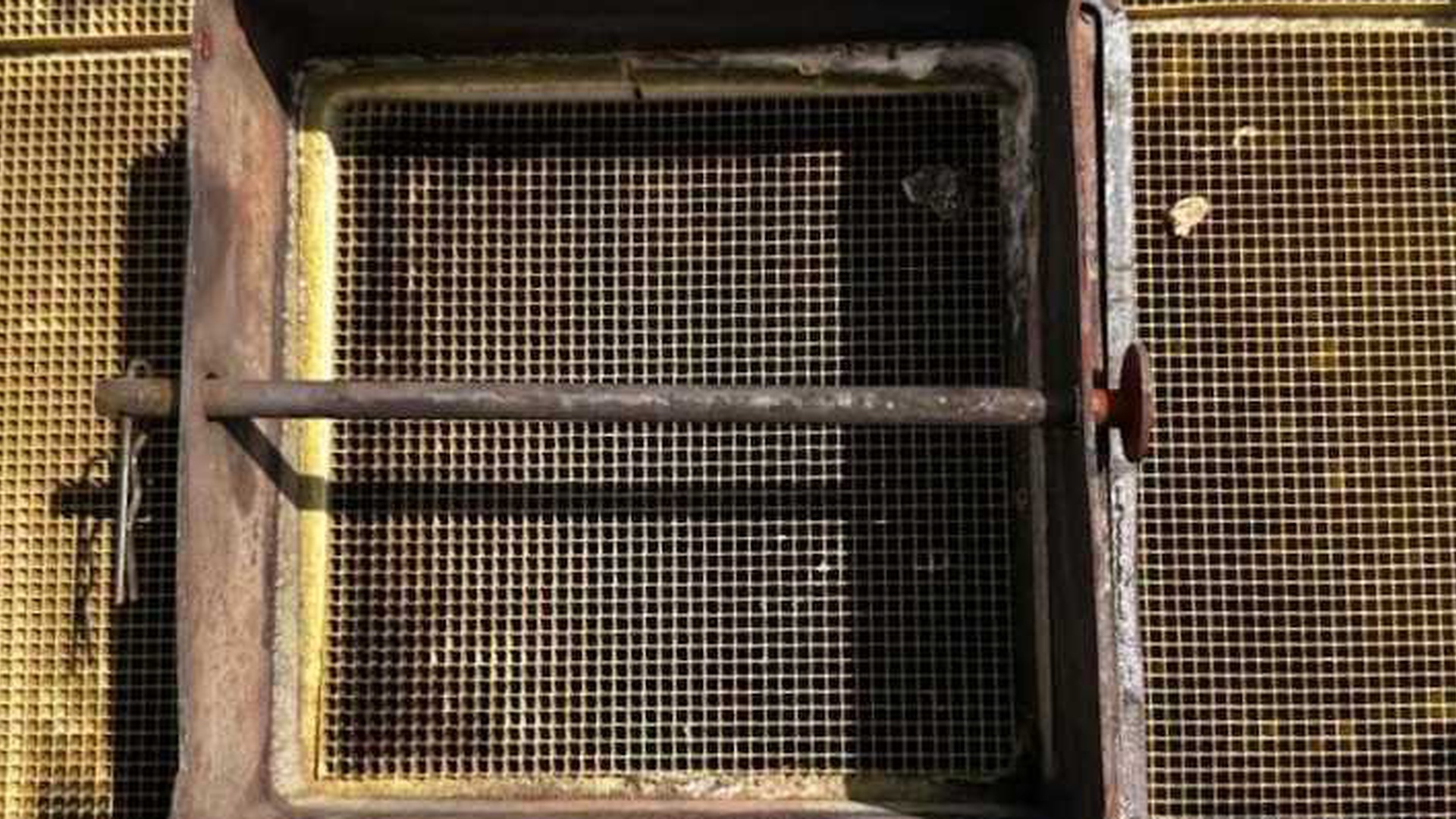
Industrial electrochemical facilities routinely retire mixed metal oxide (MMO) and dimensionally stable anodes (DSA) after years of demanding service. Too often, however, facilities treat these assemblies as hazardous industrial waste rather than recoverable metal assets. Because spent anodes may contain dried electrolyte residues, process salts, or trace amounts of regulated metals, facilities may automatically send them into a hazardous-waste disposal pathway. That decision can require TCLP testing, waste profiling, hazardous packaging, manifesting, licensed transportation, treatment, and landfill disposal.
The result is an unnecessary financial and environmental loss. Many decommissioned MMO anodes still contain valuable quantities of iridium, ruthenium, platinum, and titanium. Rather than paying to dispose of them, facilities can often send properly managed anode lots to qualified refiners or recoating providers. In doing so, they can recover precious-metal value, reduce waste-management costs, and avoid permanently removing critical materials from the industrial supply chain.
MMO anodes are designed to be stable, long-life electrodes. Unlike graphite or lead-alloy anodes that are gradually consumed during electrolysis, MMO anodes are usually built on titanium substrates. Titanium may be fabricated as a plate, expanded mesh, rod, or another geometry appropriate to the cell design. Its surface is coated with catalytic metal oxides that make the electrode active for chlorine evolution, oxygen evolution, electroplating, electrowinning, or cathodic-protection applications.
The coating chemistry depends on the process. Chlor-alkali and hypochlorite systems commonly use ruthenium dioxide-based coatings, often combined with titanium dioxide, tin dioxide, tantalum pentoxide, or iridium-containing stabilizers. Iridium dioxide and tantalum pentoxide coatings are commonly used in copper and zinc electrowinning, PCB copper plating, copper foil production, and other oxygen-evolution applications. Some specialty systems use platinum or platinum-iridium deposits over titanium or niobium.
Operators usually remove these anodes from service because of substrate passivation rather than complete loss of the catalytic layer. Over time, electrolyte can migrate through microscopic pores and cracks in the coating. Under anodic conditions, titanium at the interface oxidizes, forming a nonconductive titanium dioxide layer beneath the catalyst. This oxide layer increases the electrode's electrical resistance and forces the rectifier to supply more voltage to maintain the required current density. As cell voltage rises, electrical consumption rises. Even a few hundred millivolts of additional voltage can materially increase operating costs in a large electrowinning, plating, or chlor-alkali system. The anode may therefore be retired because it has become energy-inefficient or operationally unstable, even though it still retains a substantial portion of its original precious-metal coating.
A retired MMO anode is often far from depleted. Depending on the application, service conditions, original loading, and retirement criteria, spent anodes may retain about 20% to 35% of their original platinum-group-metal content. In some cases, residual loading may be even higher. Copper and zinc electrowinning anodes with iridium-tantalum coatings may begin service with approximately 12 to 25 grams of iridium per square meter. At retirement, they may still contain 2.5 to 8.5 grams per square meter. Chlor-alkali anodes using ruthenium- or ruthenium-iridium-based coatings may retain 25% to 40% of their original PGM loading. Similar recoverable values may remain in PCB plating meshes, continuous electro-galvanizing anodes, and impressed-current cathodic-protection systems.
A single spent anode assembly can contain 5 to 40 grams of recoverable iridium, ruthenium, platinum, or mixed PGMs. When a facility replaces an entire anode bank, the accumulated metal can total kilograms. That material is not ordinary scrap, and it should not be discarded without an economic review. It is a concentrated secondary refining feedstock containing some of the world's most valuable and supply-constrained industrial metals.
The financial contrast between hazardous disposal and precious-metal recovery can be significant. Consider a representative lot of 1,000 copper electrowinning anodes. If each anode has 2.2 square meters of coated surface, the total lot contains 2,200 square meters of active area. If the original iridium loading was 15 grams per square meter, the anodes initially contained approximately 33 kilograms of iridium. If the lot is retired with 25% of the original loading remaining, it still contains about 8.25 kilograms of iridium, equivalent to more than 265 troy ounces. At an assumed iridium price of $5,000 per troy ounce, the gross contained iridium value exceeds $1.3 million. The titanium substrate may provide additional value. If the lot contains 18 metric tons of Grade 1 titanium, even modest titanium scrap pricing can add tens of thousands of dollars in recoverable value.
By comparison, classifying the same lot as hazardous waste can create a direct cash loss. The facility may pay for testing, containers, freight, hazardous-waste manifests, stabilization, treatment, landfill tipping fees, and compliance administration. Disposal also eliminates the possibility of recovering the remaining catalyst metal. In other words, a plant may spend money to discard material that could otherwise generate substantial refining revenue permanently. The actual financial return depends on precious-metal prices, assay results, transportation costs, refining yields, contamination levels, and the commercial agreement with the refiner. Even so, the underlying principle is straightforward: before designating an MMO anode for disposal, evaluate its recoverable PGM content.
Spent anodes may require careful environmental management, particularly if they contain loose residues or contamination from process solutions. However, federal RCRA rules distinguish between discarding hazardous material and sending recyclable material for legitimate metal recovery. This distinction matters for titanium-based MMO anodes containing economically significant quantities of iridium, ruthenium, platinum, or related metals.
Under 40 CFR § 261.6(a)(3)(ii), scrap metal that is being recycled may be exempt from Subtitle C regulation. Retired MMO anodes consist largely of manufactured titanium metal structures that can be processed to recover base metals and precious metals. When sent to a legitimate recycling facility rather than discarded, they may qualify for management as recyclable scrap metal. A second pathway may be available under 40 CFR Part 266, Subpart F, which addresses recyclable materials used for precious-metal recovery. Section 266.70 is relevant to materials reclaimed for valuable metals such as platinum, palladium, iridium, ruthenium, rhodium, gold, and silver. Because MMO coatings commonly contain iridium, ruthenium, or platinum, this framework may provide a more appropriate management approach than hazardous-waste disposal.
Facilities must still maintain records, manage containers appropriately, document shipments, and prevent speculative accumulation. State requirements may also differ from federal regulations, so operators should verify their specific compliance approach with environmental counsel, their state regulatory agency, and the recovery vendor. The objective is not to avoid compliance; it is to apply the correct compliance framework to material that is being legitimately recovered rather than discarded.
The recovery route depends largely on the titanium substrate's condition. If anodes are bent, burned through, heavily pitted, or structurally damaged, they may be sent for destructive refining. In this process, workers first cut or sized the assemblies, and then they smelt them with a collector metal such as copper, nickel, or iron. The collector metal concentrates the platinum group metals, after which hydrometallurgical refining can separate iridium, ruthenium, platinum, and other metals.
Where the titanium remains structurally sound, stripping and recoating may be the more valuable option. The depleted catalyst layer can be removed through controlled caustic or molten-salt treatment. The stripped coating residues are collected and refined to recover precious metals, while the titanium substrate is cleaned, surface-prepared, and recoated with a new catalyst. This approach preserves the titanium structure and can reduce replacement costs substantially compared with purchasing new anodes. Both approaches keep valuable materials in productive use. Destructive refining recovers the PGM content from damaged units, while recoating extends the service life of reusable titanium assemblies. The right choice depends on dimensional stability, substrate condition, coating type, anticipated replacement needs, and the economics offered by the refiner or anode manufacturer.
A recovery lot's value depends on how the material is handled before shipment. Facilities should segregate retired anodes by coating chemistry and application. Iridium-tantalum oxygen-evolution anodes should not be mixed with ruthenium-based chlorine-evolution anodes, platinized titanium, or uncoated scrap. Mixing lots can dilute high-value iridium material, complicate refining, and reduce payable metal value.
Maintenance and environmental teams should retain records identifying the original coating formulation, manufacturer, installation date, service duration, current density, cell voltage history, and reason for retirement. These records help establish an expected metal range and support commercial discussions with refiners. Portable X-ray fluorescence can help with sorting and preliminary screening, but it should not be used as the final settlement method. Wear across an anode surface can vary significantly because MMO coatings are non-uniform. A representative settlement assay requires homogenization through stripping, dissolution, or smelting. Reputable refiners should provide a documented sampling procedure, split samples for the seller and refiner, and an umpire-sample process in case of disagreement.
Treating MMO anodes as recoverable precious-metal lots supports both financial and sustainability objectives. Iridium and ruthenium are critical minerals with limited global production and highly concentrated supply chains. Their importance is growing because they support electrochemical manufacturing, chlorine production, metal refining, cathodic protection, and green-hydrogen technologies.
Recovering these metals reduces reliance on primary mining and keeps scarce catalyst materials in circulation. It can also reduce the greenhouse-gas impact associated with purchasing virgin metals and manufacturing new titanium structures. For facilities with recurring anode replacement cycles, recovered PGMs may be credited through unallocated metal accounts and used toward future coating or replacement-anode purchases. The practical conclusion is clear: retired MMO and DSA anodes should not automatically be treated as hazardous waste. They should first be evaluated as recoverable titanium and precious-metal assets. With proper segregation, documentation, regulatory management, sampling, and refinery agreements, what appears to be a disposal problem can become a meaningful source of value.