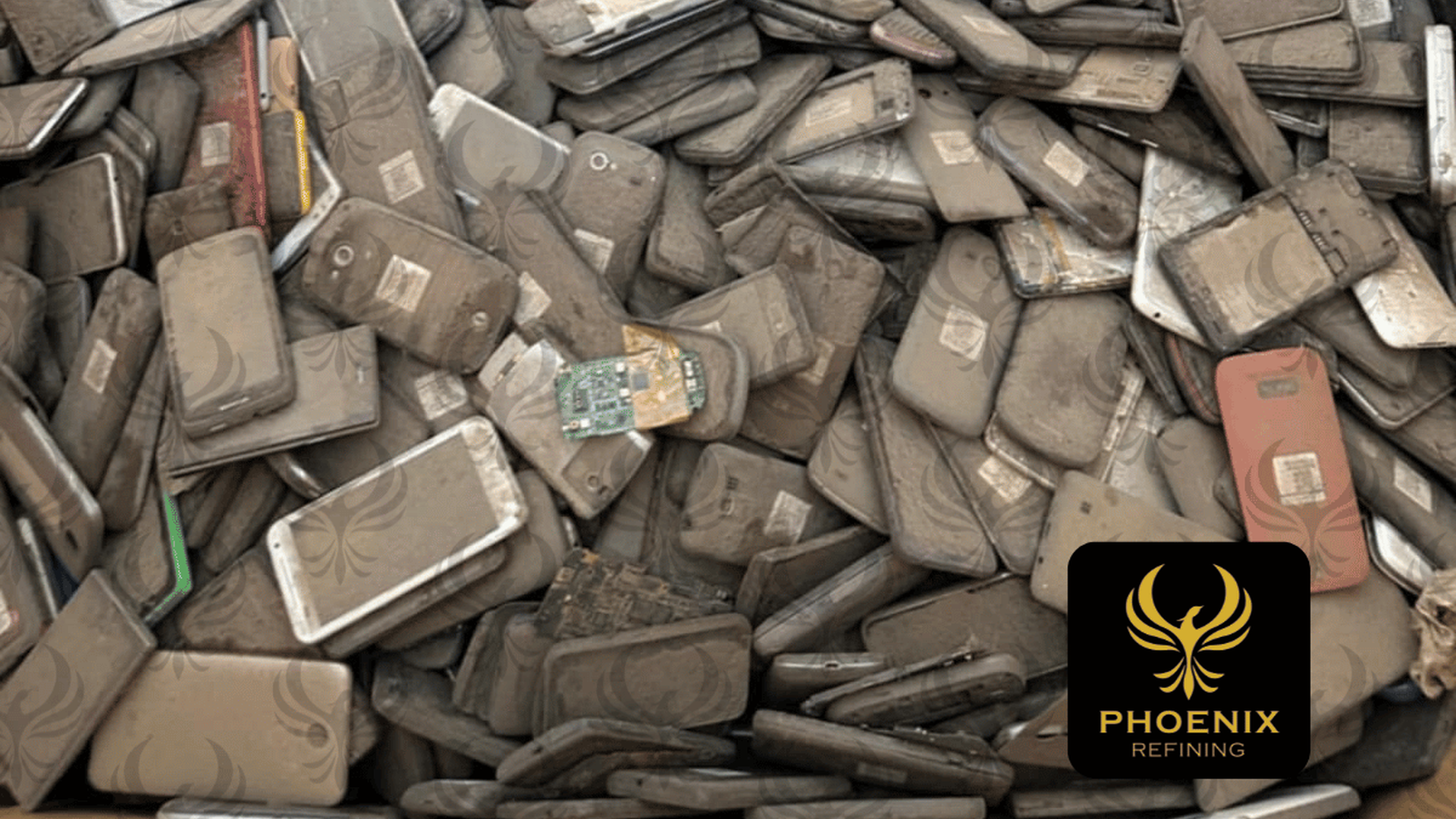
In 2022, the Americas remained one of the world’s largest generators of electronic waste, reflecting both high consumption of electrical and electronic equipment and uneven systems for collection, recycling, and regulation. Within this regional picture, the United States stood out by a wide margin as the single largest generator of e-waste in the Americas. Its scale, high per-capita generation, decentralized policy framework, and role in cross-border movements make it central to understanding the region’s e-waste landscape.
Across the 36 countries analyzed in the Americas, a total of 19 billion kg of electrical and electronic equipment was placed on the market in 2022. From this stock of products, the region generated 14 billion kg of e-waste, equal to 14.1 kg per capita. Of this amount, only 4.3 billion kg, or 30 percent, was documented as formally collected and recycled.

The region also showed major policy gaps. Only 12 countries had a national e-waste policy, legislation, or regulation in place. Nine countries used the extended producer responsibility principle, four had collection targets, and none had recycling targets at the regional level.
The environmental costs were considerable. In 2022, e-waste in the Americas was associated with 30.9 billion kg of CO2 equivalents in greenhouse gas emissions, 12.4 thousand kg of mercury emissions, and 9 million kg of unmanaged plastics containing brominated flame retardants. These figures show that e-waste is not only a waste management issue but also a climate, toxic pollution, and public health issue.
The United States generated 7.2 billion kg of e-waste in 2022, making it by far the largest producer of e-waste in the Americas. It was followed by Brazil at 2.4 billion kg, Mexico at 1.5 billion kg, Canada at 770 million kg, and Argentina at 520 million kg.
On a per capita basis, the United States was also among the highest generators in the region, at 21 kg per person, tied with Aruba and ahead of Canada and Puerto Rico, each at 20 kg per person. This high per capita figure reflects the country’s high rates of electronics consumption, short product replacement cycles, and large overall market for digital devices and appliances.
Within Northern America, which had a population of 380 million, around 8,000 million kg of electrical and electronic equipment was placed on the market. The subregional summary documented 4,100 million kg of e-waste, with North America accounting for 52 percent of the region’s e-waste generation, underscoring the dominance of the United States and Canada in the continental e-waste profile.
Compared with other subregions, the Caribbean generated 32 million kg of e-waste; Central America generated 1,800 million kg; North America generated 8,000 million kg; and South America generated 4,400 million kg. The United States alone generated more e-waste than many entire subregions combined. It far exceeded Brazil (2.4 billion kg), Mexico (1.5 billion kg), and Canada (770 million kg).
This means U.S. policy choices have effects far beyond national borders. Improvements in collection, repair, product design, and export controls in the United States could significantly improve the e-waste performance of the Americas as a whole.
A defining feature of the U.S. e-waste system in 2022 was the absence of a uniform federal law. Instead, e-waste regulation was handled at the state level, creating a patchwork of legal frameworks and compliance requirements. By 2022, 25 states and the District of Columbia had enacted legislation establishing statewide e-waste recycling programs. Some states had also introduced bans on landfilling and incineration of e-waste, and the most common policy model was extended producer responsibility.
Under EPR systems, producers are assigned collection responsibilities based on their share of electronic products sold in a state, but the actual rules differ widely. These variations include which products are covered, which consumers or institutions can use free recycling services, whether businesses are included, and whether collection targets are based on sales, past collections, or estimated generation.
In most U.S. state systems, covered product categories focus mainly on consumer electronics such as laptops, televisions, monitors, and printers. Large household appliances are usually excluded from official e-waste statistics because they are often managed separately through removal and scrap systems.
California is an important exception. Rather than using a standard producer-funded EPR model, it relies on an advance recycling fee system. Consumers pay retailers a fee of roughly USD 6 to 10, depending on the product, when purchasing certain electronics. That money is directed into a fund that supports statewide e-waste management.
The lack of federal harmonization has created significant challenges. Producers must comply with different rules across states, product scope varies widely, collection systems are inconsistent, and recovery rates are difficult to compare nationally. This fragmentation limits the country’s ability to implement a unified, efficient e-waste system, despite its large market and relatively advanced recycling infrastructure.
State-level collection rates in the United States have recently declined per capita. One key reason is a shift in the composition of the e-waste stream. Older, heavier cathode-ray tube televisions have increasingly been replaced by lighter flat-panel LCD and LED screens, reducing total collection weight even as device turnover remains high.
This shift has important implications. If collection targets are set primarily by weight, newer electronics may make systems appear less effective even when a significant number of devices are being collected. It also means that valuable and critical materials used in newer technologies may be overlooked if laws are not updated to include them.
Recognizing this, some states have expanded their legislation. California, for example, expanded product coverage in 2022 to include OLED and LCD devices. Other states updated their laws to expand the categories of covered products and increase the number of collection sites. Oregon used academic research on future e-waste flows to help determine collection goals for 2023 and 2024.
Another important development came just after the study period. In 2023, New York became the first U.S. state to adopt right-to-repair legislation for digital electronic devices. This law requires manufacturers to provide repair manuals, helping consumers and small businesses repair devices rather than replace them. While not a waste law directly, right to repair can reduce future e-waste generation by extending product lifespans.
Given the country’s massive e-waste volume, the United States plays a major role in the environmental footprint of e-waste in the Americas. Improper handling of discarded electronics can release toxic substances, including mercury, brominated flame retardants, and other hazardous materials, into the air, soil, and water.
At the regional level, the environmental impact of e-waste included high greenhouse gas emissions from production and disposal, toxic mercury emissions, and millions of kilograms of unmanaged plastics containing brominated flame retardants. In the United States specifically, one major concern is that significant amounts of used electronics are still stored in households, disposed of in landfills, incinerated, or exported abroad for processing. When e-waste is not managed in environmentally sound ways, it leads to the loss of recoverable metals, increased demand for virgin resource extraction, and greater risks of toxic exposure.
Cross-border movement is another major issue in the Americas and directly affects the United States. For 2019, the region recorded 393 million kg of imports, of which 89 million kg were controlled, and 305 million kg were uncontrolled. It also recorded 547 million kg of exports, of which 159 million kg were controlled, and 388 million kg were uncontrolled.
These numbers suggest that a substantial portion of e-waste movement in the Americas occurred outside clearly controlled systems, raising concerns about illegal shipments, weak traceability, and environmentally unsound treatment.
In the U.S. context, one longstanding issue is the export of collected e-waste to low-income countries, where informal dismantling and recycling often occur under unsafe conditions. Workers in these settings may be exposed to toxic dust, fumes, and contaminated materials without proper protection.
To address this, certification systems such as R2 and e-Stewards have been developed to improve standards and reduce improper handling and illegal exports. These standards are important, but certification alone does not fully solve the challenge of monitoring downstream exports and ensuring safe end processing.
A further complication is that, unlike almost every other country in the Americas, the United States has not ratified the Basel Convention, the main international treaty governing transboundary movements of hazardous waste. This makes the U.S. position unique in the region and adds complexity to international oversight of e-waste flows.
The Americas present a mixed regulatory landscape. In South America, many countries regulate e-waste at the national level, often through EPR frameworks. In Canada and the United States, regulation occurs primarily at the provincial or state level. In Central America and the Caribbean, many countries still rely on general hazardous waste laws or have limited infrastructure and weak enforcement.
This means the United States is not alone in facing challenges, but the scale of its shortcomings makes them especially important. The country has relatively advanced programs compared with many of its neighbors. Yet, it still lacks federal harmonization, comprehensive product coverage, unified reporting, strong nationwide collection targets, and robust controls on exports.
The United States was the clear center of the e-waste challenge in the Americas. With 7.2 billion kg of e-waste generated and 21 kg per capita, the region was the largest generator by total mass and among the highest per capita. Its decentralized, state-based legislation has enabled substantial recycling programs, especially through EPR models, but the lack of a federal framework has produced fragmentation, inconsistent scope, and uneven performance.
At the same time, the environmental stakes are high. E-waste in the Americas contributes to greenhouse gas emissions, toxic releases, and the accumulation of unmanaged hazardous plastics, while transboundary movement remains difficult to monitor and regulate. The U.S. role is especially significant because of its volume, export links, and non-ratification of the Basel Convention.
This shows both progress and persistent gaps. State programs, collection targets, product scope expansions, and emerging right-to-repair rules are all positive signs. But if the United States is to improve its e-waste performance and help shift the trajectory of the Americas as a whole, it will need more coherent policy, broader product coverage, stronger collection systems, and stricter oversight of downstream flows. In a region already generating 14 billion kg of e-waste, the future of e-waste management in the Americas depends largely on what the United States does next.