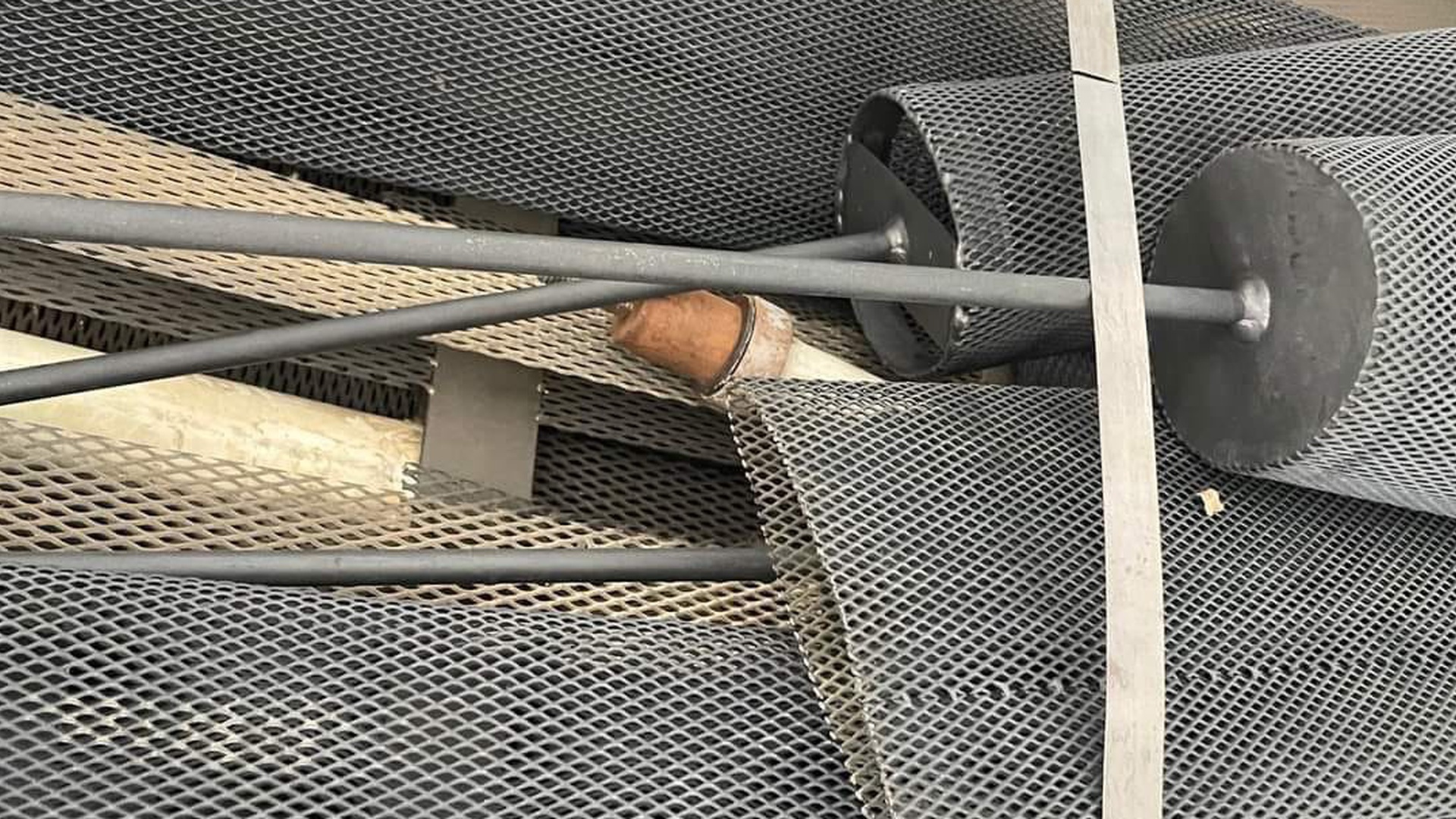
When a titanium mesh anode starts drawing excessive voltage, production managers know exactly what happens next: energy consumption rises, cell efficiency drops, and eventually the screen is taken out of service. Once labeled 'spent,' it can go into a scrap bin, where it is mainly valued for the titanium it contains. However, a failed anode is not necessarily empty. Dimensionally stable anodes and other mixed metal oxide-coated titanium screens often still contain considerable amounts of ruthenium and iridium, even though they can no longer operate efficiently. These platinum group metals might be present only as an extremely thin surface coating, but because of their rarity and high value, they can be economically important. So it makes sense to give up a large part of the material's recoverable value if you sell it as regular titanium scrap without first testing it. The solution lies in understanding why these electrodes fail and why only a proper assay can show what remains.
Mixed metal oxide, or MMO, anodes are used in several processes, including chlor-alkali production, electrochlorination, printed circuit board plating, electrowinning, and industrial wastewater treatment. The basic design combines two very different material systems. The structural base is generally commercially pure titanium. Titanium works well in corrosive anodic conditions because it readily forms a protective titanium dioxide layer. Yet this same feature poses a problem: titanium dioxide is highly resistive, and bare titanium would quickly passivate in an electrolytic cell and, as a result, stop carrying the necessary current.
To keep the electrode active, manufacturers use a catalytic coating that is only a microscopically thin layer. The coating may include ruthenium oxide, iridium oxide, titanium oxide, tantalum oxide, tin oxide, or a combination of these materials. Ruthenium dioxide is especially important in cases involving chlorine evolution. It has metallic-like conductivity and an extremely low overpotential, meaning chlorine can be produced with less energy. Iridium dioxide is usually added to improve stability, particularly when the electrode is subjected to acidic conditions, high temperatures, or oxygen evolution.
The coatings consist of very thin layers, but the metals they contain are among the rarest and most strategically important materials on earth. Ruthenium and iridium are usually obtained as minor by-products of mining operations involving platinum, palladium, and nickel. You can't quickly boost supply to meet rising demand, and primary production is concentrated in just a few areas; therefore, every gram recovered matters.
The biggest misconception is that a spike in the electrode's terminal voltage means its catalytic coating is entirely used up. In fact, the point at which useful electrical performance ends is usually due to a loss of conductivity, not to the complete loss of the precious metals. MMO coatings have a porous, microscopically cracked structure that increases the surface area where catalytic action can take place and helps bubbles of chlorine or oxygen escape as they form. Nevertheless, over time, the electrolyte and the reactive oxygen species can penetrate these microscopic channels and reach the titanium underneath the coating.
A titanium dioxide layer, which acts as an insulator, then forms at the interface between the titanium substrate and the conductive MMO coating; as it thickens, it obstructs electron transfer from the titanium to the surface containing ruthenium and iridium.
The rectifier then has to supply increasing voltage to maintain the required current. This extra resistance generates heat, which can speed up further passivation. Finally, the voltage exceeds an acceptable operating or economic limit, and the screen must be removed.
The key point is that the failure occurs within the catalytic coating. However, ruthenium and iridium may still be physically present; the insulating layer has effectively severed their connection to the circuit. The electrode is therefore electrically spent even if it is not metallurgically depleted. The amount of precious metal some retired screens may retain varies from 30% to 50% or more, depending on the original coating, cell chemistry, current distribution, contamination level, and operating history; in other cases, it may be much less. Because no reliable universal percentage exists, it is dangerous to assume based on the age or appearance of the electrodes.
Catalyst loss occurs during operation. Ruthenium and iridium oxides may dissolve slowly, and coating particles can flake off under chemical, thermal, or mechanical stress. High temperatures, excessive current density, drastic pH changes, fluoride contamination, shear from gas bubbles, and polarity reversals can all speed up wear. Still, this wear is usually uneven across the whole screen.
Areas near electrical connections may age differently from the outer edges. Uneven erosion can result from electrolyte movement and gas release. Scale or deposits may protect some areas while forcing more current through others. A mesh that looks bare in one place might have a much thicker coating elsewhere. The metals may also change their chemical composition during use. Ruthenium oxide can turn into oxyhydroxide species or into localized metallic ruthenium, especially following reverse-current or reducing conditions. The screen may therefore appear dull, discolored, scaled, or visually depleted yet still contain valuable material embedded in the pores and microcracks. One cannot judge the composition by appearance.
X-ray fluorescence, or XRF, can determine whether ruthenium, iridium, tantalum, or other metals are present; it is fast, non-destructive, and suitable for initial screening. However, it has some important limitations when applied to spent MMO-coated titanium. Because XRF examines only a shallow surface layer, scale, calcium and magnesium deposits, organic fouling, and a passivating titanium oxide layer can inhibit the signal from the precious metals beneath. The expanded mesh's complex geometry also creates line-of-sight issues, and the mix of heavy and light elements in the MMO coating can distort quantitative results. A small number of spot measurements cannot reliably represent the whole surface, especially with highly uneven coating wear. Even with a wider XRF map, it may still underestimate the amount of material embedded within a porous or multilayered coating.
To arrive at a definite valuation, you must take a representative sample and carry out suitable laboratory analysis. The sample should include high-wear and low-wear areas, as well as the edges, tabs, and any other distinct parts. Since high-fired ruthenium and iridium oxides are extremely resistant to ordinary acids, special methods of preparation and digestion must be used before instrumental analysis can accurately measure them. This difference matters: a recycler who relies solely on surface readings might assess the load as low-grade titanium, whereas a qualified precious-metal refiner looks for ruthenium and iridium that ordinary scrap channels cannot detect.
It isn't just about reducing waste to recover ruthenium and iridium. Because supply chains for both metals are tightly constrained and demand is rising in advanced catalysts, electronics, electrochemical systems, and green hydrogen technologies, discarding recoverable material increases reliance on primary mining and exposes manufacturers to volatile markets.
For plant operators, the point is simpler: untried screens may contain untapped revenue. Even if a Ti/Ru or Ti/Ru/Ir mesh has reached the end of its useful life in the cell, that doesn't mean its most valuable components are gone. Passivation can stop a coating from working long before it is completely removed, so ruthenium and iridium can remain hidden. Before treating used screens like ordinary titanium, let Phoenix Refining test them for free. An electrode reaching the end of its life may no longer be performing, but that doesn't mean its value has disappeared.