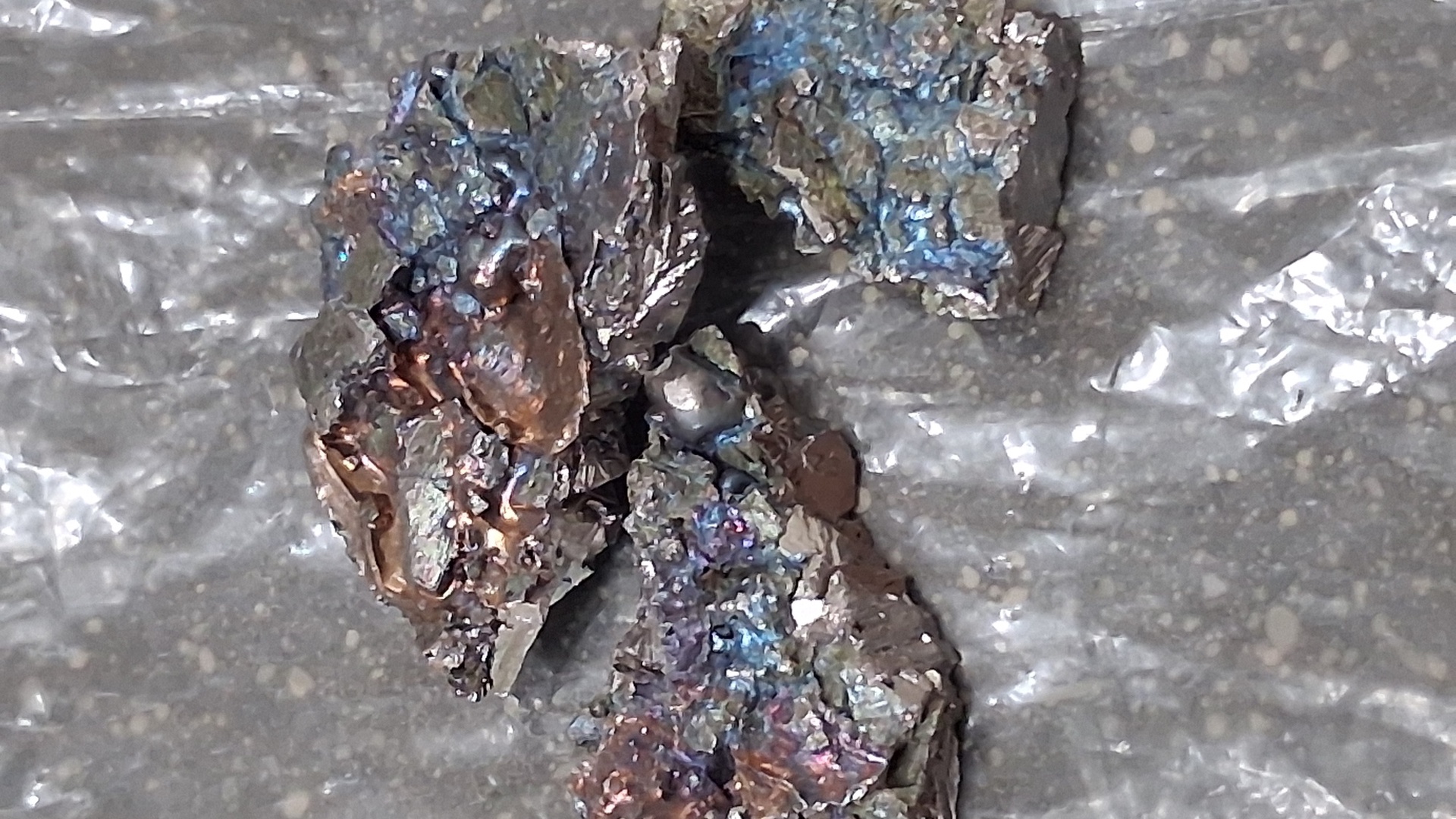
Iridium is an elemental paradox: it is among the most physically durable materials known, yet it is also one of the least accessible stable elements in Earth’s crust. With atomic number 77 and a relative atomic mass of 192.217, iridium belongs to the platinum-group elements, a family of transition metals that also includes ruthenium, rhodium, palladium, osmium, and platinum. It is a silvery-white metal with a slight yellowish cast and a face-centered cubic crystal structure. Its melting point of approximately 2,446 degrees Celsius, boiling point of about 4,428 degrees Celsius, and density of 22.56 grams per cubic centimeter place it among the most physically extreme elements in the periodic table.
These qualities, combined with exceptional resistance to corrosion and chemical attack, make iridium invaluable in high-temperature equipment, spark plugs, crystal-growth crucibles, medical technologies, and advanced electrochemical systems. The defining feature of iridium, however, is not simply its durability but its profound terrestrial scarcity.
Estimates of iridium’s abundance in the continental crust vary, but some place it at only about 0.022 micrograms per kilogram, or 0.000022 parts per million. Its concentration in seawater is smaller still, at approximately 0.5 to 1 femtomole per kilogram. Yet Earth as a whole is not genuinely poor in iridium. The metallic core may contain approximately 2,600 micrograms per kilogram, while the primitive upper mantle contains about 3.5 micrograms per kilogram. CI chondrite meteorites, which approximate some of the primitive material from which the Solar System formed, contain around 462 micrograms per kilogram.
Iridium’s scarcity is therefore not simply a question of how much of the element exists. It is a question of where planetary evolution placed it. Most of Earth’s iridium lies deep within the inaccessible metallic core, while the crust available to mining inherited only a minute fraction of the planet’s total inventory.
At average crustal abundances, iridium is far too dispersed to mine economically. A viable deposit requires geological processes that can enrich the metal by factors of thousands. Such enrichment occurs mainly in three settings: extraterrestrial impact structures, large layered igneous intrusions, and ophiolitic mantle sequences exposed through tectonic emplacement.
Each setting records a different mechanism for collecting and preserving an element that would otherwise remain at nearly undetectable levels. Impact structures may add extraterrestrial material or create large melt systems. Layered intrusions concentrate iridium through fractional crystallization and sulfide liquid separation. Ophiolites preserve mantle processes in which chromite and microscopic platinum-group minerals trap iridium in highly localized zones.
Extraterrestrial impacts provide the most direct mechanism for enriching Earth’s surface with iridium because primitive meteorites contain much more of the element than ordinary crustal rocks. The best-known example is the Cretaceous-Paleogene boundary, a thin global layer of sediment deposited approximately 66 million years ago.
In 1980, Luis and Walter Alvarez and their colleagues identified an anomalous iridium concentration within this boundary and proposed that it recorded the impact of a massive asteroid or comet. The later discovery of the Chicxulub crater beneath the Yucatán Peninsula strengthened the connection among the iridium-rich layer, a catastrophic impact, and the extinction of the non-avian dinosaurs.
The Cretaceous-Paleogene boundary layer is too thin and widely dispersed to constitute an economic resource, but larger and older impacts have generated important mineral systems. The Sudbury Basin in Ontario, Canada, formed following a massive impact approximately 1.85 billion years ago. The event produced a vast superheated melt sheet that assimilated sulfur-bearing crustal rocks. As the melt cooled, it became saturated with sulfur, causing a dense iron-nickel-copper sulfide liquid to separate from the surrounding silicate magma. Iridium and other platinum-group elements have a strong chemical affinity for sulfide melts, so the sulfide droplets scavenged them from the much larger body of magma. The droplets then sank, accumulated, and crystallized into valuable nickel-, copper-, and PGE-bearing ore bodies. At Sudbury, the impact went beyond introducing unusual material. It created the thermal and chemical conditions needed to concentrate dispersed metals into mineable deposits.
Geological concentration is only the first part of the iridium paradox. Once iridium-bearing material has been mined, the metal remains exceptionally difficult to isolate. Its chemical inertness, which makes it valuable in corrosive and high-temperature environments, also makes it resistant to conventional refining. Platinum-group elements invariably occur together and possess broadly similar chemical characteristics, so their separation requires a long sequence of carefully controlled treatments.
In traditional hydrometallurgical processing, a PGE concentrate is treated with hot aqua regia, a highly corrosive mixture of hydrochloric and nitric acids. Gold, platinum, and palladium dissolve, but iridium generally remains in a refractory dark residue with osmium, ruthenium, and rhodium. Breaking down this residue often requires alkaline oxidative fusion. During fusion, the material is mixed with sodium peroxide or with potassium hydroxide and potassium nitrate, then heated to approximately 600 to 900 degrees Celsius. This treatment destroys the resistant metallic or mineral structure and oxidizes iridium into more reactive iridate compounds. After cooling, the fused material is leached with concentrated hydrochloric acid at elevated temperature, converting iridium into soluble chloroiridate complexes.
Ammonium chloride is then added to precipitate ammonium hexachloroiridate, a dark crystalline material known in industry as “black salt.” This intermediate can be purified to high levels and subsequently heated in a reducing atmosphere, typically flowing hydrogen, to produce metallic iridium sponge or powder. Although effective, alkaline fusion is energy-intensive and hazardous. It relies on powerful oxidants, high temperatures, corrosive acids, and processes that may generate toxic gases. These limitations have spurred the development of safer recovery methods, particularly for recycling spent iridium oxide catalysts.
Microwave-assisted leaching with hydrochloric acid and hydrogen peroxide has achieved iridium extraction efficiencies above 80 percent under optimized conditions. Other emerging approaches include selective solvent extraction, electrochemical dissolution, and modified chlorination techniques. Such methods are important because a future circular economy cannot rely entirely on processes that consume excessive energy or create disproportionate quantities of hazardous waste.
The economic consequences of geological and metallurgical scarcity are severe. Global iridium production amounts to only about 7,000 to 8,000 kilograms per year. There are essentially no large dedicated iridium mines because the element is recovered almost entirely as a byproduct of platinum, palladium, nickel, and copper operations. For comparison, the global mining industry may produce approximately 190 tonnes of platinum while recovering only around 7.5 tonnes of iridium. This dependence on byproducts makes supply highly inelastic. Even a sharp increase in iridium prices cannot immediately increase production because mining decisions are based primarily on the economics of the host commodities. Expanding iridium output may require increasing platinum or nickel production regardless of whether markets need additional quantities of those metals.
This structural constraint has contributed to exceptional price volatility. Iridium traded at roughly 1,066 US dollars per troy ounce in 2012, fell to around 544 dollars in 2015, rose to approximately 1,293 dollars in 2018, and reached about 5,400 dollars in 2021, with temporary peaks close to 8,000 dollars. Prices remained near 5,000 dollars per ounce in 2024. Iridium’s modern applications explain the rising pressure on supply. Historically, iridium-osmium alloys were used in fountain-pen nibs, compass bearings, and precision measurement standards, including the International Prototype Meter. Today, iridium is used in heavy-duty and aviation spark plugs because it resists high-temperature spark erosion. The radioactive isotope iridium-192 serves as a gamma source in industrial radiography and in brachytherapy for cancer treatment. Iridium crucibles are also used to grow high-purity crystals such as sapphire and lithium tantalate for LEDs, OLED displays, and advanced electronics.
Its most strategically significant emerging application is in water electrolyzers that use proton-exchange membranes. Iridium oxide is currently the leading electrocatalyst for the oxygen-evolution reaction at the anode. The acidic, strongly oxidizing conditions inside these systems rapidly degrade most alternative materials, whereas iridium oxide offers both catalytic efficiency and relative stability. As governments and industries expand green hydrogen production, demand for electrolyzers could place unprecedented pressure on an already limited supply of iridium.
Iridium’s geological scarcity means that humanity cannot simply mine its way out of a future shortage. The constraints created by core-mantle differentiation billions of years ago are absolute. A viable strategy must instead combine reduced material use, improved recycling, selective exploration, and stronger environmental governance. In proton-exchange membrane electrolyzers, catalyst thrifting is especially important. Research into core-shell nanoparticles, supported catalysts, perovskite structures, and mixed oxides such as iridium-ruthenium oxide aims to maximize the electrochemically active surface area of iridium while minimizing the total amount needed. The objective is to reduce iridium loading by an order of magnitude without compromising catalytic activity or long-term stability. Complete substitution would be preferable, but no widely commercialized alternative yet matches iridium’s performance under highly acidic and oxidizing conditions.
Recycling must also become a central source of supply. End-of-life electrolyzer catalysts, spark plugs, crucibles, and industrial components should be treated as high-grade secondary ores. Microwave-assisted leaching, electrochemical dissolution, selective precipitation, and solvent extraction technologies could recover iridium with lower energy consumption and fewer hazardous byproducts than conventional alkaline fusion. Recycling cannot immediately satisfy all demand because many iridium-containing products remain in service for years. Still, a mature closed-loop system could eventually provide a large and comparatively secure secondary supply.
More intelligent geological exploration may identify additional resources, although the discovery of new deposits comparable to the Bushveld Complex is improbable. Geochemical vectoring in known ultramafic terranes can distinguish high-chromium boninitic sequences from ordinary mid-ocean-ridge assemblages and help locate dunite pods and chromitite horizons where laurite and iridium-osmium alloys are most likely to occur. Any new exploration, however, must be paired with rigorous safeguards for watersheds, biodiversity, mine waste, and Indigenous rights.
Iridium’s scarcity is not an accident of geography or a temporary result of inadequate exploration. It is an enduring consequence of planetary physics. During Earth’s earliest evolution, liquid iron drew most of the planet’s iridium into the metallic core. Whether the mantle’s remaining inventory reflects late chondritic addition, high-pressure equilibration in a deep magma ocean, or a combination of both, the continental crust inherited only an exceedingly small fraction.
The remaining accessible anomalies are products of rare geological circumstances. Asteroid impacts introduced extraterrestrial material or created sulfide-rich melt sheets. Layered intrusions concentrated platinum-group elements through fractional crystallization and sulfide immiscibility. Suprasubduction-zone ophiolites trapped microscopic iridium minerals during chromite crystallization. In every case, several geological conditions had to coincide before an almost immeasurably dispersed element could become a potential resource.
Even after geological concentration, iridium remains difficult to recover because its extraordinary chemical resistance demands aggressive, energy-intensive refining. Its production is tied to other metals, concentrated in a few regions, and burdened by substantial environmental and social costs. As demand grows, particularly from green hydrogen technologies, the sustainable response cannot be unlimited extraction. It must be based on using less iridium, recovering more of what is already in circulation, and improving processing technology. Specialist refiners such as Phoenix Refining can play an important role in this transition by helping return valuable platinum-group metals to the supply chain. Ultimately, responsible use of iridium must respect the geological and ecological limits that govern its availability.