Iridium is one of the rarest and most strategically important metals in the modern economy, yet its supply system is unlike that of almost any other industrial material. Unlike copper, iron ore, or even gold, iridium is rarely mined as a primary target. It occurs only as a minute constituent within complex platinum-group metal deposits, and its production is governed less by its own price than by the economics of other metals such as platinum, palladium, rhodium, nickel, and copper. This unusual status makes iridium one of the most structurally constrained commodities in the world.
An extraordinarily difficult refining process compounds this dependence on byproducts. Iridium concentrations in raw platinum-group ores are generally below 0.003 percent, and separating the metal from its host materials is among the most chemically intensive and energy-demanding procedures in the mining industry.
After ore is extracted, it is crushed and milled before being subjected to froth flotation, which produces a sulfide concentrate. This concentrate is dried and smelted in electric arc furnaces at temperatures exceeding 1,500 degrees Celsius, creating a matte that then undergoes converting to remove iron. The resulting high-grade matte is sent to a base metal refinery, where nickel, copper, and cobalt are extracted. What remains is a precious-metal residue that enters a specialized refinery, where platinum-group metals are isolated through a series of solvent extraction, ion exchange, and selective precipitation. Because iridium is exceptionally inert and resistant to dissolution, it is typically among the last metals to be separated. Producing high-purity iridium sponge or powder requires aggressive reagents and specialized high-temperature oxidation processes. This creates a structural lag in the market, so that months can pass between the time ore is blasted underground and the moment refined iridium becomes available for sale.
Even measuring iridium precisely presents technical challenges. Traditional fire assay methods, which concentrate noble metals into a metallic bead or prill, can understate iridium content because the high temperatures required to remove lead impurities may also volatilize or burn off portions of iridium, ruthenium, and osmium. As a result, accurate determination of iridium content often requires careful calibration with secondary analytical methods such as inductively coupled plasma mass spectrometry. In such a small market, even minor errors in assay can materially affect reserve estimation, metallurgical planning, and the economic valuation of ore.
The center of gravity in global iridium supply is overwhelmingly South Africa, which contributes more than 80 percent of primary mined output, equivalent to roughly 6,000 to 7,000 kilograms annually. This near-monopoly is anchored entirely in the Bushveld Igneous Complex, an enormous layered intrusion covering around 65,000 square kilometers. The Bushveld hosts three principal platinum-group metal horizons: the Merensky Reef, the UG2 Chromitite Reef, and the Platreef.
Historically, the Merensky Reef was the dominant source of global platinum-group metals because it was thicker, more metallurgically favorable, and richer in base-metal credits. However, over a century of intensive mining has severely depleted shallow Merensky reserves, forcing South African producers to shift toward the deeper UG2 reef.
This transition has major implications for iridium. Compared with Merensky, UG2 generally contains lower nickel and copper credits but higher concentrations of the minor platinum-group metals, especially rhodium, ruthenium, and iridium. Geological estimates suggest that the Bushveld Complex contains around 230 metric tons of iridium in UG2, compared with only about 51 metric tons remaining in the Merensky Reef. In practical terms, the global future of iridium is increasingly tied to the deep, technically challenging, and capital-intensive extraction of UG2 ore.
Control over this supply is concentrated in a small corporate oligopoly dominated by South African producers. Anglo American Platinum, Impala Platinum Holdings, Sibanye-Stillwater, and Northam Platinum collectively shape a large share of the world’s platinum-group metal output and, by extension, iridium availability. In 2024, the top five global platinum-group metal companies accounted for nearly 79 percent of total market revenue. This concentration means that operational or financial distress among only a handful of firms can reverberate throughout the entire iridium market.
That is precisely what occurred during the 2023–2024 supply crisis. Although iridium prices remained elevated, the broader platinum-group metal basket weakened sharply. Palladium prices fell by roughly 27 to 30 percent, while rhodium, which had become a key profit driver for UG2 mining, collapsed by between 31 and 51 percent. Because rhodium and palladium contribute far more revenue to most mines than iridium does, these price declines devastated producer economics.
Anglo American Platinum’s attributable free cash flow fell from a positive $1.585 billion in 2023 to a negative $1.385 billion in 2024. Impala Platinum swung from a profit before tax of R9,787 million to a loss of R20,426 million. Sibanye-Stillwater continued to suffer heavy losses and significant impairments due to weaker long-term assumptions for platinum-group metal prices. South Africa’s infrastructure problems deepened the crisis. Persistent electricity rationing constrained both underground hoisting and smelting operations, while rail logistics failures hindered concentrate transport. In response to compressed margins, operators cut capital expenditure, deferred projects, and, in some cases, announced mine closures. Because global iridium is recovered overwhelmingly as a byproduct from these exact operations, any reduction in South African platinum-group metal mining directly tightens iridium supply, regardless of whether iridium demand itself is rising.
Russia serves as the second pillar of global iridium supply, contributing roughly 11 to 12 percent of world volumes, or on the order of 200 to 400 kilograms annually. Unlike the fragmented South African landscape, Russian production is concentrated almost entirely in one company, Nornickel. The Norilsk-Talnakh region, located above the Arctic Circle, hosts massive magmatic nickel-copper sulfide deposits in which platinum-group metals, especially palladium, occur in highly valuable concentrations. Because these operations are fundamentally driven by nickel and copper economics, Russian iridium enjoys a degree of insulation from the collapse in rhodium and palladium prices that hurt Southern African producers.
During 2023 and 2024, Nornickel’s platinum-group metal output fluctuated as a result of infrastructure upgrades and changes in ore grade. The company reported a 4 percent decline in palladium output in 2023, but 2024 saw important operational gains. The reconstruction of flash smelting furnace number two at the Nadezhda Metallurgical Plant was completed in only 60 days, rather than the planned 90, and increased the furnace’s capacity by 25 percent. At the same time, the company expanded its Sulfur Program, significantly reducing sulfur dioxide emissions and improving environmental performance. These upgrades supported stronger base metal production, which in turn sustained byproduct platinum-group metal and iridium output.
Yet Russian supply is shadowed by geopolitical friction. While iridium and other platinum-group metals are often spared total sanctions because of their strategic importance, trade in Russian material has become more opaque and logistically complex. Much of this metal is likely to continue flowing through Asian refining and trading channels rather than Western ones.
Zimbabwe is the third major geographic source of iridium and has historically produced between 600 and 800 kilograms per year. Its platinum-group metal resources are concentrated in the Great Dyke, a 2.5-billion-year-old layered intrusion that cuts across the country. Mineralization occurs in the Main Sulfide Zone, where platinum-group metals are found alongside gold, copper, and nickel. The Great Dyke contains an estimated 120 metric tons of iridium resources, making it the third-largest known repository in the world after UG2 and Merensky in South Africa.
Zimbabwean production is anchored by Zimplats, Mimosa, and Unki, all of which are tied closely to South African capital and technical expertise. Despite this strong resource base, production contracted sharply in 2023 and 2024. In the first half of 2023, Zimbabwe produced 458 kilograms of iridium, but in the first half of 2024, this fell to just 344 kilograms, a 25 percent decline. This was a much steeper contraction than in platinum or palladium. Zimplats reported a similar pattern at the company level, with iridium showing the largest drop among the individual platinum-group metals. The causes were not geological exhaustion but rather power instability, high operating costs, foreign currency shortages, and transitional metal lock-up within expanded smelting infrastructure. Some of this lost metal may re-enter the market as inventories are worked through, but the immediate effect has been a further tightening of global supply.
Outside Southern Africa and Russia, iridium production is marginal. Canada remains North America’s only meaningful primary source, drawing minor volumes from the nickel-copper ores of the Sudbury Basin and related operations. Yet Canadian output has been in steady decline. Official statistics show production of 91.9 kilograms in 2022, 72.8 kilograms in 2023, and just over 69 kilograms in preliminary 2024 data. This reduction reflects the aging profile of the Sudbury mining complex, even as operators pursue deep-level replacement projects. Although Canada remains an important palladium producer, its contribution to iridium is negligible in the global context, and the country itself imports significant volumes of refined platinum-group materials.
The United States, despite having the geologically important Stillwater Complex in Montana, effectively produces no material quantity of iridium. The J-M Reef mined by Sibanye-Stillwater is heavily concentrated in palladium and platinum, with iridium and ruthenium too minor to be economically significant in reserve calculations. As a result, the United States relies almost entirely on imports for its iridium needs. In 2023, the country imported about 2,040 kilograms for consumption, with 2024 likely lower but still substantial. This dependence is especially problematic given iridium’s role in aerospace, medicine, electronics, and energy technologies. The existence of a small U.S. defense stockpile underscores how strategically sensitive this supply vulnerability has become.
Highly specialized industrial applications have long sustained iridium demand, but the green energy transition now dominates its future. The most important emerging demand vector is proton exchange membrane electrolysis, which produces green hydrogen by splitting water using renewable electricity. The anode environment in a PEM electrolyzer is extraordinarily acidic and oxidizing; under these conditions, almost all conventional metals dissolve rapidly. Iridium oxide is effectively the only material currently capable of combining the necessary catalytic activity with adequate durability. This gives iridium a uniquely critical role in the hydrogen economy.
Here, the market encounters a profound paradox. Global annual primary supply, on the order of 7,000 to 9,000 kilograms, is extremely small relative to the scale of gigawatt-level hydrogen ambitions now being discussed by governments and industry. If current PEM technologies were deployed broadly without major changes in catalyst intensity, iridium availability would become a hard physical ceiling on expansion. Recognizing this, researchers and manufacturers are aggressively pursuing thrifting strategies that reduce iridium loading per unit of electrolyzer capacity. Recent advances have demonstrated reductions of threefold to sixfold while preserving acceptable durability. Yet thrifting can only postpone the bottleneck if the overall hydrogen economy grows by orders of magnitude. Even an 80 percent reduction in iridium use per device may still be overwhelmed by a fiftyfold increase in total installed capacity.
Beyond hydrogen, iridium remains indispensable in several other high-technology fields. Platinum-iridium alloys are used to make high-temperature crucibles for the growth of synthetic sapphire and oxide crystals essential to advanced optics, semiconductors, and lasers. Radioactive iridium-192 remains vital in industrial radiography and medical brachytherapy. These are not markets where substitution is easy, and they reinforce the importance of secure iridium supply even outside the energy transition.
Price behavior over the past decade reveals how unusual the iridium market has become. In 2015, iridium averaged just $544 per troy ounce. By 2021, amid expectations of rising hydrogen demand and temporary disruptions at South African smelters, the average price surged to around $5,400 per ounce. In 2022, it averaged about $3,980, then rose again to roughly $4,650-$4,670 in 2023 and to around $4,800-$5,000 in 2024. What makes this remarkable is that iridium strengthened while palladium and rhodium were collapsing. This decoupling reflects iridium’s distinct scarcity and demand profile. Yet the price increase also demonstrated the limits of market signals. No matter how high iridium prices go, miners cannot meaningfully expand supply unless the economics of the broader basket justify greater extraction.
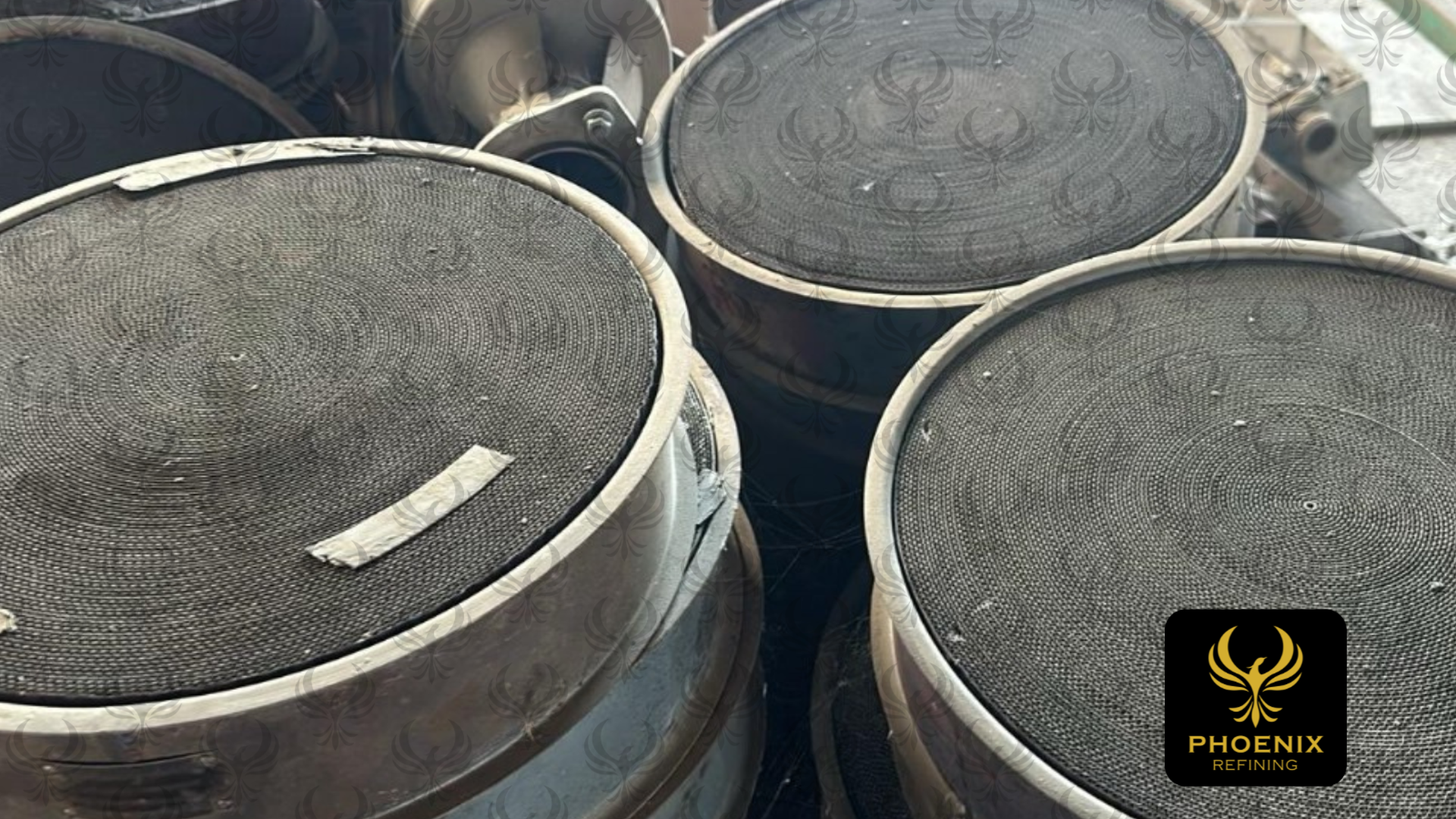
Because primary supply is so rigid, recycling has become increasingly important. In the broader platinum-group metals sector, secondary recovery already accounts for roughly 30 percent of total supply. But iridium recycling differs fundamentally from the recycling of platinum, palladium, and rhodium. The largest pool of recyclable platinum-group metals globally is spent automotive catalytic converters, yet these contain virtually no iridium. As a result, iridium secondary supply must come from far narrower and more specialized loops.
The most important recycling streams are closed-loop industrial systems. Electrodes from chloralkali plants and PEM electrolyzers that carry iridium oxide coatings can be returned for stripping and recoating. Platinum-iridium crucibles used in crystal growth can be melted down and refined at the end of their life. Recovery of spark plugs and electronic scrap is technically feasible, but these sources are fragmented and yield only small quantities. Because the absolute amount of iridium in use is so small and often tied up in long-lived equipment, recycling cannot rapidly create large new supplies. It can, however, become an essential stabilizer, especially if closed-loop systems achieve very high recovery rates. This is also critical from an environmental perspective, since life-cycle assessments show that secondary production of platinum-group metals avoids substantial carbon emissions compared with energy-intensive deep-level mining.
Iridium stands as one of the clearest examples of the complexity of critical minerals in the twenty-first century. It is geologically scarce, metallurgically difficult, geographically concentrated, and economically trapped in a byproduct system that cannot respond normally to price signals. At the same time, its importance to hydrogen, electronics, crystal growth, aerospace, and medicine continues to rise. Global supply is measured not in millions of tonnes, but in mere thousands of kilograms. That makes iridium less of a conventional commodity than a strategic chokepoint within the global technological transition. In the coming years, the ability to secure, conserve, and recycle this tiny but indispensable metal may prove to be one of the defining constraints on the pace of industrial decarbonization and advanced manufacturing itself.