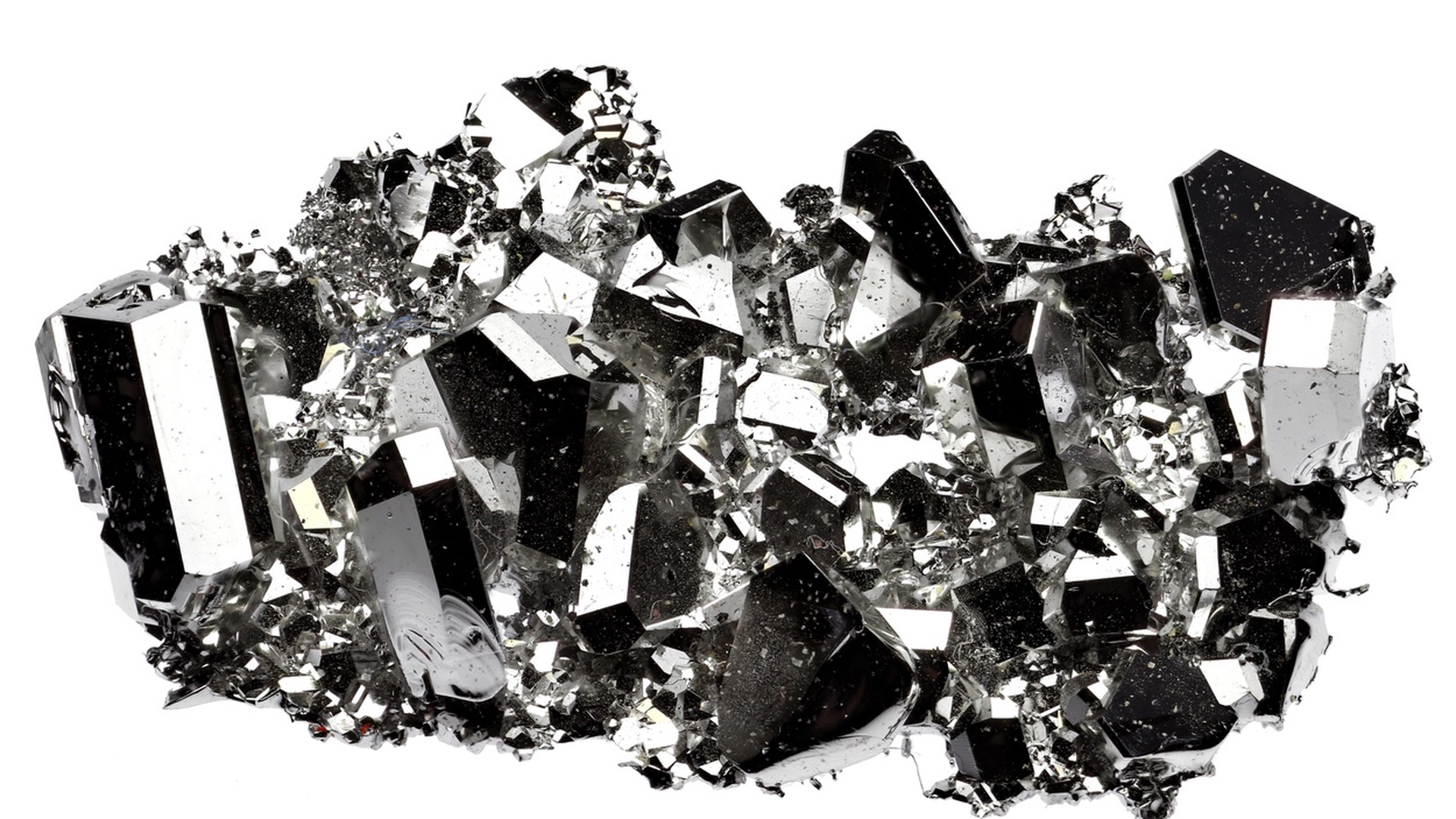
Ruthenium is one of the rarest elements in Earth’s crust and an increasingly important input for advanced technology. Historically used in specialized alloys, electrical contacts, and resistors, it is now gaining strategic importance in semiconductor interconnects, high-density data storage, pharmaceutical catalysts, and green-hydrogen systems. Yet its supply chain is exceptionally concentrated and cannot readily respond to rising demand.
Global primary production is estimated at only about 30 tonnes annually. More than 90% comes from South Africa’s Bushveld Igneous Complex, particularly the UG2 Chromitite Layer, with most remaining production originating from Russia’s Norilsk-Talnakh region. Zimbabwe contributes a small share, while North American output is negligible and the European Union has essentially no primary production.
This concentration creates major operational and geopolitical exposure. South African production is vulnerable to electricity shortages, deep-level mining hazards, labor disputes, and high operating costs. PGM smelters require continuous power so interruptions can reduce production and damage furnaces. Russian supply faces sanctions, logistical constraints, and the risk of export restrictions. A disruption in either country could quickly affect technology and chemical manufacturers worldwide.
Ruthenium is not mined independently. It occurs at extremely low concentrations and is recovered mainly as a byproduct of platinum, palladium, and nickel extraction. Consequently, higher ruthenium prices do not necessarily encourage greater production.
The profitability of PGM mines depends on the combined value of all recovered metals, particularly platinum and palladium. These metals have historically relied heavily on demand from catalytic converters in internal combustion engine vehicles. As battery electric vehicles gain market share, long-term autocatalyst demand is expected to weaken.
This creates a “PGM basket paradox.” Technologies associated with electrification and decarbonization are increasing demand for ruthenium, while the same transition is weakening the economics of the mines that produce it. Falling PGM prices have already encouraged producers to close marginal shafts, postpone expansions, and reduce investment. Once underground mines close, restoring production becomes costly and slow.
Semiconductors may become the most important source of additional ruthenium demand. As chip interconnects shrink below 10 nanometers, copper suffers from rising electrical resistance and requires barrier layers that consume valuable space. Ruthenium is less sensitive to dimensional scaling and may permit thinner or simpler barrier structures. Intel, Samsung, TSMC, Applied Materials, and other industry leaders are exploring ruthenium-based or ruthenium-cobalt architectures for advanced chips.
Ruthenium is also used in magnetic layers for hard-disk drives. Growth in artificial intelligence, cloud computing, and hyperscale data centers is supporting demand for high-capacity drives, including those using heat-assisted magnetic recording technology.
In chemical manufacturing, ruthenium catalysts enable olefin metathesis and other reactions used to produce pharmaceuticals, polymers, agrochemicals, and specialty materials. Ruthenium-based catalysts are especially valuable because they tolerate complex functional groups and can operate more reliably than many alternatives.
Green hydrogen could create another source of demand. Proton-exchange-membrane electrolyzers traditionally use iridium oxide catalysts, but iridium’s extreme scarcity threatens large-scale deployment. Mixed ruthenium-iridium catalysts may reduce iridium requirements while maintaining strong catalytic activity. However, such an approach would shift part of the supply pressure from one scarce PGM to another rather than eliminating it.
Recycling can reduce dependence on primary mines, particularly in closed-loop systems. Spent pharmaceutical and petrochemical catalysts contain relatively high ruthenium concentrations and can achieve recovery rates above 95% at specialized refineries.
Recovery from electronic waste is more difficult. Ruthenium is dispersed in thin films and complex mixtures of metals, ceramics, and polymers. Its purification may also involve ruthenium tetroxide, a highly toxic, volatile, and powerful oxidizing agent that can react violently with organic materials. Only a limited number of specialized refiners possess the equipment and expertise needed to manage this chemistry safely. Recycling, therefore, helps but cannot rapidly eliminate the supply deficit.
The combination of concentrated mining, byproduct dependence, specialized refining, and expanding high-technology demand has made ruthenium a national-security concern. Governments are increasingly examining processed critical minerals and derivative products through trade and industrial-policy mechanisms such as Section 232 of the U.S. Trade Expansion Act.
Tariffs or quotas alone, however, cannot create new geological resources or quickly reproduce sophisticated refining capacity. A more effective strategy would combine allied sourcing agreements, diversified processing, long-term supply contracts, strategic inventories, material-efficiency research, and closed-loop recycling. Ruthenium illustrates a central vulnerability of the technology transition: demand is rising because of advanced computing and clean energy. At the same time, supply depends on a small number of mines supported by weakening traditional markets. Without coordinated action, persistent deficits, price volatility, and geopolitical disruptions could threaten semiconductor, energy, data-storage, and chemical production worldwide.