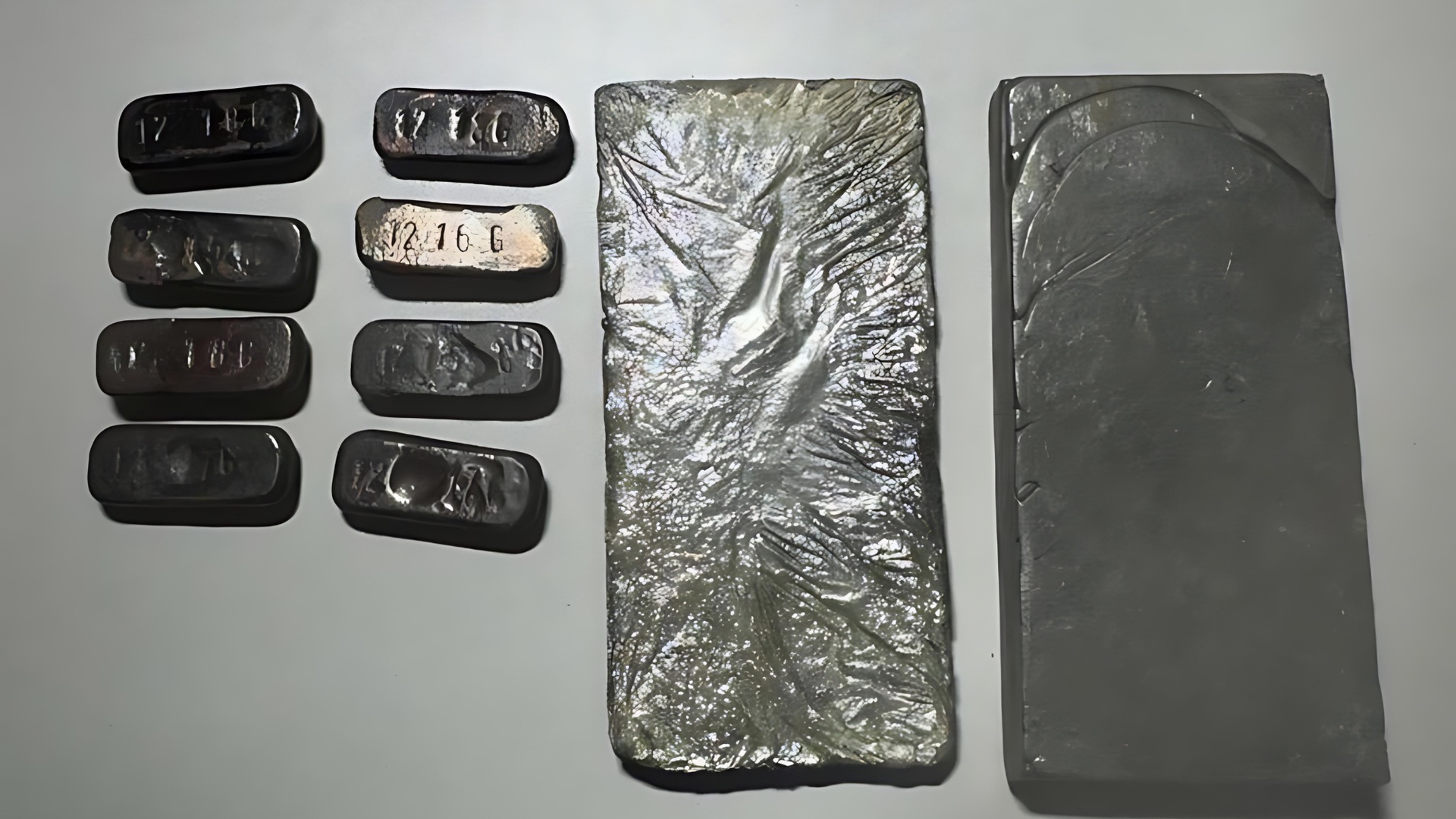
As of mid-2026, the old architecture of the PGM market has fractured. These metals sit at the intersection of the legacy industrial economy and the emerging energy transition. They remain indispensable for catalytic converters, petroleum refining, chlorine production, electronics, and advanced chemical processes. At the same time, they are essential to proton exchange membrane (PEM) electrolyzers and hydrogen fuel cells, making them central to the green hydrogen economy.
That dual importance has elevated PGMs from industrial inputs to strategic assets. Securing resilient and transparent supplies is no longer simply a matter of procurement; it has become a matter of national security. Increasingly, the market is being shaped less by conventional supply-and-demand mechanics than by geopolitical fragmentation, sanctions regimes, logistical chokepoints, and state intervention. With above-ground inventories depleted across much of the complex, even minor disruptions now carry outsized consequences for pricing and industrial continuity.
The vulnerability of the global PGM supply chain begins with geology. Economically viable PGM deposits are rare, geographically concentrated, and costly to develop. South Africa and Russia dominate the global production landscape to an extraordinary degree. South Africa’s Bushveld Complex contains more than 85% of the world’s known PGM mineral resources and accounts for roughly 70% of global platinum production and more than 75% of primary iridium output. Major operators include Anglo American Platinum, Impala Platinum, and Sibanye-Stillwater, whose large-scale mines in the Bushveld remain the backbone of global supply. Anglo American Platinum’s Mogalakwena mine alone produced an estimated 411,600 ounces of platinum in 2023, while Impala’s flagship mine led global output at approximately 710,730 ounces.
Russia provides most of the remaining supply, primarily through Nornickel’s operations in the Norilsk-Talnakh region. Nornickel accounts for about 37.5% of global palladium output and more than 10% of global platinum supply, alongside significant rhodium and iridium production. Combined, South Africa and Russia represent over 95% of global primary PGM production. Smaller contributions come from Zimbabwe, Canada, and minor byproduct recovery in the United States.
This concentration creates a structurally fragile system. It is compounded by the fact that several PGMs, especially iridium, ruthenium, and rhodium, are not mined independently. They are recovered as byproducts during the refining of platinum, palladium, or nickel-bearing ores. Iridium, for instance, occurs at extremely low concentrations and can only be recovered through complex, energy-intensive hydrometallurgical processing.
That means supply is highly inelastic. Producers cannot significantly increase iridium or rhodium output in response to surging demand without also raising the extraction of primary metals such as platinum or nickel. Doing so would risk flooding those larger markets and undermining the economics of the entire operation. In practice, even sharp price increases in minor PGMs do not translate into rapid new supply.
The economics of production are further shaped by the “prill split,” or the natural ratio of metals in a given ore body. Sibanye-Stillwater’s Southern African 4E production in 2025, for example, consisted of roughly 59% platinum, 30% palladium, 9% rhodium, and 2% gold. If palladium demand weakens as it has with the rise of battery electric vehicles, overall basket prices fall, reducing profitability and limiting mine investment. The result is less output not only of platinum and palladium, but also of critical byproducts such as iridium and ruthenium.
These supply rigidities have produced persistent physical deficits across the PGM complex. In 2025, global PGM mine supply fell to 5.51 million ounces, the lowest level in five years, reflecting aging assets, high sustaining costs, and years of underinvestment.
The platinum market alone recorded a deficit estimated between 461,000 and 692,000 ounces in 2025, depending on methodology, marking a third consecutive annual shortfall. Palladium posted a fourth consecutive deficit at 433,000 ounces. Rhodium, iridium, and ruthenium also remained in deficit, with shortfalls of 116,000, 34,000, and 312,000 ounces, respectively.
By 2026, the platinum market is expected to post another deficit of roughly 312,000 ounces. Above-ground platinum stocks have been drawn down to around 9 million ounces. In comparison, readily accessible commercial inventories are estimated at just 3.2 million ounces, less than five months of global demand coverage. That erosion of the physical buffer has made the market acutely sensitive. Any mine outage, logistics disruption, or surge in industrial buying now translates much more quickly into price volatility.
The United States illustrates the strategic vulnerability facing Western economies. USGS Mineral Commodity Summaries 2026 show that domestic mine production has collapsed while import dependence has risen sharply. By 2025, U.S. palladium mine production had fallen to 6,200 kilograms, down from 10,200 kilograms in 2024. Platinum mine production dropped to just 1,800 kilograms from 3,010 kilograms the previous year. Meanwhile, imports surged: palladium consumption imports reached 92,000 kilograms, and platinum imports rose to 99,000 kilograms. Apparent U.S. palladium consumption climbed to 130,000 kilograms.
This divergence between shrinking domestic output and robust industrial demand reveals a severe structural imbalance. American manufacturers in automotive, chemicals, and technology are now heavily reliant on imported PGM supply, much of it originating in politically sensitive regions and transported through vulnerable maritime corridors.
Russia’s role in the PGM market has become central to the geopolitical reordering of supply. Before the escalation of the war in Ukraine, Russian metal flowed freely into Europe and North America. The United Kingdom, for example, sourced roughly 63% of its platinum and 25% of its palladium imports from Russia in 2021.
Since then, sanctions and financial restrictions have steadily tightened. Although Western governments initially avoided comprehensive sanctions on Nornickel to prevent severe industrial disruption, pressure on Russia’s metals sector has intensified. European policymakers have considered bans on Russian platinum, iridium, rhodium, and copper. U.S. sanctions and export controls have increased scrutiny on the wider Russian mining and refining chain. The removal of Russian refiners from the London Platinum and Palladium Market’s good delivery lists has further undermined the acceptability of Russian-origin metal in Western financial centers.
The result has been a durable eastward pivot. Russian PGMs increasingly flow to China and India, often at discounted prices. Western buyers have effectively lost direct access to over a third of the world’s palladium supply and a meaningful portion of platinum. This has intensified competition for South African material and deepened the divide between Western and Asian supply networks.
Broader geopolitical instability is also feeding directly into the PGM market. Escalating tensions in the Middle East, especially around the Strait of Hormuz, have threatened a critical artery for global energy trade. Since PGM mining, smelting, and refining are highly energy-intensive, oil price spikes raise operating costs across the supply chain. For South African producers already contending with electricity shortages and domestic infrastructure failures, higher fuel and energy costs further compress margins. At the same time, elevated oil prices reinforce inflationary pressures, complicating monetary policy and dampening wider industrial growth.
Geopolitical stress also encourages safe-haven flows into hard assets. Platinum, which often trades in some correlation with gold during periods of macro uncertainty, has benefited from this dynamic. Chinese retail investment in physical platinum surged by 96% in 2025 to 402,000 ounces, reflecting both wealth-preservation motives and underlying strategic demand. Shipping risk adds another layer. Higher insurance costs, rerouting around conflict zones, and maritime disruptions all raise friction in a market that already lacks spare physical inventory.
If Russia is no longer fully accessible to Western buyers, South Africa becomes even more critical. But South Africa’s mining sector is constrained not only by geology and power shortages, but also by a decade-long logistics collapse.
The state-owned freight operator Transnet, once the backbone of the country’s industrial economy, has suffered severe operational decline due to corruption, underinvestment, theft, equipment shortages, and governance failures. Over 1,200 kilometers of railway cable were stolen between 2021 and 2023, and disputes over locomotive procurement left significant rolling stock idle. Rail bottlenecks forced mining companies to shift freight onto trucks, raising costs, damaging roads, and contributing to port congestion. The consequences have been severe. Durban ranked near the bottom of global port performance metrics, and by late 2023, more than 60,000 containers were reportedly stranded offshore due to equipment failures and congestion.
In May 2026, South Africa initiated a historic reform by granting network access to 11 private freight rail operators through a slot-leasing system, breaking a century-old state monopoly. Firms including MSC, Grindrod, and a range of regional logistics operators will now operate on key corridors, with initial capacity expected to rise by 24 million tonnes, potentially reaching 52 million tonnes over five years.
For the PGM industry, this is a potentially transformative development. If successful, rail liberalization could restore export reliability, lower logistics costs, reduce dependence on trucking, and improve access to ports. Given Western dependence on South African supply, this reform may serve as an important geopolitical pressure valve. But its long-term success remains uncertain and depends on sustained investment in track, security, signaling, and port coordination.
Among all PGMs, iridium may be the most strategically consequential. It is exceptionally rare and almost entirely dependent on South African byproduct supply, yet it is indispensable for PEM water electrolysis.
In PEM electrolyzers, iridium is used as the catalyst for the oxygen evolution reaction under highly acidic and oxidative conditions. Very few materials can withstand this environment. Ruthenium is more catalytically active, but it degrades too quickly in commercial systems. That makes iridium functionally irreplaceable for many PEM applications. It is also used in platinum-iridium fuel cell catalysts to improve durability in demanding operating conditions.
This has created a severe bottleneck as investment in green hydrogen accelerates. Between January 2020 and May 2026, iridium prices rose from about $52.91 per gram to roughly $278.17 per gram, an increase of more than 425%. Refiners such as Johnson Matthey and Umicore reported pricing near $7,300 to $7,400 per troy ounce in May 2026, and forward expectations remain elevated. The combination of inelastic supply, geographic concentration, and rising demand in the hydrogen sector has made iridium one of the most stressed metals in the global energy transition.
The hydrogen sector is responding in two ways: by using less iridium and by developing technologies that avoid it altogether. Governments and industry are pursuing aggressive reductions in catalyst loading. The U.S. Department of Energy has targeted major cost reductions in PEM electrolyzers, seeking to lower capital costs from about $450/kW to $150/kW and cut hydrogen production costs toward $1/kg. Achieving that requires much more efficient use of scarce catalyst materials.
Recent advances from Rice University, the University of Oxford, and commercial players such as Heraeus Precious Metals have shown that iridium use can be reduced by 70% to 80%, and in some cases by up to 90%, through nanostructuring, single-atom catalysis, and core-shell architectures. These breakthroughs are not just scientific milestones; they are reshaping value creation. In the hydrogen economy, intellectual property around catalyst efficiency may become as strategically important as access to the underlying metal itself.
At the same time, alternative electrolyzer technologies are gaining momentum. Alkaline water electrolyzers, which use abundant base-metal catalysts such as nickel and iron, held about 65% of the market share in 2025. Anion exchange membrane (AEM) electrolyzers are also emerging as an iridium-free alternative that combines lower materials costs with greater flexibility for renewable power integration. In other words, the scarcity of iridium is not only affecting the price. It is altering the technological trajectory of the hydrogen economy itself.
The global PGM market is undergoing a lasting strategic realignment. Geological concentration still matters, but it no longer explains the market on its own. Today, PGM availability, pricing, and trade flows are being determined by sanctions, exchange design, shipping insecurity, infrastructure breakdowns, strategic stockpiling, and the industrial policies of major powers.
China’s GFEX has begun to shift the center of price discovery toward Asia and toward physical industrial consumption rather than purely financial trading. Sanctions on Russia have bifurcated global supply chains and redirected large volumes of metal eastward. South Africa, now more central than ever to Western supply, remains constrained by fragile infrastructure even as rail liberalization offers a possible path toward recovery.
In response, governments are stockpiling critical materials, building alliances such as the MSP, funding domestic processing and recycling, and supporting the development of supply in new jurisdictions. Meanwhile, private capital is increasingly rewarding projects that offer not just resource quality but geopolitical alignment, logistical resilience, and technological adaptability. The result is a market defined by fragmentation and strategic competition. For governments, industrial consumers, and investors, the lesson is straightforward: in the coming decade, security of supply will depend not simply on who owns the resource in the ground, but on who controls the route to market, the pricing benchmark, the refining system, the logistics network, and the technology that reduces dependence on scarce material. In the new PGM order, physical metal remains vital, but control over infrastructure, policy, and innovation is becoming equally decisive.