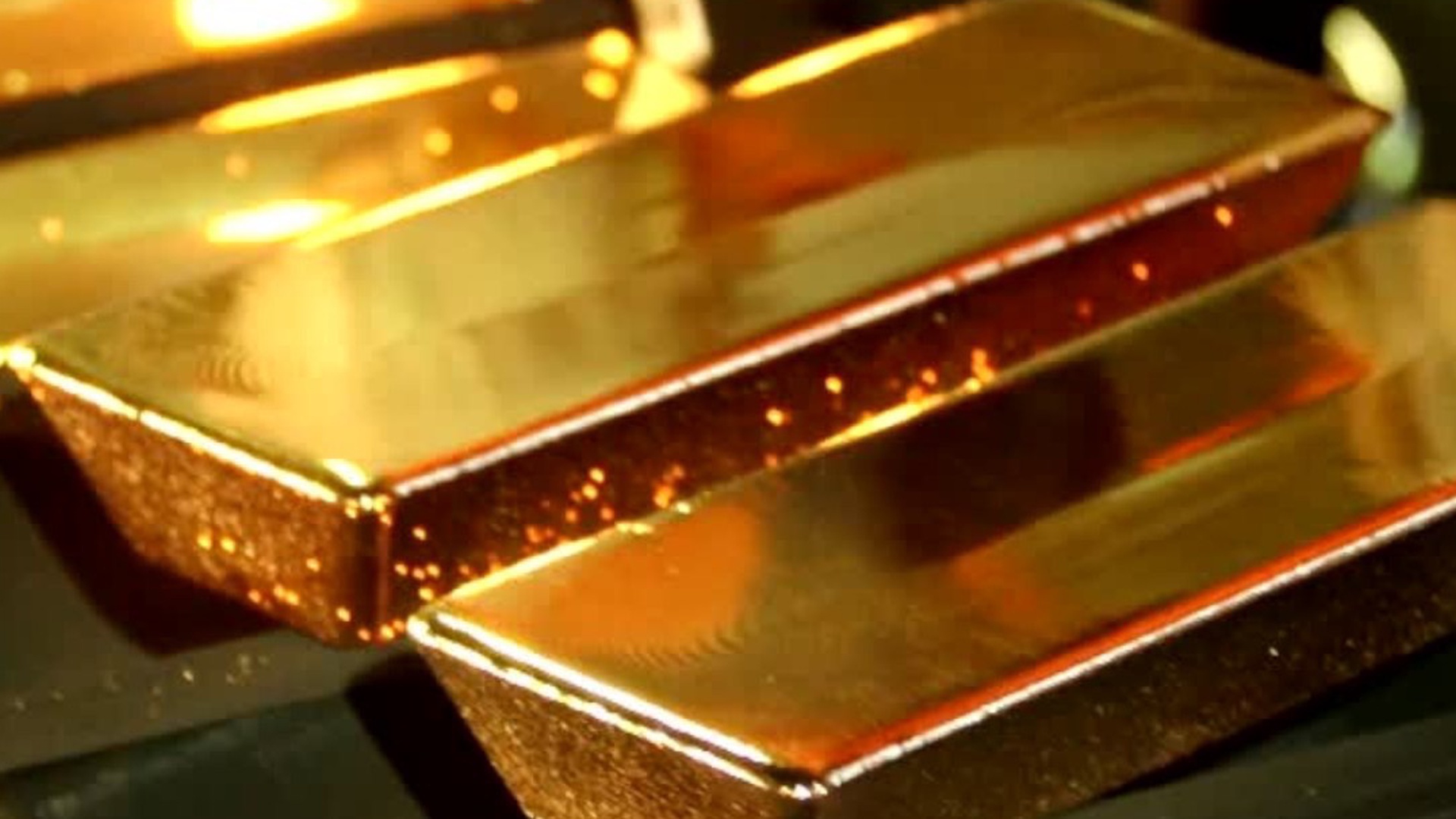
Gold enters the second half of 2026 at a critical crossroads, caught between persistent geopolitical stress, shifting interest-rate expectations, volatile investor positioning, and resilient long-term demand from central banks and global buyers.
After a dramatic start to the year, the metal has settled near the psychologically important US$4,100 an ounce level, far below its late-January record but still historically elevated. According to the World Gold Council's Gold Mid-Year Outlook 2026, gold set more than a dozen all-time highs earlier this year and reached a peak of US$5,405/oz before falling to a June low of US$4,002/oz. That reversal left bullion down roughly 7% year to date and pushed average volatility to about 30%. Yet despite the pullback, gold remains one of the strongest-performing major assets over the past 12 months, a reminder that the market's recent weakness follows an extraordinary multi-year rally rather than a simple collapse in demand.
The World Gold Council said elevated geopolitical risk was the most important contributor to gold's first-half performance, with the US-Iran conflict playing a major role. Renewed US airstrikes on Iran have again placed the region at the center of global market attention, especially after Washington revoked a waiver that had allowed Tehran to sell oil globally.
US Central Command said it launched "powerful strikes" in retaliation for Iranian attacks on shipping in the Strait of Hormuz, one of the world's most important energy chokepoints. Crude prices rose following the escalation, reviving concerns that higher energy costs could feed back into inflation. For gold, the implications remain mixed. Geopolitical shocks typically support safe-haven demand. But if higher oil prices lead investors to expect stickier inflation and tighter monetary policy, that can weigh on bullion because gold does not pay interest. That tension has kept prices in a narrow range above US$4,000/oz, with spot gold recently trading around US$4,101/oz in Asia.
Investors are now watching the Federal Reserve closely, with minutes from its June meeting expected to provide fresh clues on the policy outlook. Gold sold off after that meeting, as new Fed Chair Kevin Warsh struck a more hawkish tone than markets had anticipated. However, weaker-than-expected US jobs data later softened expectations of aggressive tightening and helped pull bullion back above the US$4,000 threshold.
"All the gold and silver markets care about at the moment is the question of whether the US Federal Reserve will raise interest rates or not," said Carsten Menke, head of next-generation research at Julius Baer Group Ltd. He added that Julius Baer does not expect the Fed to raise rates, arguing that part of the inflation pressure should prove temporary. The World Gold Council emphasizes that the policy path will be decisive in the second half. Its valuation framework suggests that, if current macro assumptions broadly hold, including inflation peaking near 3.9% in the second quarter and central banks moving in line with market expectations, gold may trade within roughly 5% of US$4,100/oz through year-end. But the range of possible outcomes is wide. A stronger dollar, higher-than-expected rates, or a broad shift into risk assets could pressure gold further. Conversely, a clear sign of global economic deterioration, a worsening geopolitical backdrop, or a dovish shift in rate expectations could reignite upside momentum. The council said only a strong indication of global deceleration would likely be enough to push gold above US$4,500/oz.
Geopolitics alone did not drive gold's first-half volatility. The World Gold Council's Gold Return Attribution Model found that momentum, investor positioning, and profit-taking also played major roles. After a powerful three-year bull run, gold's surge to record highs triggered a wave of profit-taking. By June, the metal had fallen more than 20% from its peak, entering bear-market territory by conventional measures. Still, analysts note there is little evidence that investors have built large-scale short positions against gold, suggesting the pullback has been driven more by liquidation and caution than by outright bearish conviction. This distinction matters. If investors are not heavily short, downside pressure may be weaker. But if gold remains below key technical levels, especially US$4,000/oz, further selling could still accelerate.
The World Gold Council warned that sustained trading below US$4,000 could trigger additional weakness. However, it also noted that historically, declines of more than 10% from current levels have tended to attract long-term buyers across multiple geographies.
One of the strongest pillars beneath the gold market remains central-bank demand. China's central bank continued buying gold in June, extending its longest accumulation streak since at least 2015. The purchases underscore Beijing's commitment to diversifying reserves despite recent price volatility.
The World Gold Council's latest central-bank survey also indicated that more central banks than ever expect to increase their gold reserves over the coming year. Menke described central-bank buying as "the strongest structural force in the market," though he cautioned that recent price damage means it may take time for gold to fully regain its footing. This structural demand is a key reason the World Gold Council continues to focus on gold's resilience even after the sharp correction from January's highs.
Another important theme in the council's outlook is the increasingly global nature of gold price formation. Much of this year's price movement occurred during Asian and US trading sessions, highlighting the growing influence of Asian investors in global gold markets. That matters because US financial conditions do not solely drive gold. While the Fed, the dollar, and Treasury yields remain crucial, demand also comes from consumers, institutional investors, central banks, and long-term savers across Asia, the Middle East, Europe, and emerging markets.
Juan Carlos Artigas, regional CEO for the Americas and global head of research at the World Gold Council, said this year's market action has reinforced gold's identity as a global asset. "The gold market has made something clear this year: it is a genuinely global asset," Artigas said. "The gold price reflects macroeconomic and geopolitical dynamics around the world, not just in the US, which is part of what makes it such a valuable lens for investors." He added that while rates will remain a key variable, they are not the only force shaping the market. "Gold has come under pressure near US$4,000/oz this year and previously rebounded, supported by organic demand from long-term buyers across multiple geographies," Artigas said. "That structural demand from central banks, institutional investors, and consumers worldwide is what underpins gold's resilience."
Gold's second-half outlook is therefore finely balanced. On one side are familiar headwinds: a potentially stronger dollar, elevated real rates, hawkish central-bank rhetoric, profit-taking after a historic rally, and renewed appetite for risk assets. On the other side are powerful supports: geopolitical instability, central-bank accumulation, inflation uncertainty, weaker growth signals, and long-term demand from investors seeking diversification.
For now, gold appears anchored near US$4,100/oz, with the market waiting for clearer direction from the Fed, the dollar, oil prices, and the Middle East. A sustained break below US$4,000/oz could test investor confidence, while a deterioration in global growth or geopolitical conditions could quickly restore gold's upward momentum. The result is a market that is no longer simply chasing record highs but one that remains deeply sensitive to the world's biggest macroeconomic and political fault lines. In the second half of 2026, gold may once again prove less a commodity than a real-time gauge of global uncertainty.