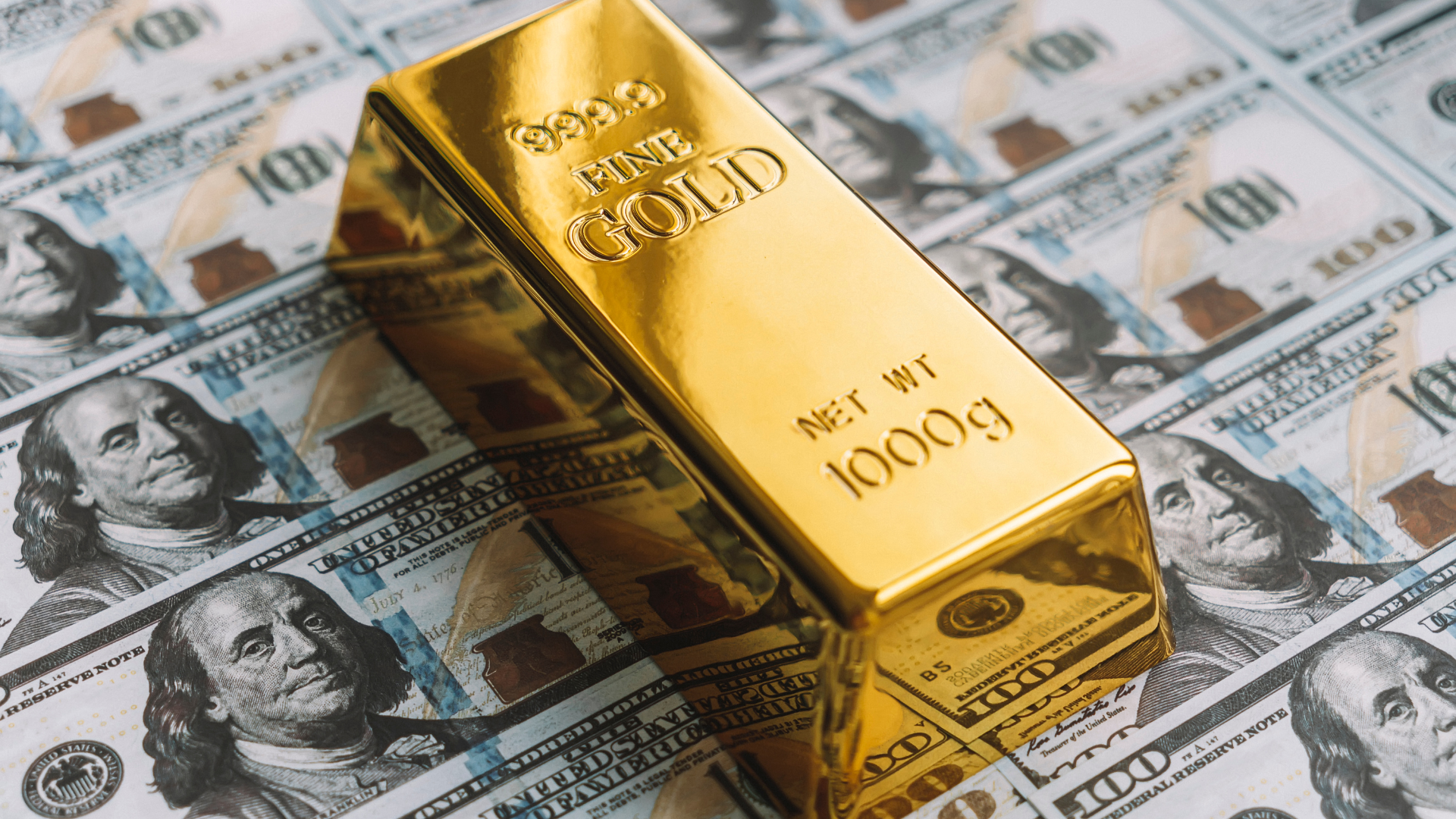
Gold prices drifted higher on Friday, with XAU/USD trading at $4,065, up 0.38%, as the precious metal navigated a complex landscape of geopolitical tensions, shifting Federal Reserve expectations, and dramatic swings in energy markets. The yellow metal rallied to $4,065 per troy ounce at London's 3 pm bullion-market auction, marking a 1.7% rise from last Friday's eight-month week-end low, only its sixth weekly gain in the 21 weeks since the US-Iran.
The advance came even as the Greenback stood firm. The US Dollar Index (DXY) edged up to 101.46 and is poised to end the week with gains of over 0.60%, tracking the buck's value against a basket of six currencies. Countering the dollar's strength, however, was a decline in US Treasury yields, with the 10-year benchmark note dropping three basis points to 4.667%, providing crucial support for the non-yielding metal. Bullion also drew strength from easing oil prices. West Texas Intermediate (WTI), the US crude benchmark, fell 3.83% to $88.79, though it remains set to finish the week with gains of over 8.50%. Brent crude, meanwhile, eased back from Thursday's dramatic spike above $100 per barrel on the ICE exchange's September contract.
The latest tranche of geopolitical news has had little impact on the Gulf conflict. Reports indicated Pakistan is looking to resume US-Iran talks at China's urging, while President Trump revealed he is losing patience over Iran, confirming that China and Russia are not giving or selling weapons to Tehran. On the ground, fighting intensified on multiple fronts. Iran struck targets in Kuwait, Jordan, Bahrain, and Iraq, while US military strikes killed four people in Ahvaz, western Iran. Oil tanker traffic through the Strait of Hormuz fell to its lowest level since May, even as Yemen's Houthi rebels denied blockading the Bab el-Mandeb Strait.
The Russia-Ukraine war also escalated. US talks with Moscow ended with the Kremlin's Sergei Lavrov telling Secretary of State Marco Rubio that continued US arms sales to Ukraine are "unacceptable." Ukrainian drones struck three more warehouses of Russia's Wildberries e-commerce platform, while a Russian missile killed 10 people and injured 100 at a defense industry event near Kyiv.
Money markets continued to increase the odds of a Federal Reserve rate hike at next week's meeting. While the Fed is projected to keep rates unchanged on July 29 with a 59% chance of doing so, a 25-basis-point hike now has nearly a 41% probability. For September, the odds of a rate increase stand at 84%, according to Prime Terminal data. The likelihood of a July hike has jumped by more than 20 percentage points this week alone, and year-end Fed Funds rate forecasts have set new lifetime highs. The rate pressure comes as borrowing costs surge globally: Germany's 10-year Bund yield hit 2011 levels, the US 30-year Treasury reached 2007 levels, and Japan's 5-year JGB set new record highs.
Friday's US data offered a mixed picture. The S&P Global Manufacturing PMI slipped from 53.9 to 53.8, missing expectations of 54.5, while the Services PMI jumped from 51.2 to 53.6, well above forecasts of 51, with the World Cup in the country boosting the figure. Traders will now eye US retail sales, durable goods orders, jobs data, Q2 GDP figures, and the Personal Consumption Expenditures report alongside the Fed decision.
Precious metals have rallied in recent days after a sustained period of selling pressure, with spot silver up around 6.3% this week to $59.47 an ounce, reversing 75% of last week's dramatic 6.8% plunge. But both metals remain far below the all-time highs set in late January, when spot gold hit $5,589.38/oz and silver reached $121.67/oz. ING commodities strategists Warren Patterson and Ewa Manthey attributed recent gains to "bargain hunting after recent weakness" rather than "a material shift in the geopolitical or macroeconomic backdrop." They noted that while Middle East tensions remain supportive, "markets are weighing softer US economic data against the inflationary risks from higher energy costs." The pair suggested silver "could continue to outperform if strength in industrial metals persists alongside safe-haven demand," citing support from improving sentiment across the industrial metals complex, particularly copper.
Bank of America was more bearish, warning that gold could deteriorate further after recording its worst quarter in 13 years. "A death cross signal, elevated net-long positioning and similarities to major peaks raise the risk of a longer, deeper correction," BofA said in a July 16 note. UBS is similarly skeptical of silver, cutting its attractive entry point from around $55/oz to a range of $48-$50/oz. "Silver faces a top-down backdrop that offers investors little impetus to increase long positions," strategist Dominic Schnider wrote, adding that "with investment demand patchy, silver prices have yet to find a solid floor."
Industry voices remain more optimistic. Diane Garrett, CEO of gold and silver developer Hycroft Mining, called the recent price deterioration a "normal correction," insisting "the market is not a broken bull market." She pointed to gold surpassing US Treasuries as the number one asset class and "17 straight months of central bank buying" while highlighting silver's irreplaceable role in the AI revolution: "There's no substitute."
Despite Friday's gains, gold's downtrend remains intact. The market structure would only be compromised if XAU/USD climbs above the June 17 cycle high of $4,382. The 50, 100, and 200-day Simple Moving Averages all lie above the spot price, and sellers continue dragging prices back below a resistance trendline. Momentum also points lower, with the Relative Strength Index (RSI) remaining bearish, making the path of least resistance downward. On the downside, first support sits at $4,000, followed by the year-to-date low of $3,941. A breach of those levels would lead to the October 28 low of $3,886, with further support at the swing high-turned-support of $3,500 from April 22.
For buyers to regain control, they must first clear $4,100. Above that, the weekly high of $4,165 is the next target, followed by resistance at $4,200. For now, gold remains caught between competing forces, with safe-haven demand and softer yields supporting it, but a firm dollar, rising rate expectations, and the lingering risk of a prolonged US-Iran conflict are holding it back.