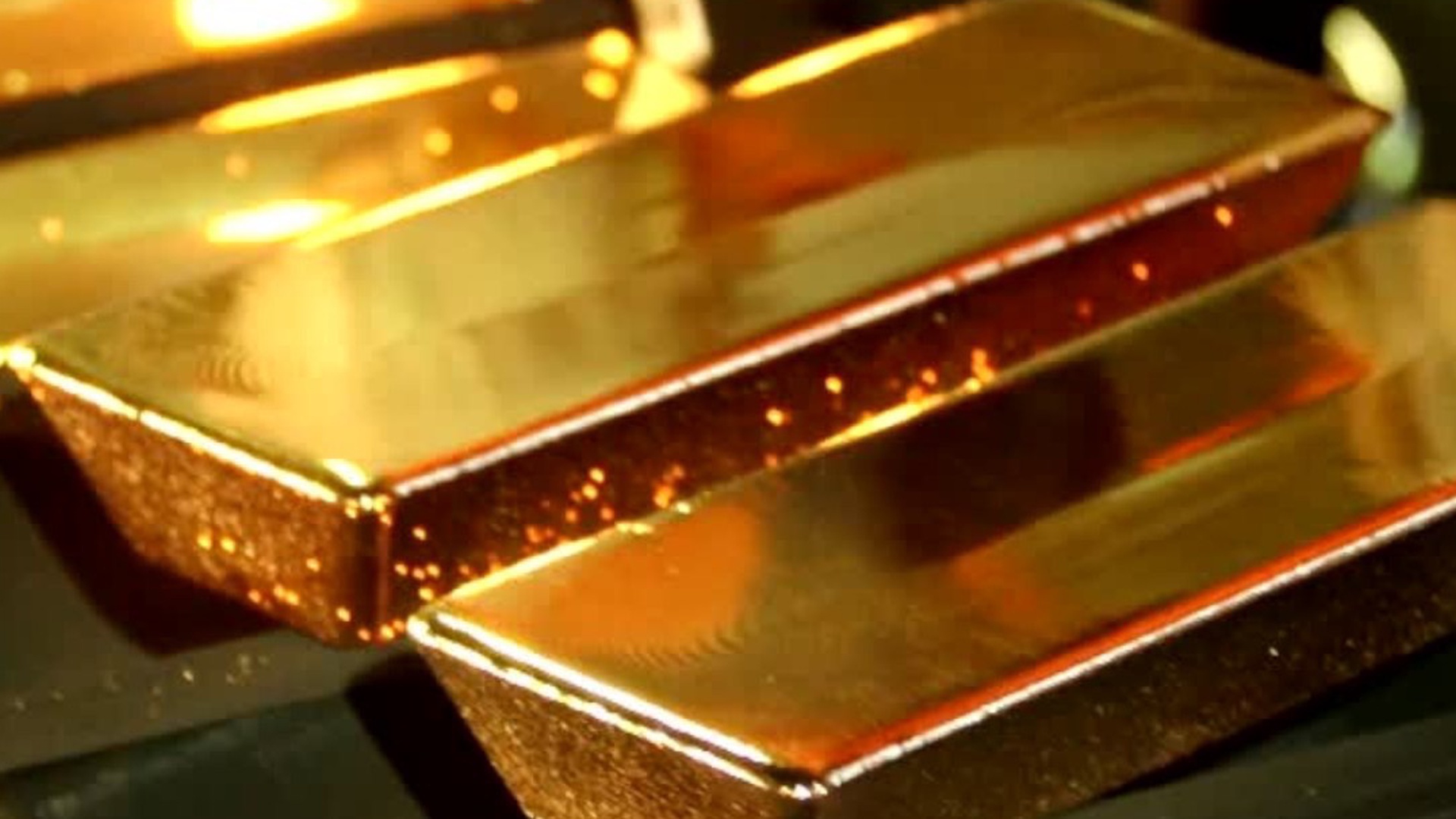
Gold prices rose nearly 1% on Monday, rebounding from an over one-week low hit in the previous session, as signs of progress in U.S.–Iran peace talks pushed oil prices lower and helped ease inflation concerns.
Spot gold was up 0.9% at $4,199.07 per ounce by 10:00 a.m. ET, after touching its lowest level since June 11 on Friday. U.S. gold futures for August delivery slipped 0.7% to $4,216.30 per ounce. The recovery came as investors weighed falling energy prices against growing expectations that the Federal Reserve could raise interest rates later this year, a factor that could limit further gains for bullion.
The main driver behind gold’s rebound was renewed optimism around talks between the United States and Iran. High-ranking officials from both countries wrapped up their first round of discussions in Switzerland on Monday, with mediators saying the talks had made “encouraging progress.”
The discussions began on Sunday under a memorandum of understanding reached last week to extend a fragile ceasefire from April for at least another 60 days. Vice President JD Vance said the talks had made progress and confirmed that the Strait of Hormuz remained open.
However, tensions remained over Lebanon and the Strait of Hormuz, a vital shipping route for global oil supplies. “Energy prices will remain a key short-term driver for the precious metal space,” said Ole Hansen, analyst at Saxo Bank. He added that the “bumpy talks” between Washington and Tehran still appeared to point toward a deal that could add fresh barrels of crude to the market, putting pressure on oil prices and supporting gold.
Oil prices fell sharply after the diplomatic developments. Brent crude futures dropped more than 3% following the announcement and were later down $1.74, or 2.16%, at $78.83 a barrel by 1304 GMT. Prices had earlier climbed to $82.30 after threats from U.S. President Donald Trump to restart the war with Iran and an announcement from Tehran that it had again closed the Strait of Hormuz.
U.S. West Texas Intermediate crude futures were at $75.87 a barrel, down 73 cents, ahead of the contract’s expiry later Monday. The more-active August contract lost $1.11, or 1.46%, to $74.74 a barrel. Iranian Foreign Minister Abbas Araqchi said Tehran had secured waivers for oil and petrochemical exports, the release of some frozen assets, and the launch of a reconstruction and development plan for Iran. UBS analyst Giovanni Staunovo said Iran had resumed oil exports that a U.S. naval blockade had blocked earlier this month. “The ‘release’ of those barrels is an additional supply for the market,” Staunovo said.
Signs of improving shipping activity also pressured crude prices. Two crude tankers carrying just under 2 million barrels of oil sailed through the Strait of Hormuz on Monday, ship-tracking data showed. That suggested traffic was beginning to recover after weaker flows on Sunday, when concerns over safe passage through the waterway weighed on activity.
The United Arab Emirates, Kuwait, and Iraq have also offered more oil to customers in the past week. Iraq plans to restore crude production gradually to between 4.2 million and 4.3 million barrels per day, its deputy oil minister for upstream affairs said Sunday.
ANZ expects around 2 million to 3 million barrels per day of supply to be restored in the first four weeks. However, it warned that a full recovery remains difficult. “Early gains will be driven by logistics rather than production,” ANZ said. “Later gains will depend on upstream and refinery recovery. Full restoration is unlikely this year.”
The bank added that another 2 million to 3.5 million barrels per day could potentially be recovered in the third quarter of 2026 if stability holds, while 1 million to 2 million barrels per day of supply could be permanently or semi-permanently lost.
Falling oil prices can support gold by reducing inflation concerns and easing pressure on central banks to maintain tight monetary policy. Gold, often viewed as a hedge against inflation and geopolitical uncertainty, can benefit when energy prices decline alongside the dollar and bond yields.
Earlier, gold gained more than 1% on Thursday as oil prices slipped amid optimism over a possible end to the conflict in Iran. Spot gold rose 0.8% to $4,466.89 per ounce, while U.S. gold futures for August delivery gained 0.9% to $4,508.00. Reports of a ceasefire deal between Israel and Lebanon also pressured the dollar and bond yields, helping gold remain above its 200-day moving average, independent metals trader Tai Wong said.
Israel and Lebanon said late Wednesday that they had agreed to implement a ceasefire, raising hopes for a wider agreement between Washington and Tehran. Oil prices fell more than 3% on that news amid hopes that the Strait of Hormuz could reopen fully. A weaker dollar makes gold cheaper for holders of other currencies, while lower Treasury yields increase the appeal of bullion because it does not pay interest.
Despite Monday’s gains, expectations of higher U.S. interest rates continue to limit gold’s upside. Traders now see an 89% chance of a rate hike in December, up from 61% before the Federal Reserve’s meeting last week, according to the CME FedWatch Tool. Nine of the Fed’s 19 policymakers believe they will need to raise the policy rate this year.
Higher interest rates tend to weigh on gold because the metal does not generate income, making it less attractive compared with interest-bearing assets. Bank of America said in a note Friday that its $6,000-per-ounce gold price target now appears unlikely. The bank said the market would need to fully price out rate hikes for gold to reach that level. However, it added that the original basis for its bullish gold call, unorthodox U.S. macroeconomic policy, remains intact.
Gold hit a record high of $5,594.82 per ounce on Jan. 29 but has fallen since the beginning of the Iran conflict in late February. Elevated interest rates have continued to weigh on the non-yielding metal. “Record highs for gold this year seem increasingly unlikely unless we get a clean, lasting ceasefire with Iran that opens Hormuz, allowing energy prices to drop and markets to stop worrying about potentially higher rates,” Wong said.
Investors are now focused on Friday’s U.S. employment report for May. The data could offer fresh perspectives on the health of the labor market and help shape expectations for the Federal Reserve’s next policy moves.
Other precious metals also gained on Monday. Spot silver rose 2.4% to $66.46 per ounce, platinum gained 1.7% to $1,691.54, and palladium was up 1% at $1,271.25. Earlier in the week, silver had risen 1.1% to $73.52 per ounce, platinum gained 1% to $1,877.66, and palladium added 0.9% to $1,313.50, supported by the same combination of weaker oil prices, a softer dollar, and lower bond yields.
Gold’s rebound on Monday showed how closely developments in energy markets and global diplomacy are tied to precious metals. Progress in U.S.–Iran talks eased fears of a prolonged disruption to oil supplies, pushed crude prices lower, and reduced some inflation concerns, giving bullion room to recover from recent losses.
However, the outlook for gold remains uncertain. While lower oil prices, a softer dollar, and falling bond yields can support the metal, expectations of another Federal Reserve rate hike continue to limit investor enthusiasm. For gold to regain stronger upward momentum, markets may need clearer evidence of lasting stability in the Middle East and a shift away from tighter U.S. monetary policy. Until then, gold is likely to remain sensitive to headlines from the U.S.–Iran negotiations, movements in oil prices, and incoming U.S. economic data.