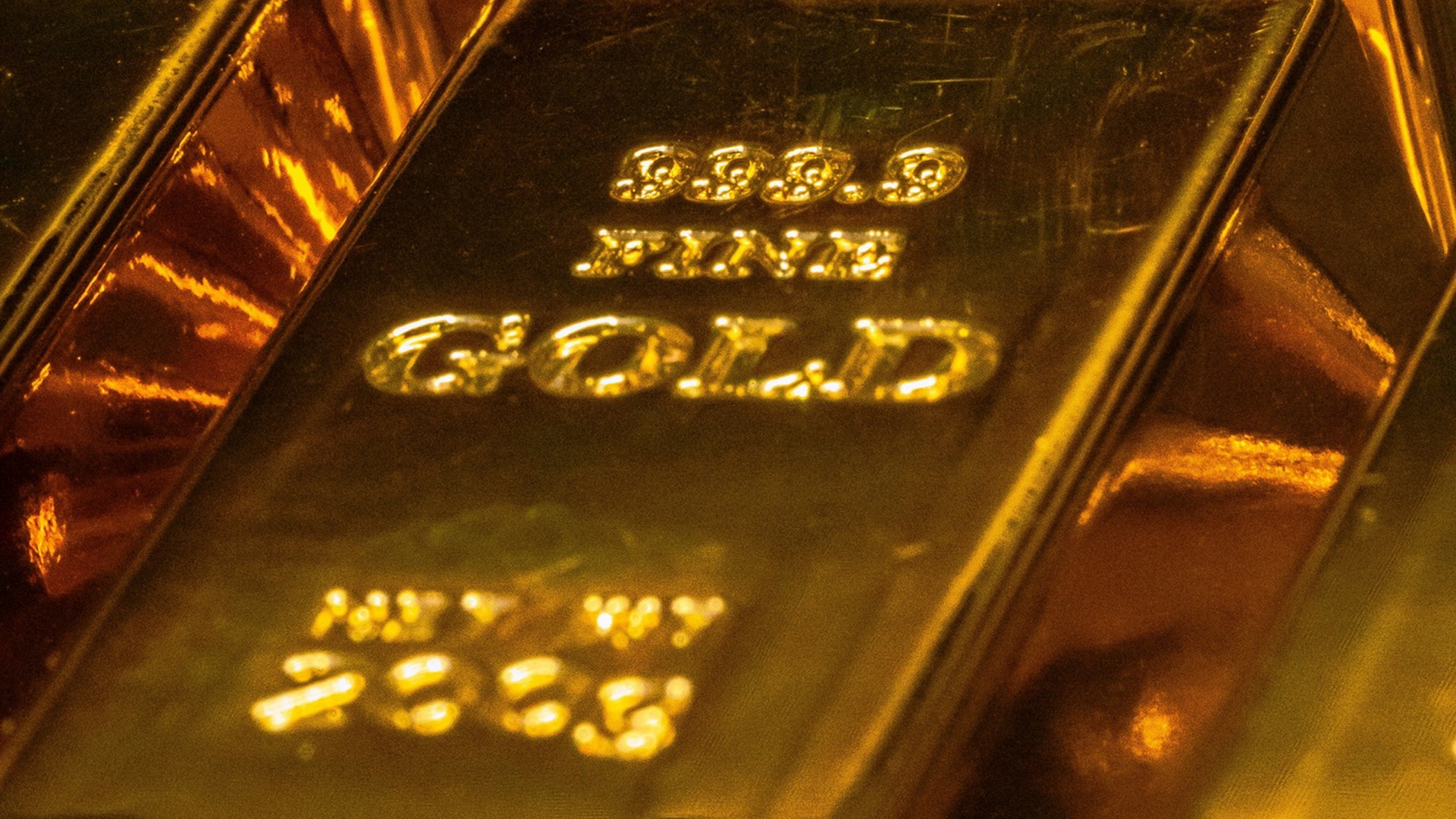
Gold prices steadied on Tuesday after a punishing multi-session sell-off. However, the metal remained firmly under pressure as rising U.S. Treasury yields, a stronger dollar and war-driven inflation fears continued to weigh on sentiment.
Spot gold was trading around $4,370 to $4,413 an ounce, while April gold futures hovered near $4,371. Even with Tuesday’s stabilization, bullion is still down more than 15% since the start of the Middle East conflict and about 21% below its late-January record high of $5,594.82 an ounce. Last week alone, gold fell almost 10%, marking its worst weekly showing since September 2011.
The rebound came after dramatic intraday swings earlier in the week, when gold briefly slumped to a four-month low near $4,098 before recovering sharply.
Gold is traditionally viewed as a safe-haven asset during periods of war and political turmoil, which makes its recent decline seem counterintuitive. Initially, that safe-haven pattern held: bullion surged above $5,400 in the early days of the Iran conflict. But the move quickly reversed.
The main reason is that the conflict has pushed energy prices sharply higher, and markets are increasingly treating it as an inflation shock rather than simply a geopolitical risk. Higher oil and gas prices raise concerns that inflation will remain stubborn, making it less likely that the Federal Reserve will cut interest rates aggressively.
That shift is particularly damaging for gold because bullion does not generate income. When interest rates and bond yields rise, investors can earn better returns in cash and government bonds, reducing the appeal of holding non-yielding precious metals.
The macro backdrop has turned decisively against gold in recent weeks. The yield on the 10-year U.S. Treasury was around 4.384% on Tuesday, up about five basis points, while the U.S. dollar index rose 0.4%.
A stronger dollar tends to hurt gold because bullion is priced in U.S. currency. When the dollar rises, gold becomes more expensive for overseas buyers, which can weaken demand. At the same time, higher Treasury yields raise the opportunity cost of holding gold.
Federal Reserve Chair Jerome Powell added to that pressure last week by warning that rising energy prices would push up headline inflation and by signaling that interest rates may need to remain mildly restrictive for longer. That prompted traders to scale back expectations for rate cuts, further strengthening both the dollar and bond yields.
Analysts say the sell-off has not been driven solely by macroeconomics. Market positioning and liquidity stress have also played a major role.
Gold entered this period of turmoil after a huge rally, rising more than 60% in 2025 and over 64% last year. That left many investors sitting on substantial gains. As broader markets turned volatile, some of those investors sold gold to lock in profits, raise cash or meet margin calls elsewhere in their portfolios.
Rajat Bhattacharya of Standard Chartered said this kind of pattern is common during periods of market stress, when investors liquidate highly tradable assets to cover losses elsewhere. Suki Cooper, also at Standard Chartered, noted that gold often comes under pressure for several weeks after a shock because it is one of the most liquid assets available.
Frank Monkam of Buffalo Bayou Commodities also pointed to deleveraging among retail investors and selling by emerging-market participants, including official institutions seeking to preserve foreign-exchange reserves amid rising energy costs.
Exchange-traded fund outflows have also amplified the recent decline. The SPDR Gold Trust and iShares IAU, the two largest physically backed gold ETFs in the United States, have both shrunk since the conflict began, together shedding more than 66 tonnes of bullion this month. That puts them on track for their first net monthly outflow since May 2025.
There are also signs that some central banks or sovereign entities may be turning to gold sales or swaps to manage currency pressures. Bloomberg reported that Turkey’s central bank had discussed gold-for-foreign-currency swaps in London, potentially to help defend the lira amid conflict-related volatility. This matters because official-sector demand has been one of the strongest pillars of the long-term gold bull market. According to the World Gold Council, central banks bought a net 863 tonnes of gold in 2025, the fourth-largest annual expansion on record.
Rather than acting as a straightforward tailwind for gold, the Middle East conflict has intensified market volatility across asset classes. Fighting between the U.S.-Israeli alliance and Iran has continued, even as President Donald Trump said talks were underway to end the conflict.
In another sign of escalating economic pressure, Iran has begun charging transit fees to some commercial vessels transiting the Strait of Hormuz, a vital route for global energy supplies. That has heightened concerns over oil supply disruptions and inflation.
At the same time, shifting political headlines have caused violent moves in gold prices. In one of the week’s most dramatic sessions, gold plunged before rebounding by roughly $400 after Trump said planned strikes on Iranian energy infrastructure would be postponed for five days pending continued dialogue. Iran later denied any communication with the United States, but the market had already reacted to the possibility of de-escalation.
Despite the recent collapse, some analysts argue that gold may simply be undergoing a sharp correction rather than entering a lasting bear market. One reason is technical support. Gold found buyers near its 200-day simple moving average, around $4,092, suggesting that longer-term investors may still be willing to step in at lower levels. As long as prices remain above that area, some market participants believe the broader uptrend remains intact.
Zavier Wong of eToro said gold’s rise to record highs was driven by more than inflation. It reflected deeper concerns about fiscal deficits, geopolitical fragmentation and central banks diversifying away from dollar reserves. After such a powerful rally, he said, some unwinding was inevitable as investors reduced exposure in a choppier market.
Even as sentiment turns bearish in the short term, many market watchers remain constructive on gold’s long-term outlook. The structural case for bullion has not disappeared: geopolitical tensions remain elevated, fiscal deficits remain large, debt burdens are rising, and central banks continue to diversify their reserves. The de-dollarization trend, which has encouraged many non-Western central banks to accumulate gold, also remains in place. Those forces helped drive gold’s strong gains over the past year and continue to support the argument that bullion retains an important role as a store of value and portfolio hedge.
Major investment banks still expect prices to recover over time. UBS forecasts $6,200 per ounce by September 2026, while Deutsche Bank and Société Générale have reiterated targets of around $6,000 by the end of 2026.
If inflation cools, economic growth weakens, or the Federal Reserve turns more dovish, gold could regain some of its lost appeal. Falling yields and a softer dollar have historically been among the strongest tailwinds for bullion. A renewed escalation in the Middle East could also revive safe-haven demand. However, recent trading suggests geopolitical fear alone is not enough when monetary policy is moving against the metal.
For now, gold is caught between immediate macro headwinds and a still-supportive longer-term story. Tuesday’s stabilization may indicate that the worst of the panic selling is easing, but the metal remains well below its highs and vulnerable to further swings. Whether this proves to be a temporary correction or the start of a deeper downturn will largely depend on inflation, interest rates, and the dollar in the weeks ahead.