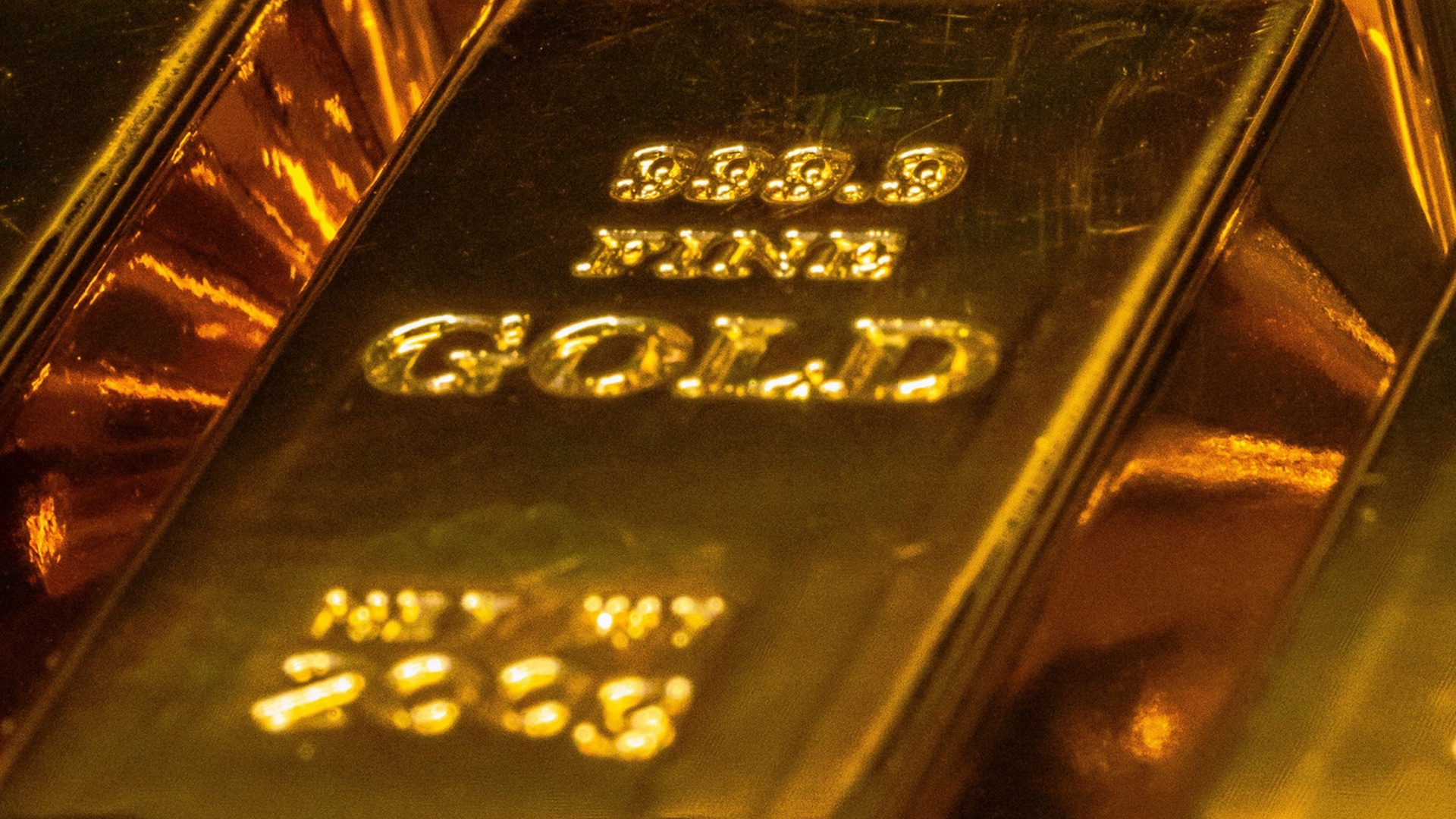
Gold prices soared past $4,100 per ounce on Monday, bolstered by a combination of political developments, dovish monetary policy expectations, and a renewed risk appetite among investors. The sharp rebound not only ended a two-week consolidation phase but also reignited bullish sentiment in the precious metals market, signaling a possible resumption of this year’s remarkable rally. The surge in bullion came as investors welcomed rising hopes for a resolution to the U.S. government shutdown, alongside comments from President Donald Trump suggesting Americans could receive a “tariff-linked dividend” of at least $2,000 per person. These policy proposals, viewed as fiscally expansionary, heightened concerns about future inflation, a traditionally positive driver of gold markets.
At one point on Monday, December gold futures (GC=F) rose more than 2% to trade at $4,120.20 per ounce, after initially spiking $112, their largest one-day jump since May, according to Kitco. As of early Tuesday trading, gold extended gains, reaching a three-week high near $4,146.
The momentum behind gold is partly due to what analysts are describing as a “run-it-hot” policy environment. Daniela Hathorn, senior market analyst at Capital.com, noted that the potential for an expansive fiscal approach, including stimulus payments and tariff rebates, is reviving inflationary concerns. In this ‘run-it-hot’ environment with governments spending more even as inflation remains above target, gold’s renewed strength may signal investors hedging against hotter inflation and renewed policy uncertainty,” Hathorn said.
Trump’s tariff rebate proposal, which Treasury Secretary Scott Bessent hinted might take the form of a tax break, evoked memories of the 2020-2021 stimulus era. Such measures, though controversial, tend to weaken currency values and intensify investor demand for inflation hedges like gold.
The rally also coincides with growing expectations of another Federal Reserve rate cut in December. The prolonged government shutdown had suspended the release of crucial economic data, leading to uncertainty around inflation and employment trends. However, the Senate’s advancement of a bill on Sunday to fund the government, potentially ending the longest shutdown in history, is changing the central bank’s calculus.
Once the shutdown ends, analysts expect a flood of delayed data, likely to show a deteriorating economic outlook, strengthening the case for further easing. Lower interest rates weaken the appeal of yield-bearing assets, making gold more attractive by comparison.” The absence of official reports will make it difficult for policymakers to assess the trajectory of inflation and the job market,” Bloomberg reported. But with confidence growing in a shutdown resolution, some analysts believe the Fed will move forward with easing policy.
This week’s price action follows a turbulent October that saw gold briefly soar to an all-time high of $4,374 on October 20 before rapidly correcting to as low as $3,901.90. Technical analysts now believe the correction has run its course and that the market is positioned for a continuation of the broader uptrend.
Gary Wagner of Kitco noted that Monday’s breakout above the 61.8% Fibonacci retracement level ($3,953) from the September rally suggests the consolidation phase has likely ended. “The strength of today’s advance and the supportive macroeconomic backdrop increasingly favor further gains in the final weeks of 2025,” Wagner said.
The December gold contract now targets resistance at $4,200 and potentially $4,250 in the near term, while support has been established around $4,050. Silver also rallied in tandem, up nearly 4% to trade just above $50 an ounce, its highest in three weeks.
Gold has soared by more than 55% year to date and is on pace for its best annual performance since 1979. The rally has been underpinned by a variety of structural factors, including record central bank purchases, rising geopolitical tensions, heavy inflows into exchange-traded funds (ETFs), and increased demand for bars and coins.
The so-called “debasement trade” remains a key theme, as investors move out of traditional fiat assets and sovereign debt into harder stores of value amid rising fiscal deficits and global monetary easing.
While Macquarie Group recently suggested gold may have peaked, other major voices on Wall Street are maintaining a bullish tone. UBS Global Wealth Management CIO Ulrike Hoffmann-Burchardi reaffirmed the firm’s 12-month price target of $4,200 per ounce, with upside potential toward $4,700 in the event of further political or market turmoil. Goldman Sachs has an even more ambitious view, projecting gold to reach $4,900 by late 2026.
Adding to the positive sentiment were signs of de-escalation in global trade tensions. Over the weekend, the U.S. and China agreed to suspend port fees and halt investigations into maritime practices, reflecting a broader thaw in bilateral relations following a recent summit between the nations’ leaders. President Trump also indicated progress on a trade deal with India, which, if realized, could further reduce global economic uncertainty and support safe-haven assets like gold.
While some caution remains especially given the lack of consensus among Fed governors regarding the next policy move the technical setup and supportive economic fundamentals suggest gold remains in a strong position.“The medium-term drivers that underpin gold’s constructive bias remain intact,” said Christopher Wong, strategist at Oversea-Chinese Banking Corp. “Rate cuts, geopolitical risk, and currency debasement will continue to make gold an attractive asset well into 2026.”
With the inflation narrative potentially reinvigorated by fresh fiscal stimulus proposals and markets increasingly pricing in further rate cuts, bullion looks poised to extend its historic rally. For gold investors, the message is clear: the precious metal’s luster remains strong and possibly just getting started again.