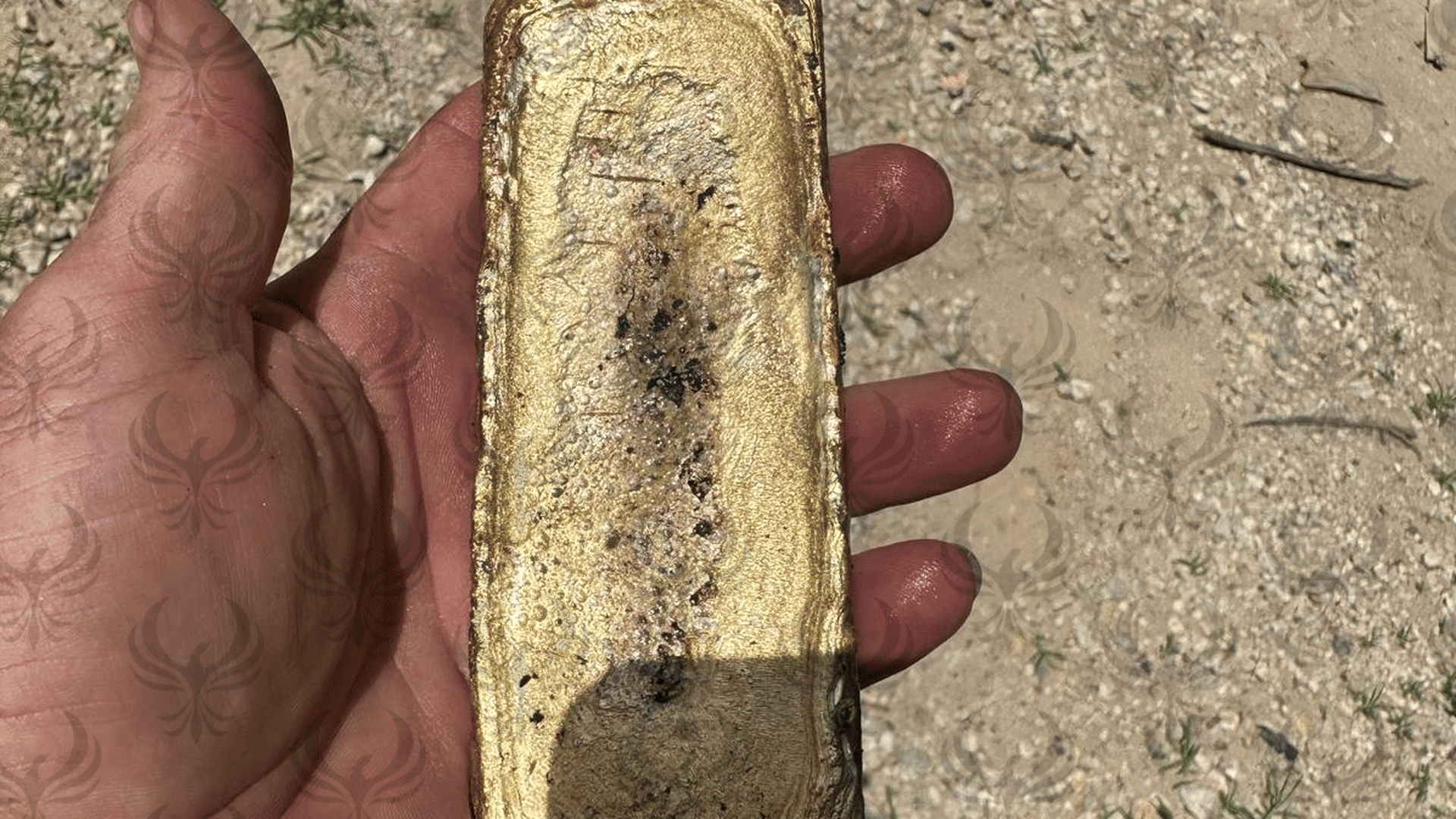
Gold futures extended a brutal slide Monday morning, with COMEX April gold (GC=F) trimming some of their heaviest losses but still down roughly 3% to 4% in volatile trading. Spot gold also plunged, at one point falling below $4,300 an ounce, capping a dramatic reversal for a metal that had been one of the market’s strongest momentum trades earlier this year.
The sell-off marks a stunning shift in sentiment. After surging on safe-haven demand and a powerful rally that lifted prices sharply through 2025 and into early 2026, gold is now being hit by surging oil prices, a stronger U.S. dollar, rising bond yields, and changing expectations for central bank policy. Last week alone, gold lost more than 10%, its worst weekly performance since 1983.“This is an extremely brutal flush,” said Greg Shearer, head of base and precious metals strategy at JPMorgan. But he argued the move says less about gold’s long-term fundamentals and more about the metal being “caught up in a contagion risk of a sell-everything trade.”
Ordinarily, an escalating conflict in the Middle East would boost demand for gold as a classic safe-haven asset. Instead, this latest flare-up centered on U.S.-Iran tensions and threats surrounding the Strait of Hormuz has had the opposite effect. The reason is oil. Fears of supply disruption pushed crude above $100 a barrel, reigniting global inflation concerns. That has led investors to scale back expectations for interest-rate cuts from the Federal Reserve and other central banks. In Europe, some officials have even floated the possibility of renewed rate hikes if energy inflation worsens.
That matters because gold does not pay interest. When bond yields rise and interest-rate expectations move higher, the opportunity cost of holding gold increases. At the same time, the U.S. dollar has strengthened as investors seek liquidity and safety, making dollar-priced gold more expensive for international buyers. A firm dollar and higher yields have pushed gold down more than 14% since the start of the war, according to market data cited by analysts. Ewa Manthey, commodities strategist at ING, said that in the near term, “a stronger U.S. dollar and gold’s high liquidity can make it a source of funds during stress episodes.”
Adding to the turbulence were sharp policy headlines out of Washington. Over the weekend, President Donald Trump threatened that Iran had 48 hours to reopen the Strait of Hormuz or face U.S. strikes on its power infrastructure. That warning reportedly helped trigger an overnight collapse in gold prices of nearly 9%, briefly sending the metal into bear-market territory around $4,150 an ounce, nearly 25% below its recent record high.
But prices then rebounded sharply on Monday after Trump said the U.S. and Iran had held “very good and productive conversations” aimed at ending the conflict. In one of the session’s more dramatic reversals, gold bounced as much as 5% from its lows and at one stage traded near $4,462 an ounce, almost recovering all of the overnight losses. Later reports suggested spot gold was hovering closer to $4,500, while the SPDR Gold Trust (GLD) was roughly flat and silver rebounded even more strongly. That relief rally, however, was tempered when Iran publicly denied that any such conversations had taken place, underscoring just how unstable and headline-driven the market remains.
Mohamed El-Erian, chief economic advisor at Allianz, said the situation remains highly uncertain, even though the latest rhetoric was a short-term positive for markets. “There’s a lot of uncertainty still, but it’s much better for markets than what it looked like just 10 minutes ago,” he told CNBC.
Analysts say gold’s recent behavior suggests that, at least in the short term, it has failed to live up to its traditional safe-haven role. Instead of rising on geopolitical fear, it has been dragged lower by the very inflation shock the conflict created. Alex Kuptsikevich, chief market analyst at FxPro, said the longer the Iran conflict continues, the more pressure gold could face. He noted that during the early months of Russia’s invasion of Ukraine in 2022, the dollar rallied strongly as investors reassessed the duration and economic impact of the war.
Since this latest conflict began, the U.S. dollar index has risen only about 2%, suggesting there may still be room for further dollar strength. In his view, gold has fallen victim to speculative excess after a huge run-up in 2025 and early 2026 left the market overcrowded.“Gold is considered a safe-haven and a hedge against inflation,” Kuptsikevich said, “but recent geopolitics has increased inflation risks, pushing up the likelihood of rate hikes, not cuts.” He added that the conflict may have burst an inflated bubble in the precious metals market.
The pressure has not been limited to gold. Silver and copper have also been hit hard, with investors increasingly concerned about demand destruction as higher energy costs threaten global growth. Silver in particular has seen steep losses, falling around 5% on Monday to roughly $64.25 an ounce and down more than 30% since the start of the conflict with Iran. From its late-January record high near $122 an ounce, silver has been nearly cut in half. Copper has also come under pressure as traders weigh the possibility that prolonged geopolitical disruption, tighter monetary conditions, and slower economic activity could weaken industrial demand.
Another key source of anxiety for gold investors is whether central banks one of the major pillars of support for the metal in recent years could begin to step back. Gold started the year with strong momentum after a historic 65% gain in 2025, helped in part by heavy official-sector buying. But traders are increasingly worried that liquidity constraints, currency pressures, and broader economic stress could alter that pattern.“I think there’s concern in the market that the combination of economic, energy, and FX pressures could trigger a sea change in central bank gold flows and buying behavior,” Shearer said.
Some analysts have suggested that in a scenario where countries face funding strains or reserve-management pressures, official gold purchases could slow or, in some cases, gold could even become a source of liquidity. Despite the near-term carnage, not all analysts have turned bearish.JPMorgan said last week that the longer the energy disruption lasts and the more severe the inflationary and growth consequences become, the more likely it is that gold’s backdrop will eventually turn “materially bullish” again.
The bank argues that if the economic fallout deepens enough, markets could shift quickly from worrying about inflation to worrying about recession and policy mistakes. In that case, the Federal Reserve may be forced into easing as labor-market weakness begins to outweigh inflation concerns. Michael Brown, senior market analyst at Pepperstone, made a similar point. Higher rates are clearly a headwind for a non-yielding asset like gold, he said, but if central banks over-tighten into a fragile economy, bullion could perform well as investors hedge against deteriorating growth.
In other words, gold may be losing the short-term battle to the dollar and bond yields, but it may not be losing the longer-term war.
Gold’s steep decline shows that even traditional safe-haven assets can behave unexpectedly when geopolitics collide with inflation fears and shifting interest-rate expectations. Rather than benefiting from Middle East tensions, gold has been undermined by rising oil prices, a stronger dollar, and the growing belief that central banks may have to keep policy tighter for longer.
Still, the long-term case for gold has not disappeared. If the conflict drags on and begins to damage global growth more severely, investors could once again turn to bullion as protection against economic stress and policy missteps. For now, however, gold remains trapped between its role as a defensive asset and the market’s immediate focus on inflation, yields, and liquidity.