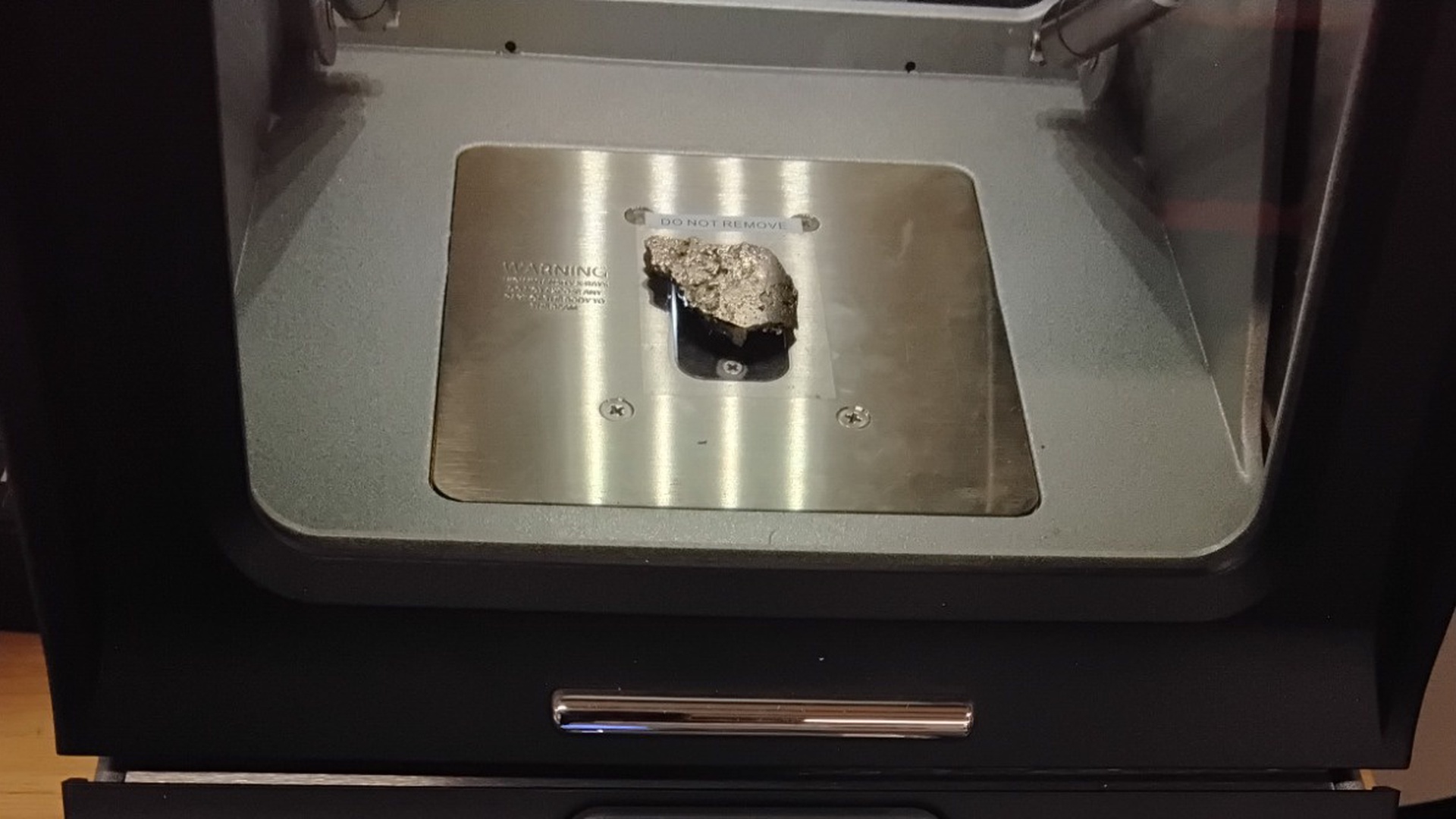
Recovering precious metals and preserving titanium substrates can turn anode replacement from a recurring procurement burden into a more efficient asset-management strategy. For electrochemical plants operating large banks of titanium-ruthenium anodes, replacement is a significant financial event. As catalytic performance deteriorates and cell voltages rise, procurement teams typically order new assemblies and dispose of the exhausted screens. The transaction restores production capability but may also discard substantial recoverable value.
The central mistake is treating electrochemical deactivation as proof that the entire assembly has reached the end of its useful life. A depleted mixed metal oxide (MMO) coating does not necessarily mean the underlying titanium structure is unusable. Spent coatings may also retain valuable ruthenium that can help fund their replacement.
Closed-loop refining and recoating capture both opportunities. By recovering residual precious metal while preserving qualified titanium carriers, plants can substantially reduce replacement expenditure. An illustrative model for a 1,000 m² anode bank shows savings approaching 45% compared with purchasing entirely new units.
The economics begin with the original assembly's cost structure. In the supplied model, a new titanium-ruthenium anode costs $1,400 per square meter. Of that amount, $600 represents the fabricated titanium substrate, $600 covers precious-metal chemistry and coating application, and $200 covers quality verification, packaging, and manufacturer margin.
The fabricated substrate and finished catalytic coating therefore account for approximately 86% of the purchase price. These assets retain value in different ways. Residual ruthenium can be recovered, although the original coating-application labor cannot. A reusable titanium substrate preserves not only its metal content but also the investment in forming, machining, welding, and dimensional control. That fabrication value is largely invisible in a conventional scrap transaction. A dealer purchasing titanium by weight is not paying for a carrier's potential to return to service. The commercial objective should therefore be broader than maximizing scrap revenue: preserve the engineered component wherever technically justified and recover the precious metal remaining on it.
Destructive refining captures more value but still requires complete replacement assemblies. At an assumed 90% payable recovery, the remaining ruthenium generates a $56.70/m² credit. After accounting for $18/m² in refining charges and the model's $30.69/m² allowance for salvaging the substrate, net recovery totals $69.39/m². The replacement bill becomes $1,330,610 for the full bank. This improves on basic scrap disposal, but only modestly: the plant still repurchases the titanium structure and its fabrication.
Closed-loop refurbishment preserves qualified carriers and uses recovered ruthenium to offset fresh coating requirements. At 94% payable recovery, the residual 4.2 g/m² produces 3.948 g/m² of metal credit, worth $59.22. Restoring the original coating loading requires another 8.052 g/m² of ruthenium, costing $120.78.
The modeled refurbishment budget includes $85/m² for stripping and activation, $45 for inspection and repair, $420 for coating application, $120.78 for make-up ruthenium, $12 for refining, and $60 for quality assurance and packaging.
A further $30/m² reserve covers new substrates for an assumed 5% rejection rate. Together, these costs total $772.78/m², or $772,780 for the bank, conservatively excluding any rejected-substrate salvage proceeds. That preserves $627,220 compared with buying new, a 44.8% reduction. Compared with scrap-and-replace, the savings are $591,120, or 43.3%.
These are illustrative replacement-cost calculations, not guaranteed quotations. An investment decision must incorporate freight, downtime, financing, taxes, and site-specific processing requirements.
The larger economic benefit comes from avoiding substrate replacement; recovered ruthenium provides an additional subsidy. Both depend on disciplined execution. A master toll-refining and recoating agreement should define sampling and assay procedures, payable recovery, processing charges, substrate acceptance criteria, turnaround commitments, and performance warranties. Metal settlements should be independently reconcilable, with an agreed mechanism for resolving assay differences.
Technical acceptance must extend beyond coating appearance or metal loading. Recoated units should meet application-specific operating-voltage and service-life requirements. A lower replacement price delivers little benefit if it shortens campaigns, adds downtime, or increases electricity consumption. Procurement should compare cost per operating year, not purchase price alone.
Recovered metal can also be credited toward future coating requirements, reducing exposure to fresh ruthenium purchases. Where unallocated metal accounts are used, controllers should review title provisions and counterparty risk rather than assume the balance represents segregated physical inventory.
Closed-loop refurbishment can replace unpredictable full-bank purchases with a more manageable service-and-material expenditure program. However, it does not automatically convert capital expenditure into immediately deductible operating expenditure. Under IAS 16, significant component replacements may require capitalization, while routine servicing is generally expensed. US GAAP and tax treatment require separate assessment. The financial case should therefore rest on reduced cash requirements and productive asset reuse, not a presumed accounting benefit.
For procurement and plant leadership, the next step is straightforward: qualify a representative batch, reconcile its recoverable metal, and verify recoated performance before committing to a full-bank program. The replacement cycle becomes financially stronger when you treat retirement as an assessment point rather than a disposal instruction. Recover the metal, preserve the qualified structure, and allow the remaining value of the previous cycle to fund the next.