Mixed Metal Oxide (MMO)-coated titanium anodes, often called Dimensionally Stable Anodes (DSAs), are designed to deliver long-term electrochemical performance with minimal changes in physical dimensions. Their structure combines a corrosion-resistant titanium substrate with a thin catalytic coating containing metal oxides such as ruthenium oxide, iridium oxide, titanium dioxide, and tantalum oxide. The titanium provides mechanical strength, while the coating enables reactions such as chlorine evolution and oxygen evolution. An MMO anode's lifespan depends on how it is used. In low-current cathodic-protection systems, anodes may operate reliably for several decades. In high-current industrial applications, however, their active coating may reach the end of its useful life within a few years. Current density, electrolyte chemistry, temperature, coating formulation, and operating conditions all influence how quickly the catalytic surface degrades.
MMO anodes used for cathodic protection generally have the longest service life. In applications such as buried pipelines, reinforced concrete, offshore structures, storage tanks, and marine installations, the anodes usually operate at relatively low current densities. Under these conditions, coating consumption is slow and predictable. Design lives of 20 to 30 years are common, while properly engineered systems may achieve 40 to 50 years of service. In highly favorable low-current environments, an MMO anode may be designed to last up to 75 years. This longevity makes MMO anodes particularly valuable for infrastructure projects. A pipeline, bridge, or marine structure may require corrosion protection for several decades, and the anode system can be designed to meet the same long-term requirement. The coating loading, anode geometry, current output, and installation environment are selected to keep the catalytic layer active for the intended design period.
Industrial electrochemical applications impose much greater stress. Processes such as chlor-alkali production, electrochlorination, metal electrowinning, PCB electroplating, and wastewater treatment can operate at current densities from approximately 1,000 to 15,000 A/m². Under these conditions, the typical operational life of an MMO anode is usually between 3 and 10 years. The exact service life depends on the coating formulation and the dominant electrochemical reaction. Ruthenium oxide-titanium dioxide coatings are commonly used for chlorine evolution and may provide approximately 3 to 6 years of industrial service. Mixed ruthenium-iridium-titanium coatings are often selected for systems where both chlorine and oxygen evolution occur, with expected life commonly ranging from 5 to 8 years. Iridium oxide-tantalum oxide coatings are generally preferred for oxygen-evolution applications and may provide 4 to 10 years of service, even at much higher current densities.
Unlike sacrificial anodes, MMO-coated titanium anodes are not designed to dissolve rapidly during operation. Instead, the thin catalytic coating gradually loses mass and activity over time. This process may involve electrochemical dissolution of the active oxides, catalyst surface restructuring, chemical attack, and a gradual loss of catalytic efficiency.
Coating consumption is commonly measured in milligrams per ampere-year (mg/A·yr). This value indicates the amount of catalytic material lost for every ampere of current delivered over one year. Engineers use this rate to determine the required coating loading and to estimate the expected life of an anode in a specific application.
In chloride-rich environments, such as seawater and brine, the chlorine evolution reaction is often dominant. Under these conditions, MMO coatings can have very low consumption rates, often around 0.5 to 1 mg/A·yr. Advanced coating formulations may achieve rates below 0.1 mg/A·yr. This low consumption is one reason MMO anodes are widely used in marine cathodic protection and seawater electrochlorination systems. In freshwater, soil, and dilute electrolytes, oxygen evolution may dominate instead. Oxygen evolution creates a highly oxidizing environment at the anode surface and can produce localized acidity. These conditions are generally more demanding on the coating, increasing its consumption rate. In some oxygen-evolution applications, consumption rates may approach 6 mg/A·yr, depending on current density, temperature, electrolyte composition, and coating type.
Because manufacturers design MMO anodes for decades of use, they rely on accelerated life testing to estimate long-term performance. These tests expose the anode to aggressive conditions that degrade the coating much faster than normal field operation. A typical test may use 1.0 molar sulfuric acid at 40°C and a current density of approximately 20,000 A/m². The test results are then used to estimate field life based on the relationship between accelerated current density and actual operating current density. In general, lower service current density produces a disproportionately longer expected life. Industry practices and standards, including NACE TM0108 and TM0294, commonly guide this type of evaluation.
Failure during accelerated testing is often defined as a cell-voltage increase of about 5 volts above the initial baseline. This voltage rise indicates that the coating is no longer efficiently catalyzing the intended electrochemical reaction. It also warns that the titanium substrate is becoming exposed. In service, operators may notice the same trend as an anode approaches the end of its life. The system may require higher voltage to maintain the desired current. Current output may decline, power consumption may increase, and chlorine-generation or oxygen-evolution efficiency may fall. These changes indicate that the active coating has become depleted or damaged.
The normal end-of-life mechanism for an MMO anode is titanium passivation. As the catalytic coating is gradually consumed, portions of the titanium substrate become exposed to the electrolyte. Titanium naturally forms a stable layer of titanium dioxide (TiO₂) when exposed to oxygen and oxidizing conditions. Titanium dioxide protects against corrosion, but it is also electrically resistive. As the passivated area increases, the anode becomes less able to transfer electrical current to the electrolyte. The cell voltage rises because more energy is required to force the reaction through the increasingly resistive surface. Eventually, the electrode can no longer operate efficiently.
This does not necessarily mean that the anode is physically destroyed. Often, the titanium substrate remains structurally sound even after the coating has reached its electrochemical end of life. The main problem is that the passivated titanium surface is no longer an effective electrode until it is stripped, prepared, and recoated.
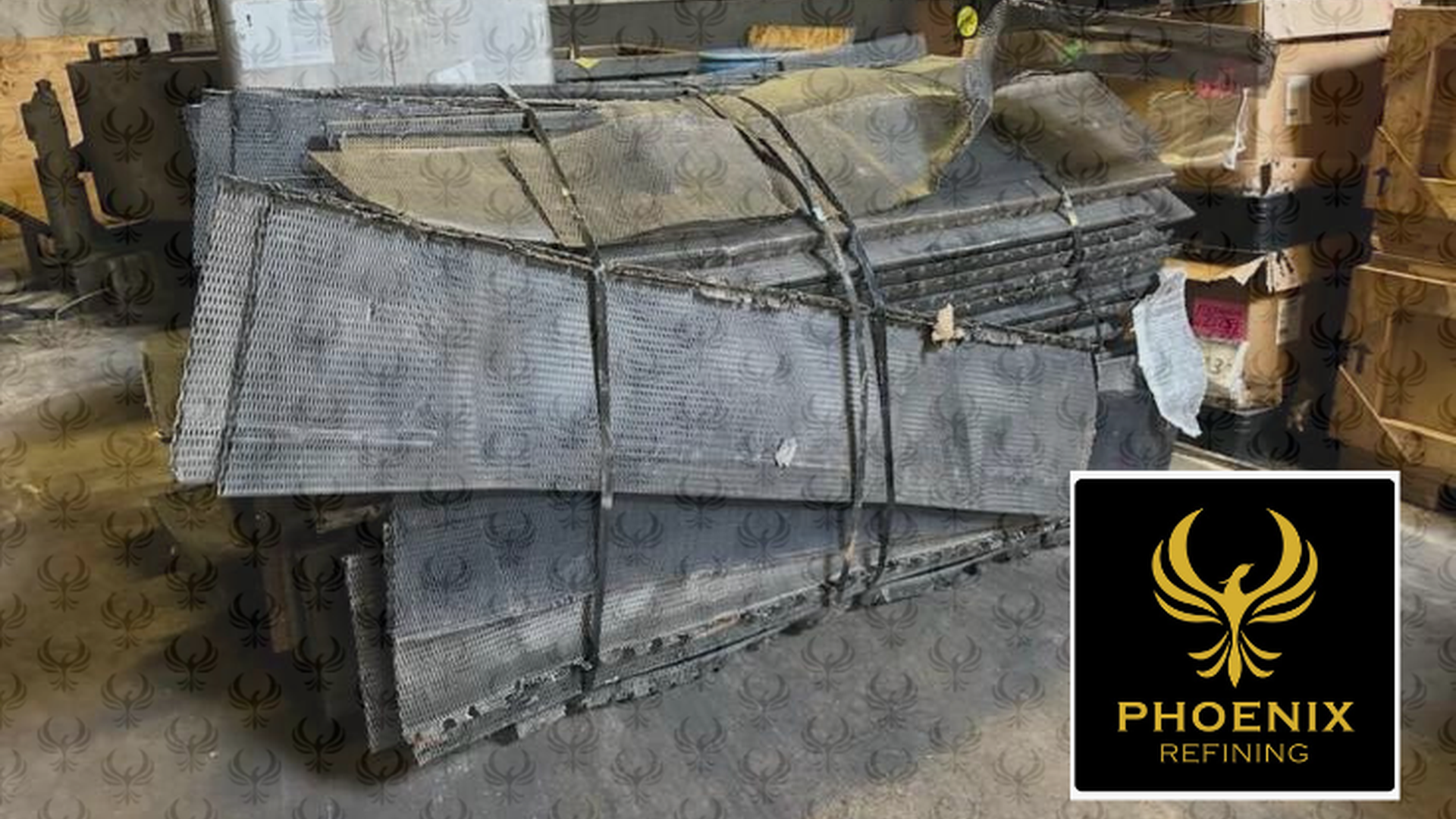
When an MMO anode reaches the end of its coating life, the titanium substrate can often be reclaimed rather than discarded. This is a major economic advantage of MMO technology. Reusing the titanium base and recovering precious-metal catalyst materials can reduce replacement costs by as much as 50 percent. Mechanical removal methods, such as grinding, sanding, and abrasive blasting, are generally avoided for high-value titanium anodes. These methods can remove titanium, alter the surface profile, and reduce the roughness needed for adequate coating adhesion. They may also introduce mechanical stress that reduces the reliability of later recoating cycles.
Chemical stripping is preferred because it removes the depleted coating while preserving the titanium geometry. Depending on the coating chemistry, stripping may use controlled nitric-acid solutions, fluosilicic-acid mixtures, molten salt baths, or proprietary chemical processes. The removed coating contains valuable metals such as ruthenium, iridium, and platinum. Hydrometallurgical refining methods can recover these precious metals. Leaching, oxidation, solvent extraction, precipitation, and distillation processes can separate and purify the metals for reuse in new catalyst formulations. After stripping, the titanium substrate is inspected, re-etched, and, when necessary, annealed before applying a fresh MMO coating through repeated thermal-decomposition cycles.
MMO anodes can last roughly 3 to 10 years in demanding industrial environments and 20 to 75 years in lower-current cathodic-protection systems. Their life depends primarily on coating composition, current density, electrolyte chemistry, temperature, and operating conditions.
Over time, the mixed-metal-oxide coating gradually loses catalytic activity. Once titanium becomes exposed, it forms an insulating titanium dioxide layer that increases cell voltage and eventually prevents efficient current transfer. While polarity reversal, fluoride contamination, and excessive current density can cause premature failure, normal coating depletion is often manageable through proper design and maintenance. Because the titanium substrate can often be stripped and recoated, MMO anodes offer a long-term, cost-effective solution for many electrochemical systems.