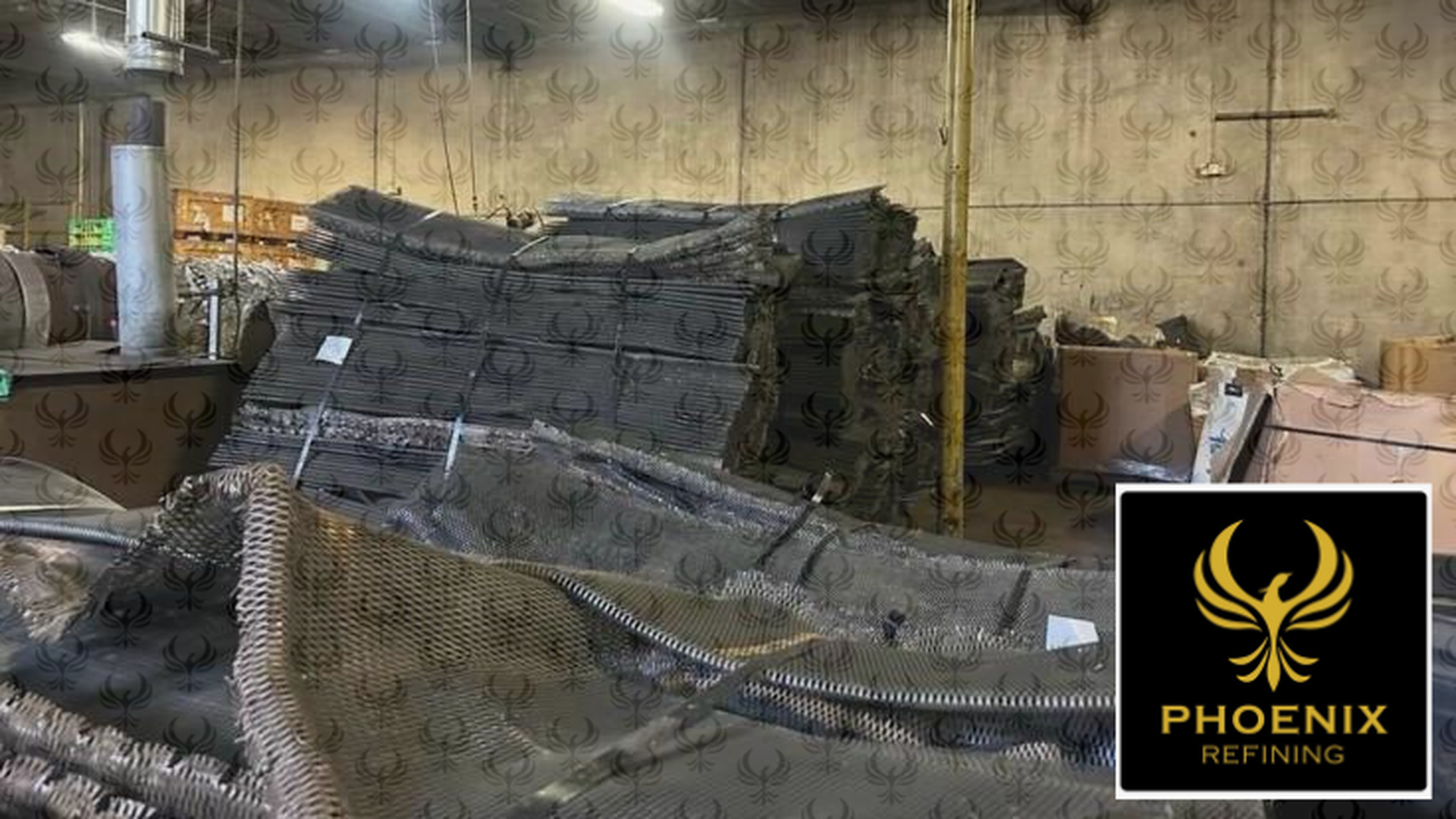
The black coating on the titanium mesh is incredibly thin (typically a few microns up to about 15 microns). That thin film does all the work, though. It turns a remarkably corrosion-resistant titanium structure into an active anode for applications like electroplating, seawater electrochlorination, and cathodic protection. It's generally a mixed metal oxide (MMO) coating and typically contains precious metals such as iridium or ruthenium. The coating thickness is important, but it is not the only factor. To understand an anode's performance, how long it will last, and what it will be worth when it's eventually retired, the more useful figure is often precious metal loading (in g/m²).
Bare titanium simply won't do as a durable anode. If you operate it at an anodic voltage, it forms a titanium dioxide layer, which is a strong current blocker. The black MMO coating is what provides the active surface for the reaction you want to take place. Ru-based coatings are typically used in chloride-rich systems (chlorine producers); Ir-based coatings are used in oxygen-producing systems. The coating is applied in several thin passes rather than one thick pass. The resulting surface is not a perfectly solid, smooth film. It can have pores and micro-cracks, and the composition will vary with the application. Two coatings that look equally thick under the microscope can therefore contain very different amounts of precious metal.
For instance, an iridium-rich coating with 12 g of iridium per m² of coated surface could be no more than around 4 microns thick under one set of assumptions regarding its make-up and porosity. A coating three times as thick wouldn't necessarily contain three times the iridium. It could contain a higher proportion of a different oxide or more space. Thickness is still a useful parameter for assessing the structure and consistency of the coating. The thickness figure alone is not a useful indicator of catalyst content or anode quality.
The area used to report loading is particularly important for expanded titanium mesh. A mesh panel has a projected area (its flat footprint) and a developed area (the total surface of its raised, 3D strands). The strand surface available for coating is much greater than the panel's footprint would suggest. Take a panel with a footprint of one square meter and 1.65 square meters of developed strand surface. If its iridium loading is specified as 12 g per square meter of strand surface, it will contain 19.8 g of iridium. If the specification is 12 g per square meter of panel footprint, then it will contain only 12 g. That difference is critical to procurement cost, supplier comparisons, and end-of-life value. The specification must clearly state the area (projected or developed), whether the number is for elemental metal or full oxide coating, and the basis of the loading. XRF can verify elemental loading where the technique and sampling are appropriate for the mesh's uneven surface.
MMO anodes are designed to be dimensionally stable; they don't last in perpetuity. Some catalyst will be lost during operation, and the titanium beneath the coating will eventually form a resistive oxide layer. An anode can therefore fail electrically and yet still have a significant amount of metal on the surface. Take the one-square-meter panel described above as an example. Suppose it started life with 19.8 g of iridium. If testing of the retired panel reveals that a quarter of that iridium is still there, then it has 4.95g left. If a recycler can recover 90% of that, then approximately 4.46 g of iridium is recovered. These are just illustrative numbers. Inspection, sampling, and processing will determine the amount of metal remaining on any particular anode and the amount a recycler can actually extract.
Recovery isn't simply a matter of treating the mesh as just another lot of ordinary titanium scrap. The valuable metals are in the oxide coating, which is adhered to a substantial quantity of titanium substrate. A specialist recycler is required to separate and refine that coating before the valuable metal content can be put back into use.
To recover the metal, you have to treat the mesh as more than just ordinary titanium scrap. The valuable metal is in the oxide layer on the much larger titanium substrate. You need to know the original loading, what you've got left, and how to process the coating properly if you want to turn a retired anode into a recoverable asset—retiring black titanium mesh. Don't value it by the thickness of the coating or by the weight of the titanium. Contact Phoenix Refining to discuss an assessment of your spent anodes and their potential for precious metal recovery.