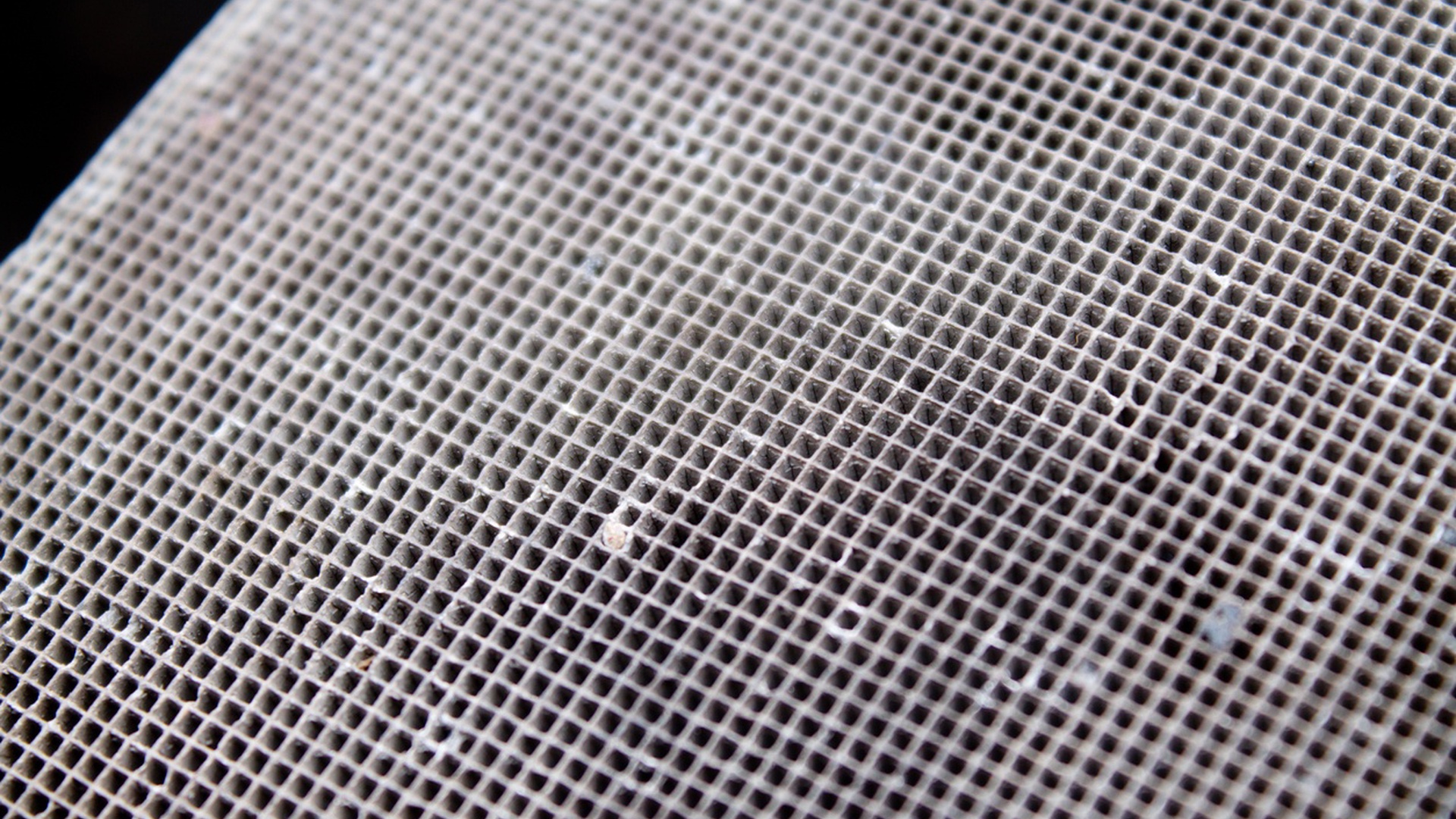
Titanium electrode mesh is widely used in industrial electrochemistry, from chlor-alkali plants and copper-foil production to cathodic protection systems and wastewater treatment. Often called a dimensionally stable anode (DSA) or mixed-metal-oxide (MMO) electrode, it combines two very different materials: a strong titanium mesh substrate and a very thin catalytic coating containing oxides of metals such as ruthenium, iridium, tantalum, tin, or platinum. Compared with older graphite or lead-alloy anodes, coated titanium mesh holds its shape exceptionally well. It does not steadily dissolve away, release lead sludge, or widen the gap between electrodes as it operates. That stable geometry can reduce energy consumption substantially over the life of a cell.
But "dimensionally stable" does not mean permanent. Over time, the electrode becomes less efficient. Cell voltage rises, current efficiency falls, and eventually the anode can no longer meet its intended duty. Importantly, this operational failure usually does not mean that the titanium mesh has been consumed or that all precious metal has disappeared. In many cases, the electrode has become electrically blocked rather than physically destroyed. Its failure typically follows a connected sequence: microcracks widen, the catalyst wears or becomes fouled, and a resistive titanium oxide layer forms beneath the coating. Understanding that sequence is essential for diagnosing failure and for recovering the value remaining in a spent anode.
A new MMO-coated titanium anode may look smooth from a distance, but under magnification its surface resembles dried mud. The coating contains a network of microscopic fissures, often less than half a micrometer wide. These cracks are not necessarily manufacturing defects. They arise naturally during production. Titanium mesh is first cleaned, roughened, and acid-etched to create a textured surface that helps the coating adhere. Then, a liquid precursor containing metal salts is applied and repeatedly heated. During each heating cycle, solvents evaporate, and the salts convert into crystalline metal oxides. As the material becomes a ceramic-like oxide film, it contracts, creating the characteristic "mud-crack" pattern.
In a healthy electrode, this structure is useful. The tiny cracks increase real surface area, exposing more catalytic sites to the electrolyte. They also relieve stress when gases form on the surface. Chlorine or oxygen bubbles can create intense local forces, and a completely rigid, uncracked oxide layer is more likely to spall. The problem begins when the original microcracks grow wider, deeper, or more interconnected. As the catalyst thins, fissure walls lose their protective activity. Electrolyte can then reach the boundary between the coating and the titanium substrate. This is the start of the most important long-term failure mechanism: passivation at the interface.
The catalytic coating is durable, but it is not indestructible. Even noble-metal oxides dissolve slowly under anodic conditions. At high local potentials, catalyst atoms can convert into soluble forms and gradually enter the electrolyte. Mechanical forces add to this loss: fast-moving electrolyte, abrasive suspended solids, and repeated gas-bubble formation and collapse can erode the coating.
Wear depends heavily on the application. In chloride-rich service, such as chlor-alkali production or seawater chlorination, ruthenium-iridium-titanium oxide coatings are often highly effective. They promote chlorine evolution at relatively low overpotentials and can have low catalyst consumption rates.
Oxygen evolution is more demanding. In freshwater, sulfate, nitrate, or acidic electrowinning environments, producing oxygen requires higher anodic potentials and creates aggressive conditions near the electrode surface. These applications commonly use iridium oxide stabilized with tantalum oxide, because iridium-based formulations generally tolerate oxygen-evolving duty better than ruthenium-rich coatings. Using the wrong coating chemistry can cause rapid failure. A ruthenium-based coating that performs well in brine may deteriorate quickly in a strongly acidic, oxygen-evolving environment. Under unfavorable conditions, ruthenium can form highly oxidized species, including volatile ruthenium tetroxide, causing precious-metal loss and potentially reducing service life from years to months.
Contamination can be just as damaging as catalyst dissolution. Iron, copper, nickel, manganese, carbonates, sulfates, and organic compounds may deposit on the surface. These deposits block active sites, much like scale blocking the holes in a showerhead. The remaining exposed areas must carry more current, producing localized overheating and accelerated degradation. Certain contaminants attack more directly. Fluoride ions can undermine titanium beneath the coating. Current reversals or cathodic excursions can drive hydrogen into titanium, increasing the risk of hydride formation, embrittlement, and coating delamination.
Although catalyst loss and fouling are visible concerns, many titanium mesh electrodes ultimately fail for something less obvious: insulating titanium dioxide growing beneath the active coating.
Titanium is a "valve metal." When exposed to oxygen, water, or anodic polarization, titanium naturally forms titanium dioxide (TiO₂). This oxide is the reason titanium survives in many corrosive environments. It protects the metal from bulk chemical attack.
Electrically, however, TiO₂ is a problem. It is a poor conductor. When electrolyte penetrates widened cracks or worn areas in the MMO coating, the titanium beneath can oxidize. A resistive oxide layer begins growing at the boundary between the titanium mesh and the catalyst.
The catalyst may still be physically present, but it is increasingly cut off from the current supply. Electrons can no longer move efficiently from the titanium substrate to the catalytic surface. To maintain the same current, the power supply must raise the cell voltage. That wastes energy, generates heat, and accelerates further degradation.
This is why a titanium anode can appear intact yet be electrochemically spent. In many operations, end-of-life is defined not by a hole in the mesh, but by voltage: often when the cell voltage rises roughly 15% to 20% above its stable baseline. In accelerated laboratory testing, researchers also use a sudden high-voltage increase as a failure criterion. As the TiO₂ barrier thickens, mechanical stresses can also build beneath the coating. Eventually, portions of the catalyst may detach or spall. By then, however, the electrode was usually already failing electrically.
When a titanium mesh electrode reaches the end of its operating life, it is often considered "failed" only because it can no longer deliver current efficiently. Rising cell voltage, passivation beneath the coating, surface fouling, or localized catalyst loss may make the anode unsuitable for continued electrochemical service. None of these conditions necessarily means that the titanium mesh—or the valuable metals on its surface—has been lost.
Unlike graphite and lead-based anodes, titanium mesh does not normally disappear through bulk dissolution. A stable oxide film protects its titanium substrate, and it often remains structurally intact after years of service. At the same time, spent MMO and DSA electrodes may retain recoverable quantities of ruthenium, iridium, platinum, and other platinum-group metals within the remaining catalytic coating. Even cracked, scaled, darkened, passivated, fouled, or mechanically damaged mesh can contain meaningful refining value. For that reason, retired titanium anodes should not automatically be sold at ordinary titanium scrap prices. The residual precious-metal coating on a spent electrode may drive its value as much as the titanium base metal beneath it. The exact recoverable value depends on factors such as the original coating chemistry and loading, electrode surface area, service conditions, contamination, and the amount of catalyst remaining after use. Materials from chlor-alkali plants, brine electrolysis systems, electrowinning operations, copper foil lines, wastewater-treatment equipment, and cathodic-protection installations can all be potential sources of metal-bearing coated titanium scrap.
Phoenix Refining is interested in purchasing spent titanium mesh electrodes and related coated titanium materials for precious-metal recovery and refining. This can include mixed-metal-oxide mesh, dimensionally stable anodes, coated sheets, expanded mesh, baskets, rods, and damaged electrode assemblies containing ruthenium, iridium, platinum, tantalum, or related coating systems. Materials do not need to be in operating condition to have value; in fact, many are retired specifically because passivation has electrically isolated a catalyst layer that remains physically present. Separating and identifying these materials before disposal can help ensure that their full value is recognized. When available, information about the original coating type, manufacturer, service environment, dimensions, or operating history can support evaluation. However, even when documentation is incomplete, spent titanium electrode mesh may warrant review as a precious-metal-bearing refining feed rather than conventional titanium scrap.