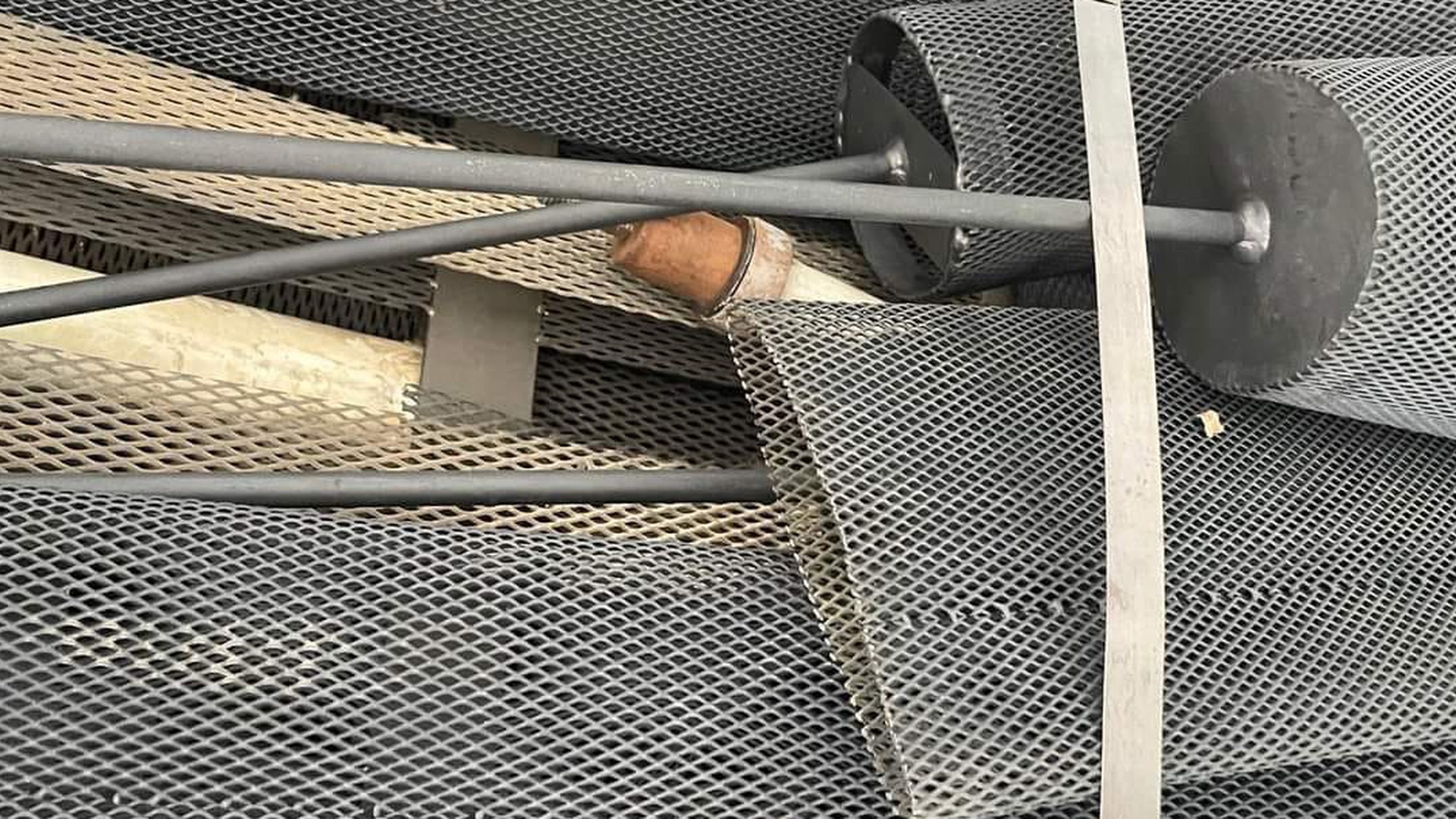
Plant managers, maintenance supervisors, and industrial scrap dealers often misclassify retired titanium mesh. After removing an anode from an electrowinning cell, a chlor-alkali unit, an electroplating line, a seawater electrolysis system, or a cathodic protection installation, it may seem like ordinary worn industrial metal. It could be scaled, discolored, bent, fouled, or electrically inactive. As a result, many companies send it to a standard scrap yard and receive a price based solely on the titanium content. This method can result in significant value loss. Titanium mesh anodes are typically industrial assets that contain precious metals. Although the titanium base provides structural support and electrical conductivity, the active electrochemical coating may include platinum, iridium, ruthenium, and other valuable materials. Even if an electrode is no longer fit for use, the mesh may still contain significant amounts of these metals. The right course of action is not to treat the material as ordinary titanium scrap but to have it assessed and refined as a precious-metal batch.
To sell used titanium mesh successfully, you first need to understand the difference between a base-metal scrap lot and a coated electrochemical asset. Careful handling is also essential, since processes such as grinding, cutting, sandblasting, and vigorous cleaning can destroy or disperse the coatings that give the material its value. With a specialized recovery program such as the five-step Phoenix process, facilities and scrap dealers can move retired mesh out of storage or disposal and into a secure, scientifically validated refining process.
Titanium mesh is frequently used as a substrate for industrial anodes because titanium resists corrosion and remains mechanically durable in harsh chemical conditions. Grade 1 and Grade 2 titanium are commonly used in electrochemical equipment because they can withstand harsh electrolytes while providing a stable structure for the catalytic coating applied to the surface.
Yet titanium alone is usually not the main factor in determining a retired anode's value. The mesh's electrochemical performance depends on the coating. Depending on the application, this coating can be platinum, iridium oxide, ruthenium oxide, a tantalum-containing mixed metal oxide, or a carefully designed combination of several metals. Platinized titanium is commonly used in durable chrome plating, electroplating, and precious-metal recovery. Oxygen-evolving mixed metal oxide anodes typically contain both iridium and tantalum and are applied in electrowinning and cathodic protection. Chlorine-evolving MMO anodes often contain ruthenium and iridium and are used in chlor-alkali production and seawater electrolysis systems. These coatings may contain considerable amounts of platinum-group metals. Initial loadings vary with anode design and service requirements, ranging from about 5 to 40 grams of precious metal per square meter of active surface area. Although the exact composition differs, the fundamental principle remains the same: the asset's value lies in the catalytic layer, not just the titanium substrate. When a typical scrapyard assesses the material only by the weight of the titanium, it may overlook the remaining platinum, iridium, or ruthenium. In contrast, a precious metal refiner examines the coating system and uses chemical recovery and laboratory assay to determine the actual amount of metal that can be recovered.
Operators commonly believe a titanium mesh anode has no value in precious metals when it is withdrawn from service. This belief usually stems from the term 'spent.' When an anode no longer works efficiently, it seems reasonable to think its catalytic material has been used up.
In most instances, this is not the situation. Titanium anodes are usually taken out of service because of electrical passivation rather than because their coating is completely depleted. When operated for long periods, a resistive titanium dioxide layer may develop between the titanium substrate and the active catalyst coating. This interfacial layer reduces electrical contact, and as a result, the voltage required for the cell to operate increases. Finally, the anode becomes inefficient or no longer suitable for further use, even though the precious metals remain on the surface.
The coating doesn't always vanish when the electrode reaches the end of its life; instead, a large portion may remain, electrically separated from the titanium base by the passive layer underneath. Wear is also seldom even throughout. Electrolyte flow, current density, temperature, process chemistry, scale build-up, and geometry can all influence the rate of degradation in a single mesh panel. One part of the anode might be severely depleted while another could still have a relatively thick layer of catalytic material. A panel that appears worn all over can still contain valuable metal that can be recovered. That is why it is impossible to judge the value of retired titanium mesh by simple visual inspection, and why a standard scrap price based on titanium weight is not a reliable measure of the lot's actual value. A special assay is required to determine how much platinum, iridium, ruthenium, or other precious metals remain.
When a facility realizes retired mesh contains precious metals, preservation becomes its top priority. Although the remaining coating is generally very thin, it may contain all the shipment's economic value. Improper handling can reduce the amount of metal recovered and make refining an otherwise valuable batch harder.
The key rule is simple: you must not grind, cut, or sandblast with titanium mesh. If you grind the mesh, it will wear down the surface and send coating fragments into the dust collection system, onto the shop floor, or into the grinding waste. Because platinum group metals may be present in small amounts over a large surface area, even small dust losses can lower the batch value. Grinding also creates local heat and mechanical stress, which can cause brittle oxide coatings to crack or flake off. Cutting is just as dangerous. Although people may want to cut large mesh panels to fit into containers or reduce freight costs, cutting can cause coating loss along the cut edge, produce flakes and debris, and make it harder to maintain a clean chain of custody for the entire precious-metal-containing lot. If a panel must be reduced for shipping, the refiner should be consulted before any cutting. Sandblasting is one of the most harmful things a facility can do. Abrasive blasting can remove catalytic coatings, break down metal oxides, and spread precious-metal-containing dust into the air, the blast media, filters, and surrounding work areas. Once valuable coating material mixes with the abrasive media or collects in the dust systems, recovery becomes much more difficult and may no longer be economically feasible.
Avoid aggressive cleaning, since retired mesh can have calcium and magnesium scale, organic fouling, deposits of process metals, or other build-up. It might be tempting to clean the material before selling it, particularly if it is being stored or transported. However, these deposits can hold onto coating flakes and particles containing precious metals. Mechanical removal of the scale may also remove material that could be recovered.
The proper procedure is to pack the mesh in the condition in which it was removed. Keep the panels separate using protective dunnage, cardboard, plastic, or other non-abrasive material to prevent rubbing when handling and shipping. Wherever possible, material from different process lines or applications should be kept in separate batches. Do not unnecessarily mix a batch of platinized titanium from a plating operation with MMO anodes from a chlor-alkali or cathodic protection system.
Used titanium mesh is a valuable resource that is often neglected. For manufacturing plants, it offers a chance to turn routine maintenance and replacement work into an activity that delivers a measurable return. For maintenance crews, proper handling can prevent the loss of valuable coating material. For scrap dealers, being able to distinguish between regular titanium and coated electrochemical mesh lets them handle a more valuable, specialized material. The solution is to regard the coated mesh as a precious-metal batch from the moment it is taken out of service. One should not assume that 'spent' means it has lost all its value. It should not be sold simply based on its titanium content. Do not grind, cut, or sandblast it to clean it, resize it, or prepare it for scrap. Instead, keep the material in the condition it was removed in, document the batch properly, and have a precious metal refiner assess it and perform the correct chemical stripping and laboratory testing.