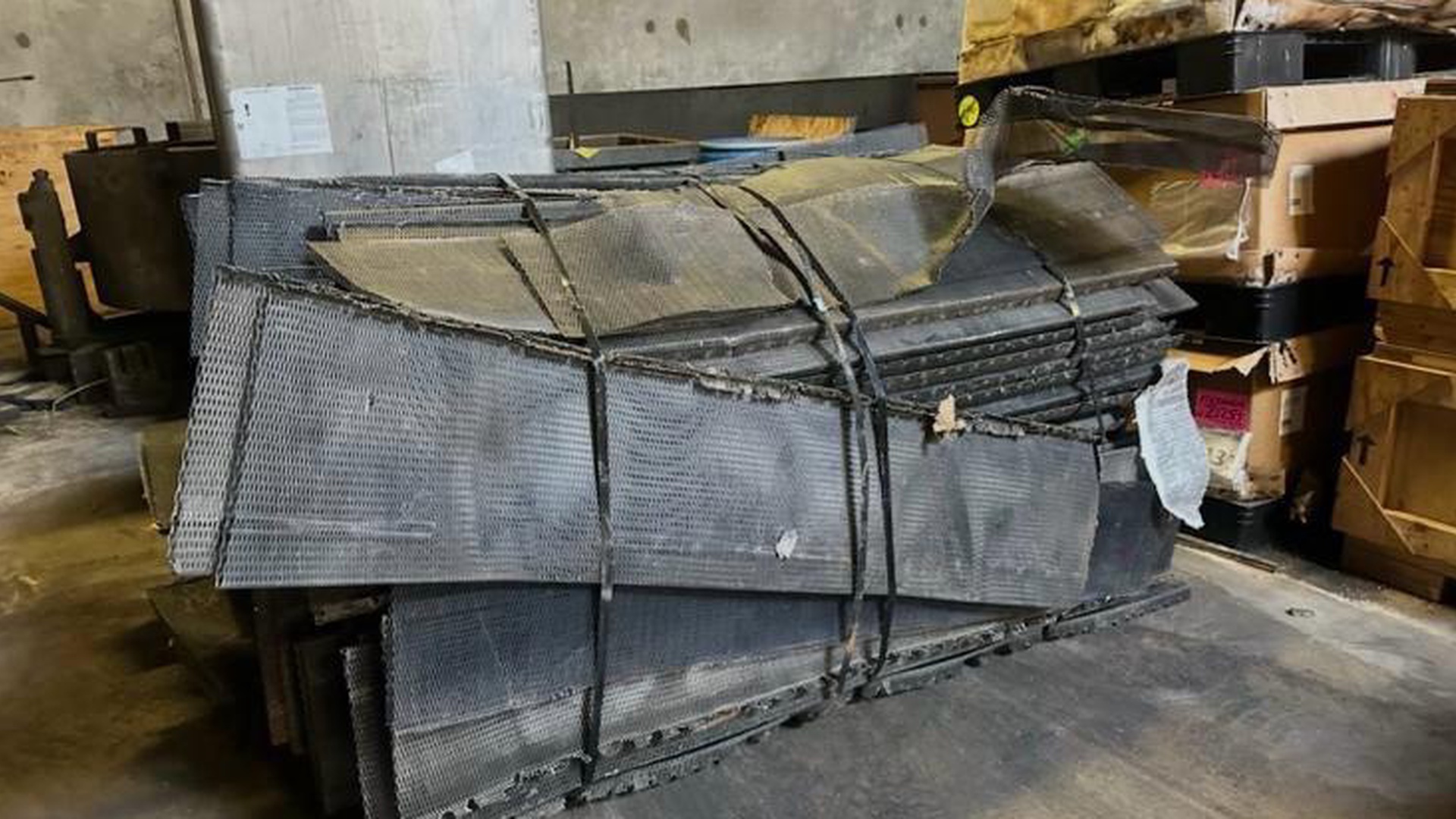
Ruthenium- and iridium-coated anodes can be hard to distinguish when the cell is shut down. They're both commonly in the form of a mixed metal oxide (MMO) coating, a thin, dark coating applied to a titanium mesh or plate. Both tend to be matte black or charcoal grey and have a fairly fine, irregular 'mud crack' texture. Color is therefore of very limited use in distinguishing between them. The only reliable way to tell is to check the anode records against what the cell is designed to produce. The difference matters because the coatings are selected for different reactions. Ru-based coatings are typically used when chloride in the electrolyte is converted to chlorine or hypochlorite. Ir-based coatings are used for oxygen evolution, particularly in acidic service. Using the wrong anode for the duty can lead to premature failure, even if it's the correct anode for the cell.
Start with the purchase order, coating certificate, manufacturer's data sheet, or drawing. "MMO" describes the coating family and does not identify the precious metal. "DSA" (Dimensionally Stable Anode) is no guarantee that the coating is based on ruthenium or iridium.
On the spec, RuO₂–TiO₂, Ru–Ti, 'chlorine evolution,' and CER all point to a ruthenium-based coating. IrO₂–Ta₂O₅, Ir–Ta, 'oxygen evolution,' and OER all point to an iridium-based coating. Some formulations (e.g., Ru–Ir–Ti) contain both, so you don't have to force every anode into an either/or.
Look for a stamped or laser-marked serial number on the busbar, hanger, or uncoated neck. Take a picture of it and cross-reference it against the manufacturer's record. The cell drawing will tell you what was specified. Still, the part-specific record is better evidence of what was actually installed, particularly if you've had replacement anodes fitted over several years. The process itself is the next useful clue. Chlor-alkali cells, sodium chlorate production, and seawater electrochlorination generally use chlorine-evolution coatings and would suggest a ruthenium-containing anode. Copper/zinc electrowinning and other acidic oxygen-evolving operations are more likely to have an iridium-based coating. The cell type is a useful cross-check, not a definitive answer. The actual electrolyte and operating conditions will vary, and the part in the cell may differ from the specification. If the paperwork says it's an oxygen evolution cell, but the crew thinks the anode came from a chlor-alkali cell, stop and sort that out before you go any further with the part.
A factory-applied MMO coating will generally follow the contours of the titanium and will appear fairly uniform. Under a loupe, you may see the fine mud-crack pattern that results from the coating process. The mud cracks themselves are not a defect and don't indicate either metal. Deposits can make inspection more difficult. White or tan crust can be mineral scale (including scale on anodes in a polarity reversal system). Uneven black or brown material could be process fouling rather than the original coating. Shiny exposed metal will, of course, indicate a bare area where the coating has gone. Blisters, flaking, gouges, and wear at the mesh edges and around the electrical connections all need to be looked at. Brown, blue, or gold discoloration may also be of interest, but again, no one color definitively indicates a particular failure mode.
During a safe, isolated shutdown, use a flashlight held at a very shallow angle to pick up any chips or raised areas, then use a loupe to inspect the mesh edges, bends, bolt holes, and welds. A gentle wipe with clean white paper will reveal any loose dark material. It won't tell you whether that material is a mark on the paper; by itself, it does not indicate a failure, whether it is ruthenium or iridium. Never wire brush, grind, or scrape the coating to expose it for identification, as that will destroy the very coating you're trying to assess. If you have to remove deposits, follow the manufacturer's approved cleaning procedure. Cell performance is another important factor. Record any rise or erraticity in voltage at a similar operating current, and note any known shorts or polarity reversals. That will tell you about the anode's condition and where to go next. It won't tell you what the coating is, but it will tell you why it was removed.
Where available, a trained operator can use handheld XRF to X-ray a readily accessible surface for Ru and Ir. Multiple readings from representative areas will be far more useful than a single reading through a scale or dark deposit. Because the MMO coating is so thin, it can be worn through and fouled, and a handheld reading can be skewed by surface contamination and the Ti underneath. XRF is therefore only useful for elemental screening, not for assessing recoverable metal or the anode's remaining useful life. If the XRF reading conflicts with the records, confirm with the manufacturer or specialist testing before assigning the anode to any other duty.
Photograph the spent assembly before cleaning or disassembly (once it's safe to handle). Take whole panel views of both sides so that you can see the wear patterns, and include a ruler or other size reference. Capture the serial number, tags, busbar, and hanger. Then take close-ups of the intact coating, bare areas, scale, blisters, scratches, welds, cut mesh edges, bends, and bolt holes. If possible, record the anode's installed position and orientation so the refiner can relate the heavily worn areas to the cell.
Label the images with the date, cell number, part number, and orientation. Send them with the part count, original coating spec if available, process duty, electrolyte, time in service, and reason for removal. A retired anode can still contain a significant amount of Ru and Ir, even if it's no longer working. You can't determine its final refining value from its appearance or a single surface XRF reading. The rule is simple: use the records to identify the coating, use the cell duty to confirm that identification, and use the visual to assess the condition. If they disagree, keep the evidence and verify the part instead of trying to determine it by color.