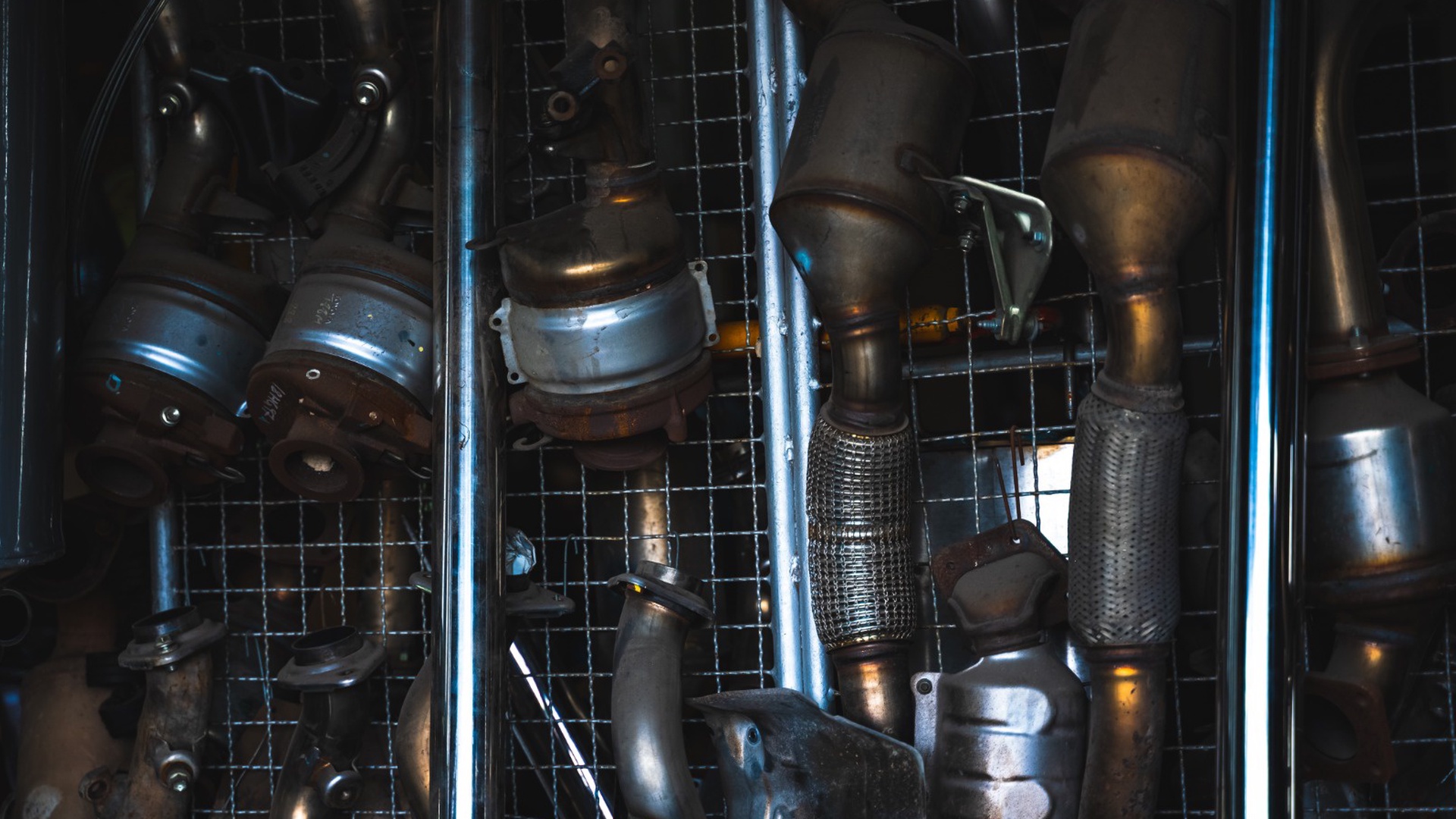
Equipment dealers and rental fleets will tell you that a used DPF or oxidation catalyst shouldn't just go straight into a scrap bin. The same applies to a natural gas or LPG engine that comes in for service. The exhaust component may be an ordinary industrial silencer, but inside it could be a three-way catalyst with rhodium (one of the most valuable metals used in emissions control). These converters are found on rich-burn natural gas, LPG, and propane engines used in stationary generators, gas compressors, and the like. When an engine is retired, or its catalyst is changed, the spent element may end up in a scrap bin with the steel, be left in the yard, or be returned to the manufacturer, where no core return is required. All of those options represent a loss of recoverable precious-metal value.
A rich-burn engine runs close to the stoichiometric air/fuel ratio required for a three-way catalyst to deal with the three pollutants simultaneously (NOx, CO, and unburned hydrocarbons). Platinum and palladium primarily oxidize CO and hydrocarbons. Rhodium is the key element for reducing NOx to nitrogen.
This property makes the catalyst very different from many components in a diesel exhaust system. A diesel oxidation catalyst works in oxygen-rich exhaust and will generally be based on platinum and palladium. Diesel NOx control generally occurs elsewhere in the system. A three-way catalyst (also known as a non-selective catalytic reduction or NSCR) on a rich-burn gas engine can contain all three metals (platinum, palladium, and rhodium). These systems have been used in industrial fleets for many years to meet emissions requirements. The applicable rules will be EPA's stationary spark ignition engine standards and the RICE air toxics standards. The exact compliance obligation will vary depending on the engine's age, size, use, and location. Still, the result is the same: the engine must have working emissions controls, and any catalysts that no longer work must be repaired or replaced.
An automotive converter is fairly straightforward to spot. An industrial catalyst can be built into a big steel exhaust silencer, or it can be a removable disc, cylinder, or rectangular piece. Many use a tightly wound metallic honeycomb rather than a brittle ceramic core. Once you remove the honeycomb, it looks like just a chunk of exhaust hardware. It's deceptive, though. The thin metal foil is actually coated with the active precious metals. The catalyst formulation varies from engine to engine and application to application, so neither the part's size nor its weight tells you anything about its rhodium content. A large element can contain far more recoverable metal than a passenger car converter. 'Spent' doesn't mean the metals are gone. Contaminants in the exhaust (material from the oil and the fuel) can cover up the active sites. Too much heat can damage the coating and degrade the performance. The catalyst may no longer meet the engine's emissions requirements; that doesn't mean the platinum group metals are gone. They're still there for recovery.
The first step is identification. When a technician removes an exhaust element, the service record should identify it by engine fuel type, model, application, and catalyst part number. That lets you distinguish a rich-burn 3-way, a lean-burn oxidation, and a plain muffler. Labels and part number plates on the elements also help the recycler identify the material.
Step 2 is control. You need a clearly designated, secure location for your spent natural gas and LPG catalysts, rather than throwing them in a general metals bin. You need to record what you've removed, from which machine, and when. Before you return anything to an OEM, check their warranty and core terms, as some will require you to return it or, in fact, just give you a credit, which can be a massive surrender of the part's recycling value. Finally, find a recycler with experience in industrial metallic catalysts, not just one that takes automotive converter shells. Ask how they separate the valuable metal from the housing, how they sample and assay the material, and how they determine what they'll pay you for the rhodium, platinum, and palladium. A quick screening estimate is useful, but with a substantial lot you'll want clear settlement terms based on representative sampling, metal content, market prices, and processing charges.
There is no such thing as a 'flat' value for any industrial converter. Metal prices are constantly in flux, formulations vary, and recovery cost is a major factor. That is why a spent element should be assessed rather than simply priced as 'ordinary steel' or assumed to have no value just because it failed an emissions test. For the dealer and the rental fleet, this opportunity doesn't require a new business line. It simply requires a better handoff between the technician, the parts staff, and the fleet manager. Please identify the catalyst, maintain the records, check the return obligations, and obtain a qualified recycling quote. The rhodium-bearing converter that once went straight into the scrap bin can then become a documented recovery from equipment already in the fleet. Before you send a spent natural gas or LPG catalyst to a scrap bin, contact Phoenix Refining. Phoenix Refining takes these rhodium-bearing materials, providing equipment dealers and rental fleets a way to recover value from converters that would otherwise be ignored.