For scintillator crystal manufacturers, the margin between a perfect boule and a costly failure is razor-thin. Driven by the relentless demand for high-performance radiation detection in medical imaging (PET and CT scanners), oil & gas (well-logging and exploration), and homeland security (cargo scanning and radiation portals), the pressure to produce flawless crystals is higher than ever. Whether you are growing Lutetium Yttrium Orthosilicate (LYSO), Bismuth Germanate (BGO), or other dense, high-light-yield oxide crystals, the Czochralski and Bridgman growth methods require a very specific, unforgiving thermal environment. At the heart of this extreme environment is the crucible. For the highest-temperature oxide scintillators, only one material is viable for this vessel: iridium.
Growing scintillator crystals is a violent thermal process. Many of the most sought-after scintillator materials have extraordinarily high melting points. LYSO, for instance, melts at approximately 2,050°C. Traditional precious-metal crucibles, such as those made from platinum (melting point 1,768°C) or platinum-rhodium alloys, would liquefy long before the scintillator charge even began to melt. Iridium, however, boasts a staggering melting point of 2,446°C. This exceptional thermal headroom is the primary reason it is the industry standard for high-temperature oxide crystal growth.
Beyond its remarkable melting point, iridium offers several critical chemical and structural advantages that make it indispensable. Its high chemical inertness resists attack by the molten oxides used in scintillator production, preventing melt contamination and ensuring the optical clarity and pure scintillation properties required for medical and security applications. Additionally, while iridium oxidizes at high temperatures to form volatile iridium oxides, it does so at a predictable and manageable rate compared to base metals, especially in the controlled, low-oxygen atmospheres typical of Czochralski growth chambers. Finally, iridium has extraordinary high-temperature strength, maintaining significant mechanical stability at temperatures where other metals become unworkable. This allows the crucible to hold the immense hydrostatic pressure of dense molten liquid without catastrophic failure.
Because scintillator crystals are often required in large volumes—particularly for whole-body PET scanner rings or massive security detector arrays—the crucibles used to grow them are correspondingly large.
Unlike small laboratory crucibles that might weigh a few dozen grams, production-scale iridium crucibles are massive investments. A typical industrial crucible used to pull large scintillator boules can range from 2 kilograms to over 10 kilograms (2,000 to 10,000+ grams). Because iridium is one of the rarest stable elements in the Earth's crust and trades at thousands of dollars per troy ounce, a single crucible represents a massive capital expenditure, often valued at hundreds of thousands of dollars. Managing the lifecycle of these assets is just as critical to a crystal grower's bottom line as the yield of the boules themselves.
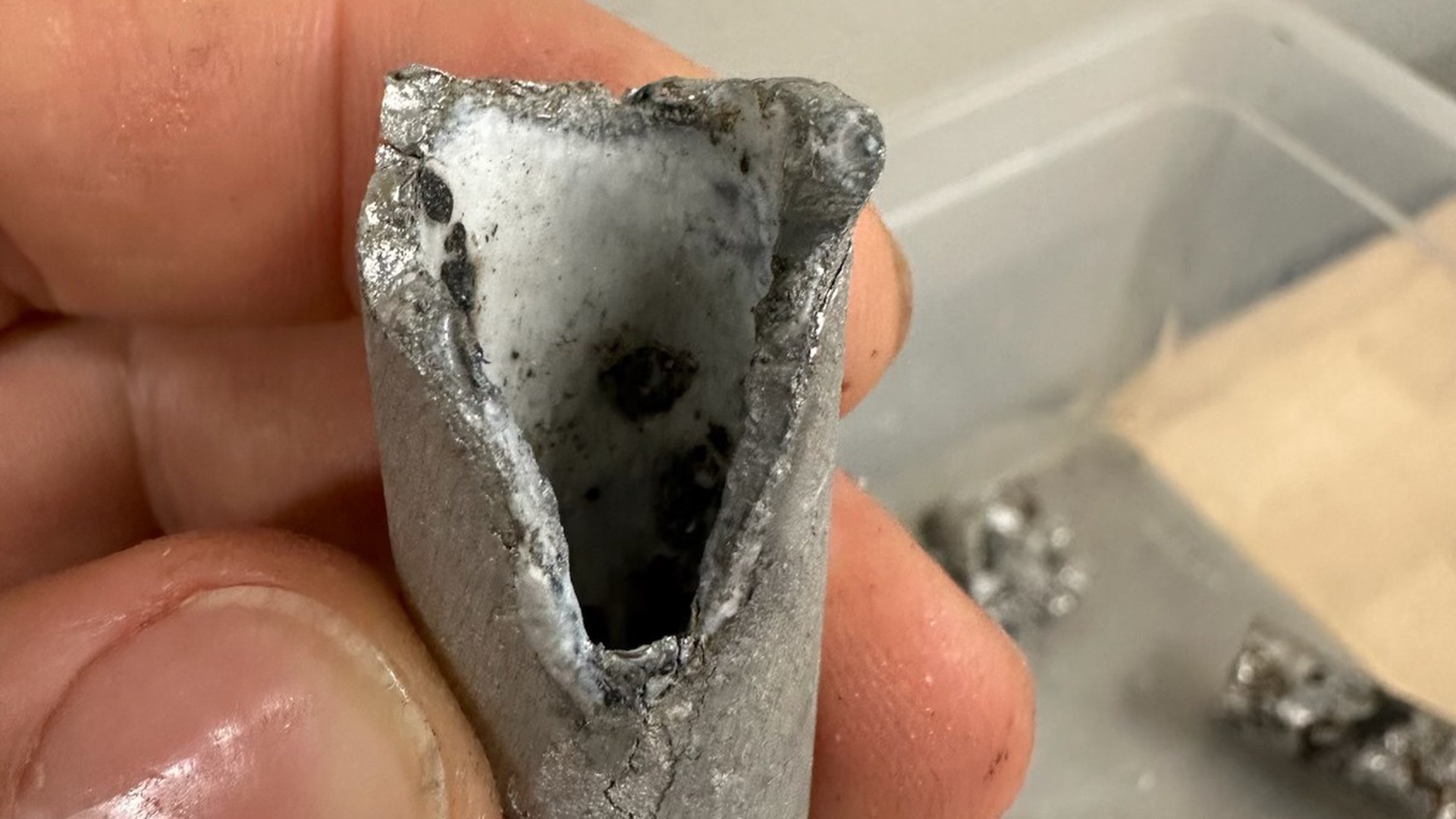
Over time, the harsh conditions inside a crystal growth furnace cause significant damage. Repeated thermal cycling from room temperature to over 2,100°C puts the iridium under significant stress. Growers will inevitably observe several forms of physical degradation as the crucible ages. The intense heat and relentless weight of the melt cause the crucible walls to creep and deform, leading to bulging and sagging over time. Furthermore, thermal shock and grain growth over hundreds of hours at high temperatures make the metal brittle, eventually leading to hairline cracks. This is compounded by the slow volatilization of iridium at the melt line, which thins the crucible walls and eventually renders the vessel unsafe for another growth run.
To a crystal grower, a deformed, cracked, or thin crucible is a dead asset—it can no longer safely hold a melt. However, to a precious metals refiner, the crucible's physical condition is entirely irrelevant. Refiners do not repair or reuse the crucible as-is. Instead, the refining process breaks the crucible down to its elemental state. Whether the crucible is perfectly cylindrical or violently warped, cracked into pieces, and covered in residual scintillator slag, the intrinsic value lies solely in the mass of the elemental iridium it contains. The material will be chemically dissolved, purified, and reduced back into 99.9% pure iridium sponge or powder, ready to be fabricated into a brand-new crucible.
Because iridium crucibles represent such a significant concentration of capital, growers typically use one of two financial strategies to manage their precious metal inventory: lease-return or outright sale. In a lease-return arrangement, often managed via a precious metals pool account, the crystal grower never actually owns the iridium. Instead, they lease the metal from a financial institution or the fabricator. Under this model, the grower pays a fabrication fee to have the leased metal formed into a crucible, along with a leasing fee that acts essentially as an interest rate on the metal's value. When the crucible reaches the end of its operational life, the grower returns it. Consequently, the grower's financial responsibility is limited to paying for the metal that was physically lost during the growth process through volatilization or melt loss, plus the cost to fabricate the replacement. This strategy frees up massive amounts of working capital, ensuring the grower does not tie up millions of dollars in static metal inventory while shielding them from extreme iridium price volatility.
Conversely, some well-capitalized growers choose to purchase the iridium outright. In this scenario, the grower buys the raw iridium and pays to have it fabricated into a crucible. When the crucible eventually fails, the grower sends it to a refiner to be melted down and sold based on its recovered weight and the current market spot price. While this means the grower ties up significant capital in the crucible, treating it as a tangible asset on their balance sheet, it also offers potential financial upside. If iridium prices surge during the crucible's lifespan, the grower can realize a profit on the metal when they scrap it. However, this ownership model inherently exposes the manufacturer to downside risk if iridium prices fall before the crucible is recycled.
Whether you own your metal or operate on a lease-return pool account, ensuring you get maximum, transparent recovery for your spent crucibles is vital. Scintillator slag, volatile losses, and accurate assaying all affect your final return.
When your iridium crucibles have reached their thermal limits and can no longer produce the pristine crystals your industry demands, Phoenix Refining provides precise, transparent, and highly efficient recovery services. With specialized capabilities for high-temperature precious metals, Phoenix Refining ensures every gram of your spent iridium is accurately assayed and credited so that you can fund your next generation of crystal growth seamlessly.