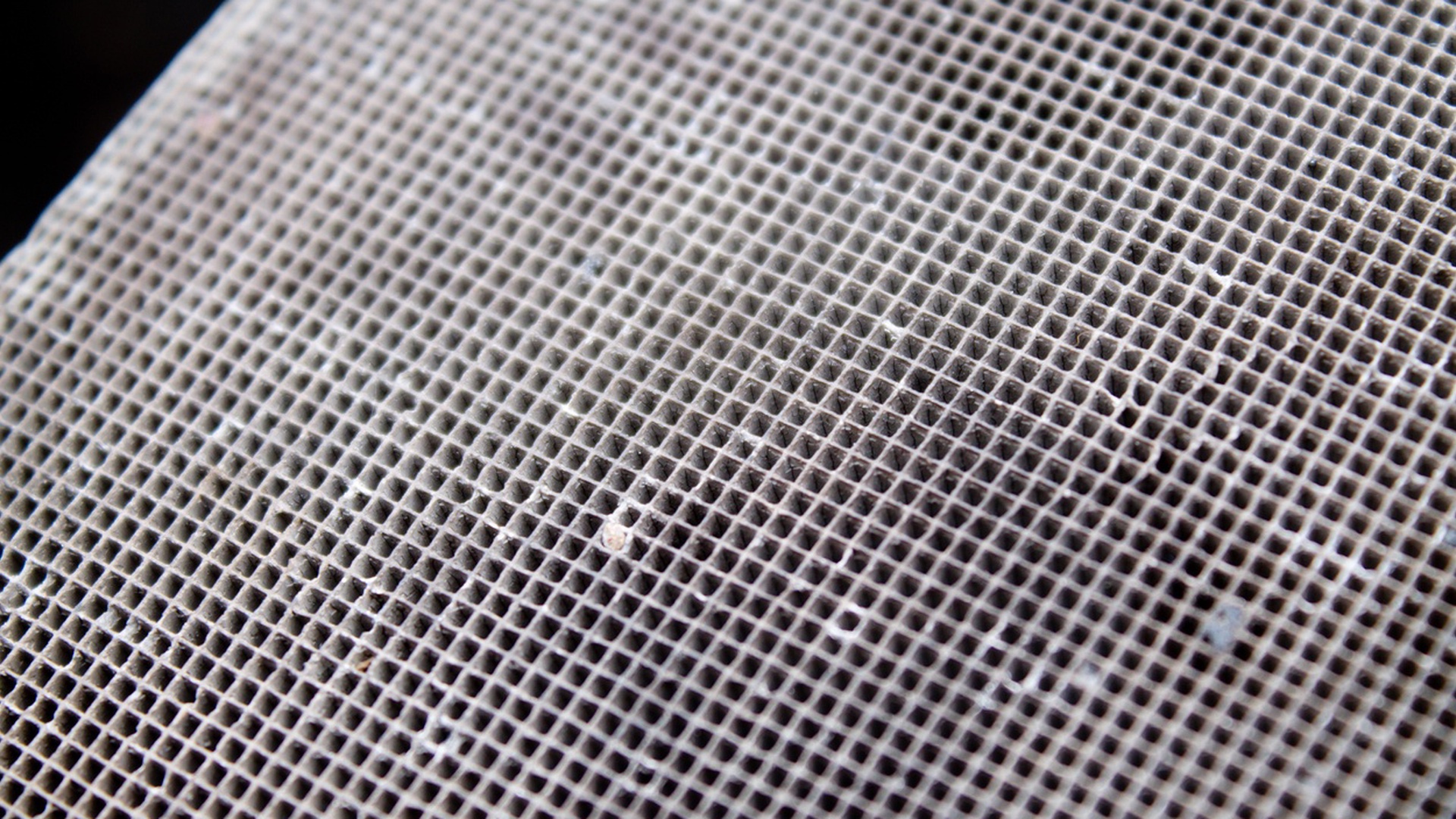
Titanium mesh removed from electrochemical systems is usually marketed as regular titanium scrap. This move could prove a costly error. Dimensionally stable anodes (DSAs), also called mixed metal oxide (MMO) or platinized titanium anodes, consist of a corrosion-resistant titanium base coated with an extremely thin catalytic layer containing ruthenium, iridium, platinum, or similar materials. Although the titanium base makes up more than 99 percent of the component's physical weight, the thin coating contains most of its recoverable value.
These anodes have replaced consumable graphite electrodes in the chlor-alkali industry, water treatment, electrowinning, cathodic protection, and other electrochemical fields. During operation, graphite wears away, and the distance between the electrodes changes, increasing electrical resistance. The titanium mesh itself is not the main catalyst; instead, it serves as a stable current collector for a specialized surface containing precious metal wire. Although an anode may stop operating efficiently when it is retired, its retirement does not mean the precious metals have been lost.
A mesh made of titanium and ruthenium or titanium and iridium may reach the end of its service life and still retain a considerable portion of its original precious-metal loading, with in some cases as much as half of the original precious-metal coating remaining. The problem, then, is identifying the coated mesh before it is blended into a low-value stream of titanium scrap.
The first sign is usually visual; commercially pure titanium, such as the common ASTM Grade 1 and Grade 2 types, typically has a silvery-grey, metallic look. MMO coatings change this appearance. Ruthenium-rich coatings are generally matte black, charcoal grey, or deep dark grey. They are often used on anodes for chlorine evolution, for example, in chlor-alkali plants, sodium hypochlorite systems, brine electrolysis, and seawater electrochlorination. Although thick deposits of calcium, magnesium, or scale may hide the original black finish, protected areas still show the underlying coating.
Iridium-based coatings generally look lighter. A titanium mesh coated with iridium oxide, which is often stabilized with tantalum oxide, can appear grey, blue-grey, purple-grey, bronze, or slightly iridescent. These coatings are widely used in oxygen-evolution processes, including copper, zinc, and nickel electrowinning; the production of printed circuit board foil; the treatment of acidic wastewater; and advanced oxidation processes. Platinized titanium, by contrast, has a different appearance; it is usually bright, reflective, silver-white, or slightly frosted because platinum is a metallic rather than a ceramic surface coating.
Under a microscope, MMO coatings applied by heat usually show a typical "mud-crack" pattern. Repeated cycles of coating and thermal pyrolysis form a fine network of microscopic cracks similar to those in dried mud. This property enables the coating to withstand stresses caused by gas evolution and is strong evidence that the surface is a ceramic MMO layer, not plain titanium.
Although weight can offer useful context, it cannot determine the value of precious metals. MMO coatings are usually only 6 to 15 micrometers thick and can contribute just 10 to 20 grams per square meter. The titanium mesh itself can weigh several kilograms per square meter. As a result, a heavier mesh does not necessarily contain more precious metal; it might merely be covered with mineral scale, sludge, concrete residue, or process deposits.
Expanded titanium mesh is made by cutting and stretching a sheet of titanium to form diamond-shaped openings. By measuring the mesh thickness, strand width, and the design in the short and long directions, an inspector can estimate the expected weight of the bare titanium. When a recovered sample is considerably heavier than its theoretical weight, the extra weight is generally due to scale or contamination. If it is considerably lighter, the mesh may have lost titanium through corrosion, mechanical damage, or severe anode degradation. In either case, it should lead to further examination rather than immediate disposal.
A magnet test quickly rules out obvious non-titanium materials. Titanium is effectively non-magnetic under real-world conditions, and the PGMs employed in MMO and platinum coatings are also non-magnetic. An authentic titanium-supported MMO anode should not be attracted to a strong neodymium magnet; if it does stick, the material could be ferritic stainless steel, a nickel alloy, iron-contaminated mesh, or titanium with attached steel parts. Nickel mesh can be used in alkaline electrolysis and may have some value, but it must not be treated or priced as titanium MMO. Handheld X-ray fluorescence, or XRF, is useful for initial screening, but it has to be interpreted with care. The technique can detect titanium and elements such as iridium, ruthenium, platinum, or tantalum. However, since the coating is very thin, scale, organic fouling, titanium dioxide, mineral deposits, and the irregular mesh structure can all affect the result. A heavily scaled anode may show titanium and calcium while hiding iridium or ruthenium underneath. A weak or negative XRF reading does not demonstrate that a PGM coating is missing.
Because of these factors, avoid grinding, sanding, or spark testing, as these methods may damage the thin coating, cause loss of PGM-bearing dust, expose the titanium substrate, and lead to the false conclusion that the material is uncoated. XRF should remain a non-destructive sorting method; if the results are unclear, do not discard the material as regular titanium; keep it for laboratory sampling.
Proper documentation is just as important; equipment tags, heat numbers, material test reports, and original purchase records can be used to determine both the titanium grade and the coating chemistry. Most MMO anodes are manufactured from ASTM Grade 1 or Grade 2 titanium, and in those cases ruthenium, iridium, or platinum is typically concentrated in the surface coating. Nevertheless, some special titanium grades contain platinum group metals as bulk alloying elements. For example, Grade 26 titanium may contain ruthenium distributed throughout the titanium matrix, and Grades 7 and 11 might contain palladium. Titanium with these bulk alloys requires a different recovery and valuation method than coated titanium mesh.
The best indication of a material's composition usually comes from its source. Mesh obtained from chlor-alkali plants, hypochlorite generators, brine cells, and seawater electrochlorination systems is probably coated with ruthenium-based or ruthenium-iridium MMO coatings. In contrast, mesh from copper and zinc electrowinning operations, PCB foil production, and acidic oxidation processes are more likely to have an iridium oxide coating stabilized with tantalum oxide. Material from cathodic-protection systems—such as pipelines, tank bottoms, marine structures, bridge decks, and reinforced concrete—may also include long-life iridium-rich MMO coatings.
An electrical failure should not be taken to mean the precious metals are completely used up. MMO anodes tend to fail because a layer of titanium dioxide develops between the titanium base and the active coating. The electrolyte enters tiny cracks in the coating and oxidizes the titanium underneath. The resulting titanium dioxide layer resists corrosion but has high electrical resistance. As this layer thickens, electrical resistance increases and the anode becomes less efficient. The coating might still include ruthenium or iridium, but it is now electrically separated from the titanium current collector. This phenomenon is sometimes referred to as electrical masking, and it explains why a 'dead' anode can still have considerable recovery value.
Field tests indicate which material is likely to be coated, but the final figure is based on laboratory analysis. To determine the concentrations of ruthenium, iridium, platinum, and other recoverable PGMs, we use representative sampling, fire assay, ICP-OES, and ICP-MS. Specialized hydrometallurgical processes are needed to recover these metals, especially the refractory elements ruthenium and iridium.
The main point is straightforward: titanium mesh should not be assumed to be bare titanium just because it is old, scaled, electrically inactive, or appears worn. Examine the surface for signs of coating, measure the mesh, run a magnet test, use XRF with care, check the documentation, and note the original application. Correct identification ensures that valuable anodes containing precious metals are diverted from low-value base-metal scrap streams and sent instead to the appropriate precious-metal recovery process.