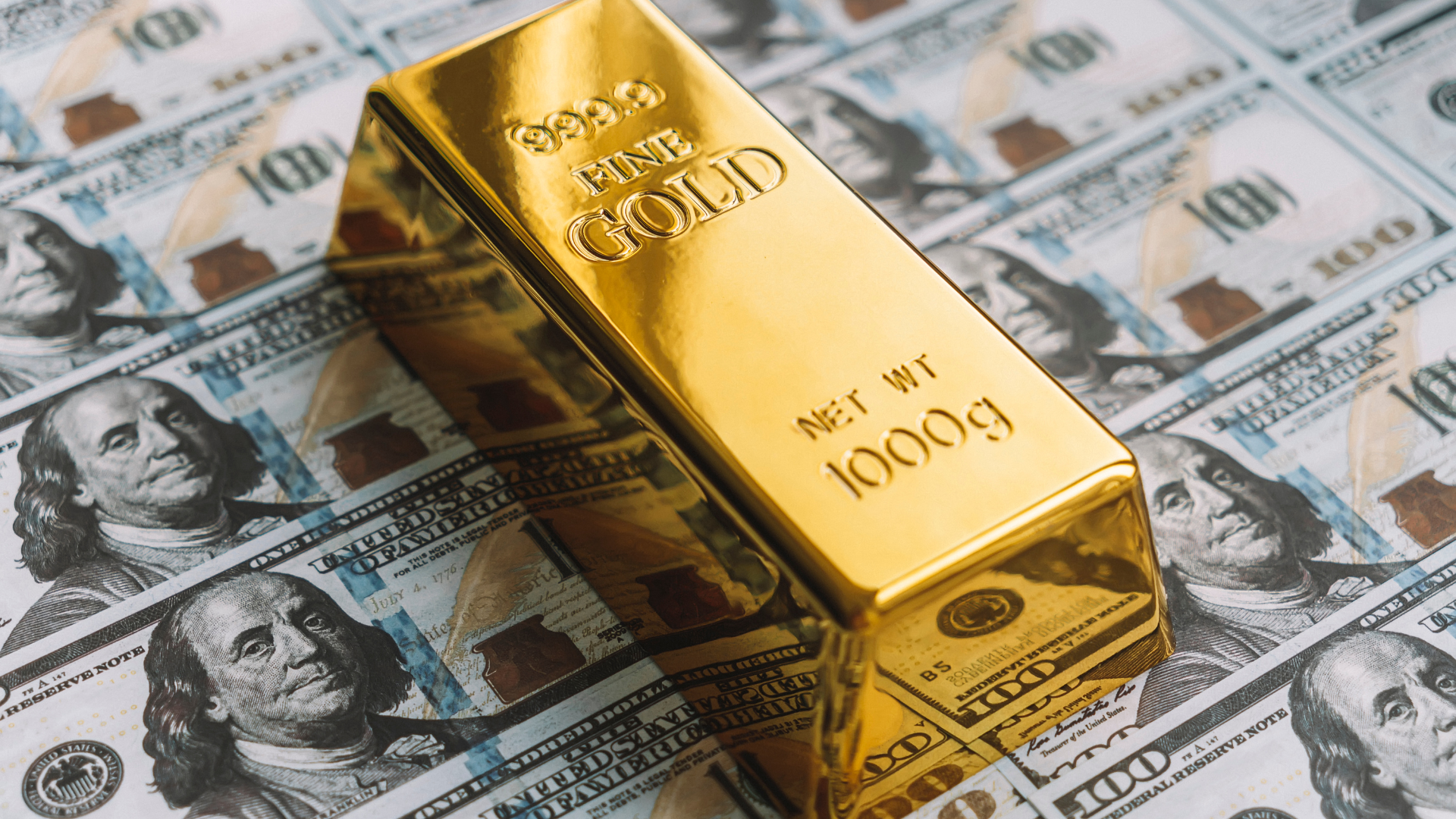
Tether Holdings SA has strengthened its position as one of the world’s most significant gold buyers, adding more than six tons of bullion to its reserves during the first three months of 2026. The latest quarterly attestation shows the crypto company held about $19.8 billion in gold at the end of March, equivalent to roughly 132 tons at spot prices. That accumulation has made Tether the largest known holder of bullion outside banks and sovereign states, underscoring how a company born in crypto has become an increasingly influential force in traditional commodity markets.
The scale of Tether’s gold reserves is striking not only because of their size, but because of the speed at which they have been built. Although the first-quarter buying pace slowed compared with the previous quarter, when Tether bought more than 21 tons in the final three months of 2025, it remained one of the largest individual purchasers of gold in the market. Analysts have begun to take notice of its role. Greg Shearer, head of precious and base metals research at JPMorgan Chase & Co., said Tether’s buying has been “material,” noting that over the course of last year it bought more gold than any central bank except Poland. For a private company tied to digital assets, that is a remarkable development.
Tether’s accumulation comes against a backdrop of extreme volatility in the gold market. During the first quarter, gold surged to a record high near $5,600 in January before suffering sharp selloffs, including declines linked to geopolitical tensions such as the outbreak of the US-Iran war. Even with that turbulence, Tether continued to add to its holdings, signaling that the company sees gold not as a short-term trade but as a core strategic reserve asset.
That strategy reflects Tether’s broader financial model. As the issuer of USDT, the world’s largest dollar-pegged stablecoin, the company accepts dollars in exchange for tokens and invests those funds in reserve assets. Traditionally, the emphasis has been on cash equivalents and U.S. Treasuries, but Tether has increasingly expanded into hard assets such as gold and Bitcoin.
According to the company’s first-quarter report, published on April 30 and attested by BDO Advisory Services, total assets stood at $191.76 billion against liabilities of $183.53 billion, of which $183.43 billion related directly to its issued digital tokens. That left Tether with a record surplus of $8.2 billion, up significantly from $6.3 billion at the end of December 2025.
The company also reported net profit of just over $1.04 billion for the quarter, bringing total net profit for 2025 to more than $10 billion. Its direct and indirect exposure to U.S. Treasuries totaled approximately $141 billion, effectively placing it among the world’s larger holders of American government debt. But the gold position has become one of the most notable features of its balance sheet. Together with $6.6 billion in Bitcoin, Tether’s gold holdings account for around 14 percent of its total reserves. The company has framed this mix as a deliberate hedge, combining dollar-based liquidity with assets designed to retain value during times of financial stress.
Tether has been careful to distinguish between the reserves backing USDT and its broader proprietary investments. The company says assets held through Tether Investments, and funded from excess capital and profits, are fully segregated from the reserve pool that backs its stablecoin. That means the gold and Bitcoin strategy is being presented not as a risk to USDT’s stability, but as an additional layer of balance-sheet strength. As of March 31, every USDT token was backed by roughly $1.045 in independently attested assets, according to the company. That figure is significant because Tether has long faced scrutiny over the quality and transparency of its reserves. The latest report is intended to show not only that the stablecoin remains fully backed, but also that the company has built a much larger capital cushion than in previous years.
At the same time, Tether is making a broader push into the precious metals business. The company had earlier recruited two senior precious metals traders from HSBC Holdings Plc as part of an effort to build what it described as “the best trading floor for gold in the world.” It later cut both traders, saying it strives to operate with a lean team and would instead rely on expertise gained through investments in the industry.
In February, Tether acquired a stake in US-based precious metals dealer Gold.com Inc., which has extensive trading and logistics operations. That move suggests Tether’s ambitions in gold extend beyond holding bullion in reserve and into the market’s infrastructure itself. Rather than simply buying and storing metal, the company appears to be positioning itself to play a more active role in the sourcing, trading, and distribution of gold.
The company’s evolution has been dramatic. Tether began in 2014 as Realcoin, founded by Brock Pierce, Reeve Collins, and Craig Sellars, and later rebranded that year. The first tokens were issued on the Bitcoin blockchain in October 2014. Now headquartered in El Salvador, Tether is a wholly owned subsidiary of iFinex Inc., which also owns the Bitfinex exchange.
Under chief executive Paolo Ardoino, who took over in December 2023 after serving as chief technology officer, the company has expanded into a much broader financial operation. Its flagship product remains USDT, which has roughly $183 billion in circulation across 13 blockchains. But Tether has also developed other tokens, including CNHT, a yuan-pegged token that is being wound down, XAUT, a gold-backed token launched in 2020, and USAT, a U.S.-focused stablecoin introduced in September 2025. Importantly, the 132 tons of gold disclosed in Tether’s reserve reports do not include the bullion held through XAUT, meaning the company’s total exposure to physical gold may be even greater than the headline number suggests.
Tether’s rise as a major gold holder shows how the boundaries between crypto finance and traditional markets are becoming increasingly blurred. What was once primarily a stablecoin issuer serving digital asset traders is now also a meaningful buyer of U.S. Treasuries, Bitcoin, and physical bullion.
With nearly $20 billion in gold, more than $1 billion in quarterly profit, and a record equity surplus, Tether is emerging as a hybrid financial institution with growing influence well beyond the crypto sector. Its expanding gold stockpile is not just a symbol of wealth or caution. One of crypto’s most powerful companies is becoming an active participant in shaping the global reserve landscape.