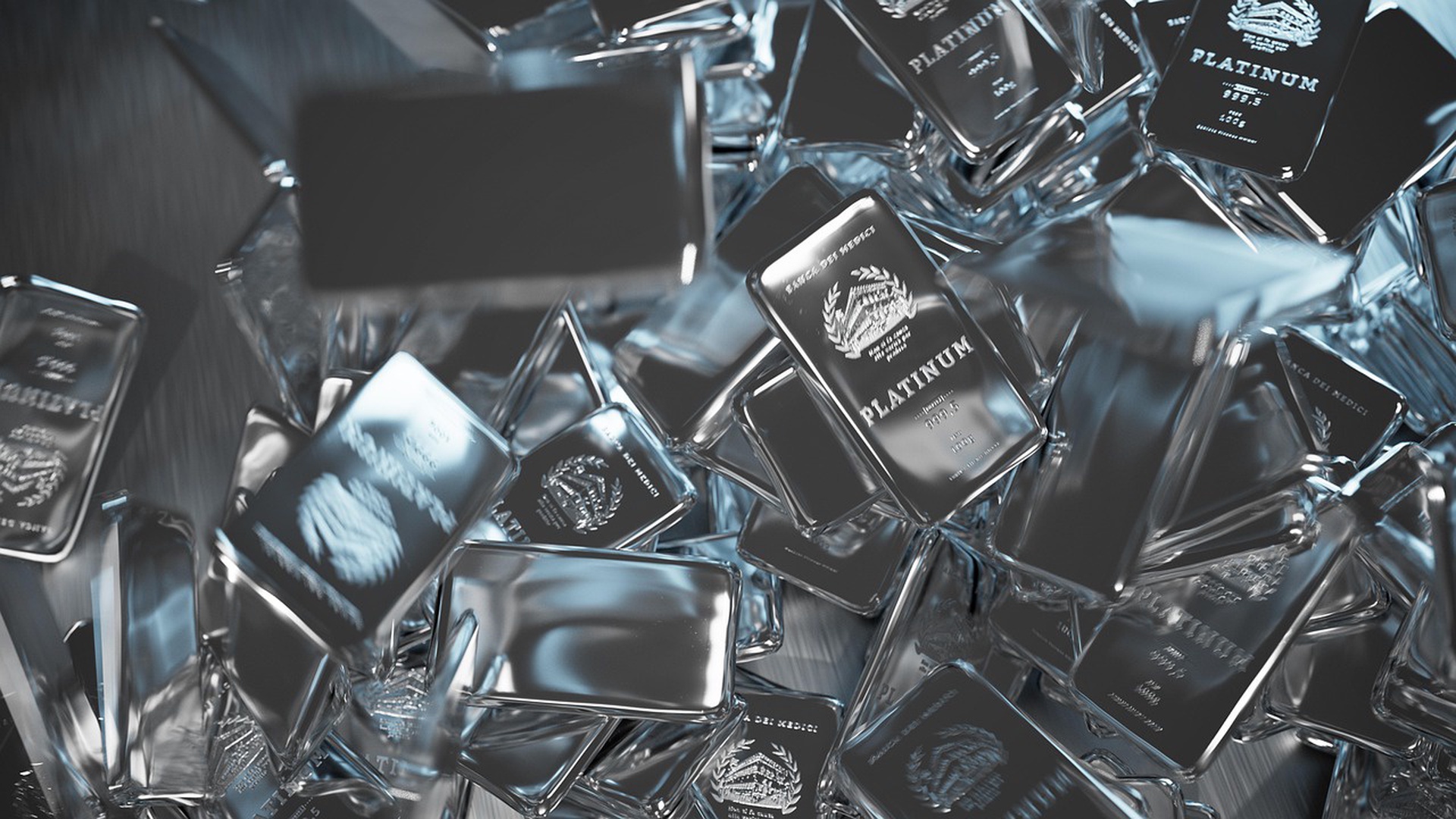
Platinum prices have surged to their highest level since 2008, driven by unprecedented market tightening, global trade uncertainties, and speculative interest in Asia. Spot prices have rallied above $1,930 per ounce, putting the metal on track for its strongest annual performance since 1987. According to the latest data from the World Platinum Investment Council (WPIC), while high prices are incentivizing some supply response, the market remains in a deep deficit that will only slowly correct as we approach 2026.

The primary driver of the current rally is a severe dislocation in the global supply chain. Fears of potential import tariffs under the U.S. administration have caused bullion banks and major market participants to shift massive tonnage of metal into American vaults.
Although platinum is not currently tariffed, its addition to the U.S. Geological Survey (USGS) 2025 List of Critical Minerals has done little to assuage fears of future trade barriers. Consequently, over 600,000 ounces are currently sitting in U.S. warehouses—far above historical norms. This hoarding has drained liquidity from the London over-the-counter (OTC) market, driving lease rates to approximately 14%, a historically high level that signals acute physical shortages.
Adding fuel to the fire is the launch of a new platinum futures contract on the Guangzhou Futures Exchange (GFEX). The contract has attracted a wave of speculative capital, driving domestic Chinese prices well above international benchmarks.
While arbitrage opportunities exist, they are currently hampered by logistical friction. Edward Sterck, Director of Research at the WPIC, noted that as these arbitrage processes smooth out, the pull from the Chinese market will likely continue to tighten global benchmarks. This creates a "three-way geographic competition" for metal between the U.S., Europe, and China.
The WPIC’s updated projections highlight a market in transition. For the year 2025, the forecast suggests that the market will end with a supply deficit of 692,000 ounces, marking the third consecutive year of shortages. However, looking ahead to 2026, analysts predict a shift towards equilibrium, with expectations of a small surplus of 20,000 ounces. This anticipated transition towards balance is largely dependent on the normalization of global trade. Sterck notes that a resolution to ongoing trade wars could potentially allow 150,000 ounces to flow out of U.S. vaults and back into the London market, which would help alleviate the current supply squeeze.
Despite the high-price environment, mine supply remains constrained. Production is expected to fall 5% year-on-year in 2025, sitting 10% below pre-COVID averages. This highlights the strategic value of resilient mining operations.
Conversely, secondary supply is booming. High PGM basket prices are drawing out spent autocatalysts and jewelry scrap. Recycling supply is projected to jump 7% in 2025 and continue growing in 2026. This surge in scrap flow underscores the growing necessity for high-efficiency processing capabilities, positioning downstream leaders like Phoenix Refining as critical valves in the supply ecosystem.
Despite a forecasted 22% decline in industrial demand due to cyclical reductions in glass manufacturing, other sectors continue to show resilience. In the automotive industry, demand is expected to experience a slight dip of 3%, yet it remains 10% above the five-year average. The European Union's decision to relax the 2035 ban on internal combustion engines has provided significant long-term support for this sector. Meanwhile, in the jewelry sector, demand is projected to rise by 7%, reaching levels not seen since 2018. On the investment front, total investment demand saw a growth of 6% in 2025. However, the World Platinum Investment Council (WPIC) anticipates a substantial 52% reduction in investment demand for 2026 as profit-taking activities increase and fears regarding tariffs begin to subside.
Platinum’s rally is also benefiting from the broader "Gold Faith" narrative on Wall Street. With gold trading near $4,335/oz and banks like JPMorgan and Goldman Sachs eyeing $5,000/oz by 2026, platinum’s historical correlation and current discount to gold make it an attractive diversification play.
As Dilin Wu of Pepperstone Group Ltd. noted, the combination of declining real interest rates, geopolitical risks, and structural deficits suggests that the current price action is "more likely a revaluation rather than a short-term speculative spike."