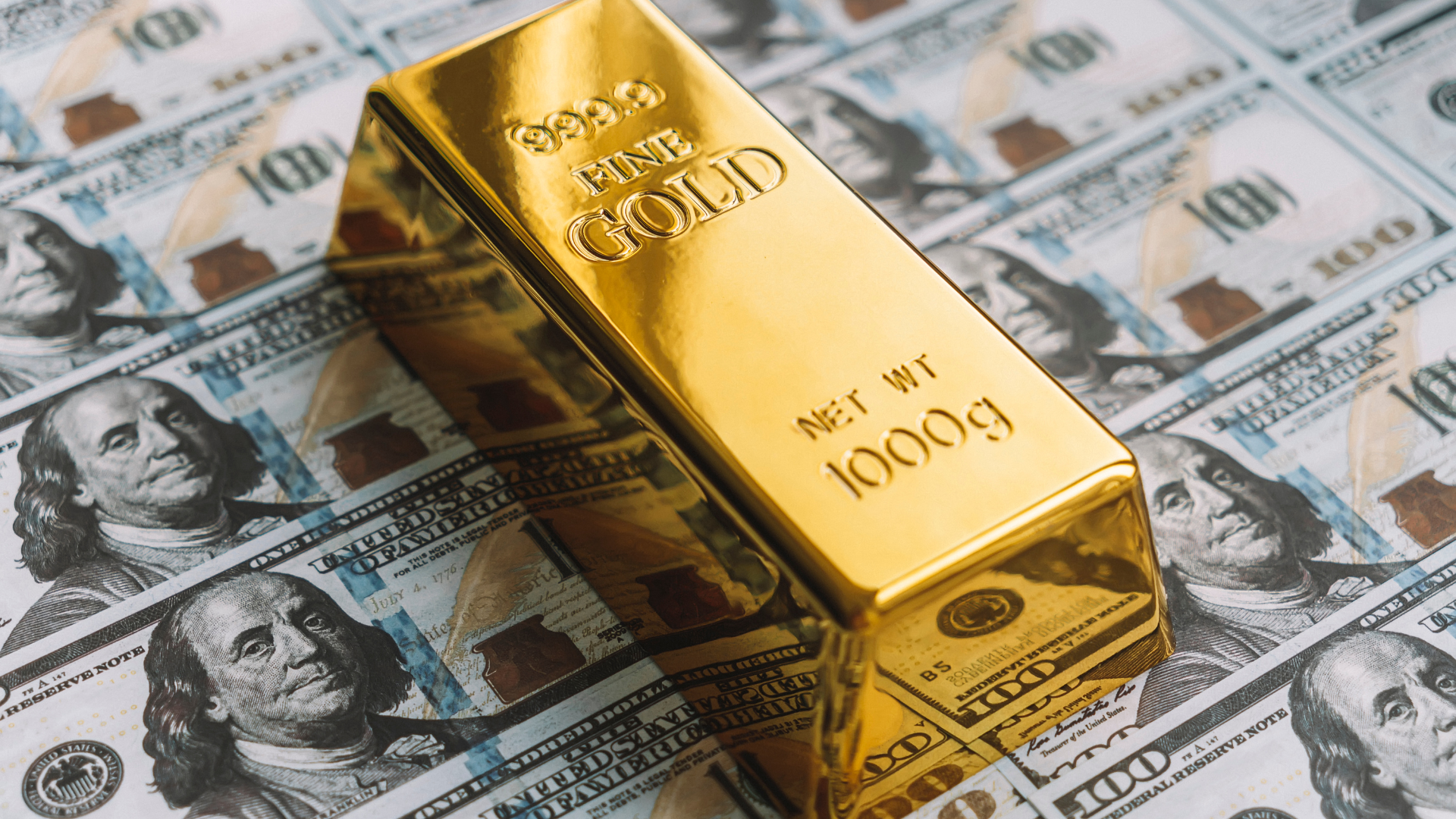
In a year marked by political volatility, global economic upheaval, and shifting investment norms, gold has emerged not just as a haven but as a dominant asset in its own right. The precious metal has shattered previous records, crossing the symbolic $4,000-per-ounce threshold in early October. With more than a 50% price increase so far in 2025, analysts and market watchers are now asking: What is behind this historic surge, and is it just about who’s sitting in the Oval Office?
While U.S. President Donald Trump’s return to the White House in January undeniably played a role in gold’s dramatic ascent, the bullion bonanza now underway is driven by a far broader network of interwoven global factors from central bank policies and geopolitical instability to a growing appetite for alternative investment strategies.
The current rally is unprecedented in recent decades. Gold, which showed a relatively stable pattern between $1,600 and $2,100 an ounce between 2020 and 2024, has exploded in value in 2025, rising by over 50% and outpacing even the most resilient stock market indices. Analysts predict it could climb as high as $4,530 by Q3 2026. Though dramatic price increases are not new to gold, the 1970s saw similar surges following President Nixon’s decision to end the gold standard. What’s different this time is how gold is behaving in tandem with, rather than in opposition to, the broader financial markets. In previous eras, gold rose when equities fell. Today, gold and equities, such as the Nasdaq and S&P 500, are rising together, suggesting a new role for gold as an “all-weather” asset.

“It’s no longer just a defensive play,” explains Tim Waterer, a chief analyst at KCM Trade. “What we are seeing now is that gold is functioning as an ‘asset for all occasions’... one that performs well during periods of market optimism and uncertainty.”
President Trump’s economic policies have certainly fanned the flames. His aggressive reintroduction of trade tariffs early in 2025 disrupted global supply chains and unsettled markets. An intensifying standoff with the Federal Reserve, repeated attacks on the central bank’s independence, and a deepening government shutdown extending into its second week have only amplified fears of fiscal instability.
“Trump has strongly influenced gold with his trade and fiscal policies, as well as his rhetoric against the Fed,” says Kyle Rodda, an analyst at Capital.com in Australia. “But this rally cannot be pinned solely on him. What we’re witnessing is a five-factor trade.” Indeed, other global tremors have added significantly to gold’s gleam. Japan’s recent political shift, following Sanae Takaichi’s surprise victory, which promised steep deficit spending and tax cuts, devalued the yen, normally another haven, fueling gold’s surge. France is in disarray after the resignation of Prime Minister Sebastien Lecornu, and continuing conflicts in Ukraine and the Middle East add further urgency to the flight to safety.
China, too, has been quietly fueling gold’s ascent through aggressive central bank buying, part of a strategy to diversify away from U.S. Treasuries amid deteriorating U.S.-China relations.
Interest rates have played a crucial role as well. In a bid to stimulate a slowing economy, the Federal Reserve has already cut interest rates by a quarter-point and is expected to cut at least twice more before year’s end.
For investors, this makes gold, which pays no yield, more attractive, especially as real returns from fixed-income assets diminish. A weaker U.S. dollar, driven by slower growth and political instability, has also made gold even more appealing to international buyers, who can now purchase bullion at a relative discount. Add to that ETF inflows, which hit a record $17.3 billion in September alone, and sustained central bank accumulation. You have a potent mix of structural and psychological forces pushing gold higher.
The retail landscape is also reacting. As gold prices soar, jewelry retailers like Pandora and Signet are grappling with “sticker shock” among price-sensitive customers. Meanwhile, many private citizens are cashing in heirlooms, melting down family jewelry for profit as gold enters uncharted territory. “There’s a visible surge in people checking the value of what they own,” said one retailer. “More people are looking to convert static holdings into liquidity.”
Silver, commonly known as gold’s cheaper cousin, has not been left behind. Futures for the metal are up over 65% this year, nearing its all-time high of $49.51 per ounce and benefiting from the gold bull market.
Veteran investors are drawing comparisons to the inflation-laden, high-debt era of the 1970s. Legendary hedge fund manager Ray Dalio noted recently that “it’s very much like the early ’70s,” suggesting that gold’s status as a portfolio diversifier has never been more critical. Dalio recommends holding up to 15% of a portfolio in gold. Meanwhile, analysts at Goldman Sachs and Deutsche Bank have raised their gold forecasts, expecting continued gains well into 2026. HSBC has also updated its silver outlook.
However, not all that glitters is investment gold. Skeptics point to gold’s volatility, typically between 10% and 15%, and caution that retail investors may be late to the party. The Commodity Futures Trading Commission warns that precious metals can be highly speculative, and in times of peak anxiety, the real winners are often the sellers, not the buyers.
Still, the broad and deep foundations of the current rally suggest it has staying power with or without Trump at the helm. The convergence of fiscal policy shifts, unprecedented ETF inflows, global political instability, and changing investor behavior has fundamentally reshaped gold’s role in the financial ecosystem.
This record-breaking rally isn’t just a rebuke of Donald Trump’s policies, though his tariffs and central bank battles certainly fanned the flames. The $4,000 price tag on gold is a referendum on a world in flux. It represents growing distrust in fiat currencies, mounting geopolitical tensions, and a broader reevaluation of traditional investment principles. As Alex Kuptsikevich of FxPro summarizes, “There is a growing trend away from the classic portfolio structure. In the current environment, it is recommended to invest about 20% in alternatives such as precious metals and cryptos.”
Whether this is the new normal or a supercycle nearing its peak, one thing is clear: gold is no longer just a recession hedge; it’s fast becoming a strategic centerpiece of global portfolios. And that transformation, many believe, is far too complex to be credited to one administration alone.