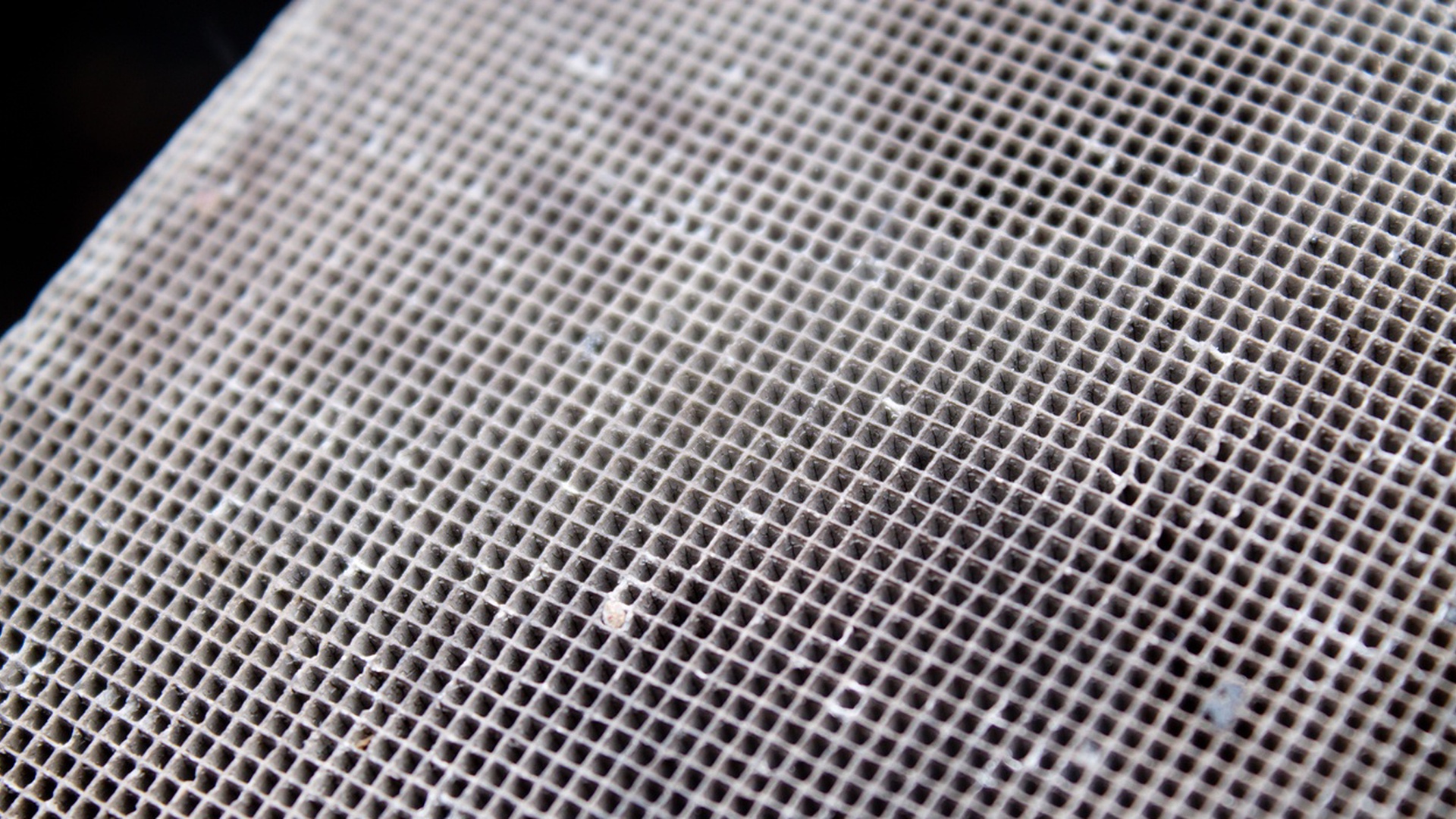
For fertilizer and chemical plants, a nitric acid burner is both a production asset and a valuable inventory of precious metals. Its catalyst converts ammonia and oxygen into nitric oxide, the first step in making nitric acid. The reaction takes place in a fraction of a second as hot gas passes through layers of fine platinum-rhodium (Pt-Rh) gauze. Temperatures commonly reach roughly 800–950 °C, so the gauze must provide high catalytic activity while retaining its shape under heat and gas flow.
That demanding service changes the metal. At the end of a campaign, platinum is no longer confined to the original catalyst wires: some remains in the spent Pt-Rh gauze, some has been captured in the palladium-based gauzes immediately downstream, and some may be present as fine dust elsewhere in the burner. Recovering value therefore means managing the whole gauze pack, not just removing and weighing the primary catalyst.
Platinum provides the activity and selectivity needed to oxidize ammonia predominantly to nitric oxide. Rhodium strengthens the fine wires at operating temperature and contributes to catalyst performance. The gauzes may be woven or knitted and are installed in multiple layers suited to the burner's operating conditions. Although platinum is a noble metal, it is not immobile in a hot, oxygen-rich ammonia burner. Platinum at the wire surface can form volatile oxide species that enter the passing gas stream. Higher temperatures, pressure, and gas throughput can increase the loss rate. At the same time, the initially smooth wire surface reconstructs into rough, branching formations often described as "cauliflower" growth. These structures provide catalytic surface area, but they can become fragile. Gas flow and handling can break off platinum-rich particles. This results in both vapor-phase transport and particulate loss. Because platinum is depleted more readily than rhodium, the remaining catalyst's surface composition also changes over the campaign. Eventually, declining performance and the condition of the gauze pack make replacement necessary.
Palladium-based catchment gauzes sit just downstream of the Pt-Rh catalyst. Their principal job is not to act as a simple dust screen. Rather, platinum-bearing vapor reaching the palladium wires can deposit as metal and diffuse into them, forming a platinum-palladium alloy. The catchment pack can also retain some entrained particles. This means the spent catchment gauze may contain a substantial share of the platinum missing from the original catalyst. The catchment wires change in service, too: they can swell and become porous or brittle as they take up platinum and lose some palladium. Treat them as valuable, potentially friable refining material—not as a reusable screen or ordinary scrap.
Ship the spent Pt-Rh catalyst and its corresponding palladium catchment pack to the same refiner. They serve as both the source and the principal recovery point for the same metal movement. If they go to different destinations, reconciling the catalyst's platinum loss against platinum recovered in the catchment pack becomes much harder. A single refiner can weigh, sample, and assay the identified streams under one agreed settlement procedure, giving the plant a clearer account of Pt, Rh, and Pd recovered from the campaign. Keeping the streams separately identified during packing and receipt also helps preserve that account; joint shipment avoids mixing them at the plant.
Aged gauzes can shed fine material with surprisingly little disturbance. During a turnaround, metal-bearing dust may also be present on support grids, burner internals, and nearby downstream surfaces. Small amounts matter financially, and airborne dust creates an exposure concern for maintenance personnel. Plan removal before opening the burner. Once the equipment has been isolated and made safe under plant procedures, handle gauzes gently, limit transfers, and use suitable containment as layers are lifted out. Avoid dragging, shaking, or crushing them. Do not use compressed air or dry sweeping to clean the work area: both can disperse valuable fines. Use appropriately rated industrial vacuum equipment with HEPA filtration for fine dust, following the site's safety and respiratory-protection requirements.
Collect loose fragments, deposits, and vacuumed material rather than discarding them with general turnaround waste. Package these fines in sealed, clearly labeled containers suitable for the material and the refiner's receiving requirements. Pack the gauzes securely so they cannot move excessively and continue shedding during transport. Record the identity and weight of each container, apply tamper-evident seals where required, and maintain a clear chain of custody. Keeping oils, solvents, and unrelated debris out of the material helps protect both the assay and the settlement.
At the refinery, the gauzes and fines require representative sampling because metal content is uneven across a used pack. The refiner then separates and recovers the platinum, palladium, and rhodium for return to the precious-metal supply chain. The practical rule for plant teams is straightforward: recover every layer, retain every reasonable fraction of dust, and keep the catalyst and catchment inventory together in the refining plan. Careful turnaround handling protects workers, reduces avoidable metal loss, and makes each nitric acid campaign's financial result easier to verify.