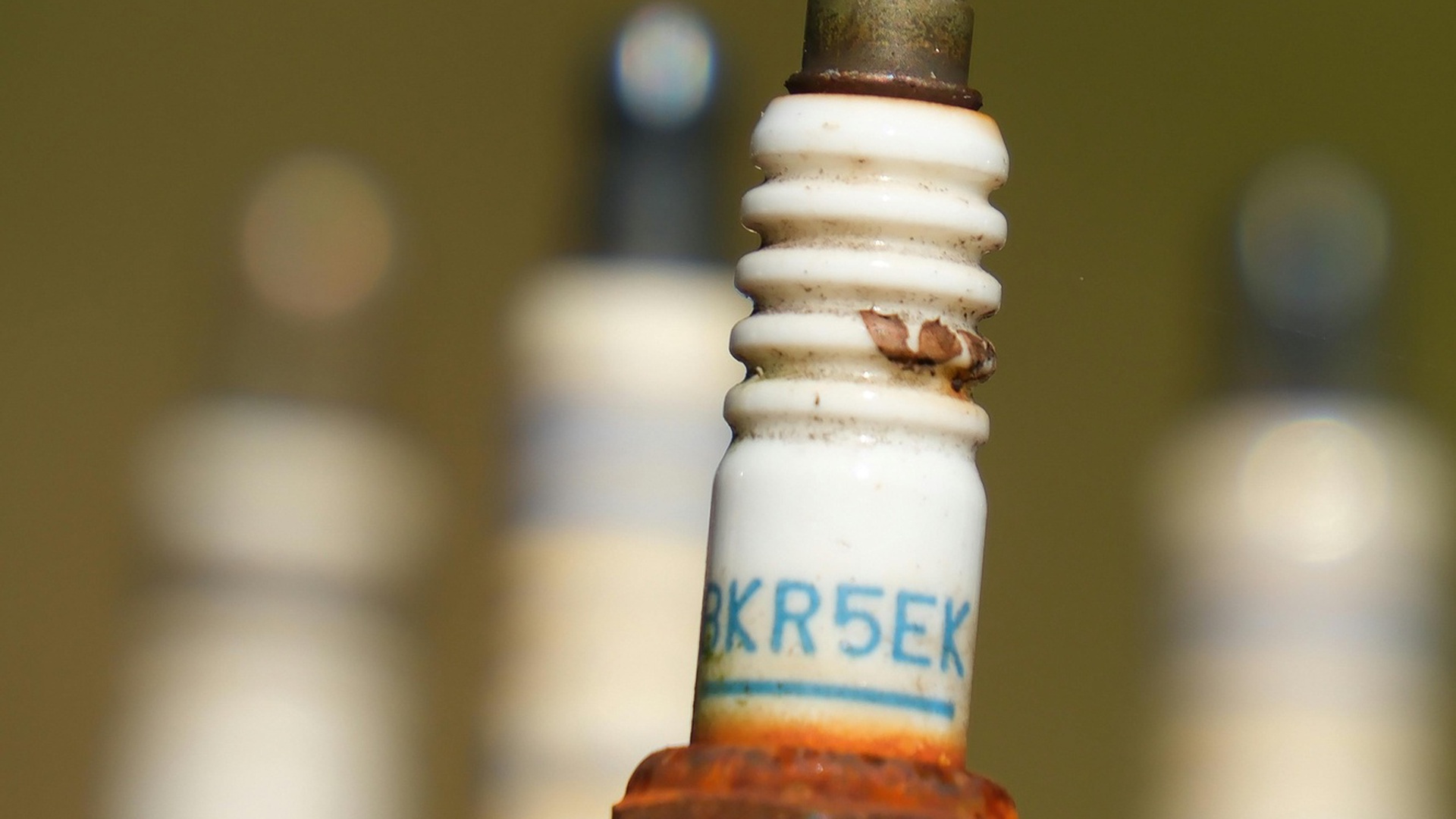
Spark plugs may look like simple, disposable automotive parts, but many modern versions contain small amounts of extremely valuable platinum group metals, especially iridium, platinum, and increasingly ruthenium. These metals are used because spark plugs operate in one of the harshest environments inside a vehicle: the combustion chamber. Every ignition event exposes the electrode to intense heat, electrical discharge, oxidation, pressure, and mechanical stress. Ordinary metals wear away quickly under these conditions, but iridium and platinum can survive for tens of thousands of miles. This hidden metal value is what makes spark plug recycling increasingly feasible.
Iridium is one of the rarest and most durable metals in industrial use. It has an exceptionally high melting point of about 2,446°C, strong resistance to spark erosion, high hardness, and excellent stability at extreme temperatures. These properties allow manufacturers to make minimal, fine-wire center electrodes, sometimes as thin as 0.4 mm. A thinner electrode improves ignition performance because it requires less voltage to create a spark and reduces heat loss from the flame kernel. This helps engines start more reliably, idle more smoothly, and burn fuel more efficiently. For this reason, iridium spark plugs are widely used in modern vehicles designed for long service intervals, often lasting 100,000 miles or more.
Platinum is also commonly used, especially on ground electrodes or in “double platinum” plug designs. Ruthenium has recently gained attention as another alternative to platinum group metals because it offers strong conductivity and durability at a lower historical cost than iridium.
The reason spark plug recycling was historically ignored is that each plug contains only a tiny amount of precious metal. The iridium or platinum tip may weigh only milligrams, while the rest of the spark plug is made from steel, nickel alloy, copper, and ceramic. If spent spark plugs are thrown into ordinary steel recycling, the precious metals are effectively lost. The iridium or platinum dissolves into the much larger steel melt and becomes too diluted to recover economically. In other words, the metal is still technically present, but it is spread so thinly through the recycled steel that separating it later is impractical.
For recycling to work, the valuable electrode tips must be physically separated before the spark plug is melted or shredded into general scrap. The economics of spark plug recycling changed as iridium prices rose sharply. Iridium is not mined in large quantities on its own; it is mostly produced as a by-product of platinum and nickel mining. That means global supply cannot easily increase when demand rises. At the same time, demand for iridium has grown because it is needed in advanced technologies, including electrolyzers that use proton exchange membranes for green hydrogen production. This has made iridium a strategic critical mineral.
When iridium prices were lower, recovering a few milligrams from each spark plug was rarely worth the labor and processing cost. But at higher prices, large volumes of used spark plugs can represent significant value. Aggregated across millions of end-of-life vehicles and repair shops, spent spark plugs become a meaningful secondary source of iridium, platinum, and ruthenium.
Modern spark plug recycling depends on efficient sorting and mechanical separation. First, recyclers must identify which plugs contain precious metals. Standard copper or nickel plugs have little value in recovering platinum group metals. Iridium and platinum plugs are often marked with terms such as “iridium,” “platinum,” “double platinum,” or “IR.” They may also be recognized by their fine-wire electrode shape or visible platinum pad. Next, the precious metal-bearing tips are removed from the steel and ceramic body. Manual separation is possible but slow, so commercial recovery increasingly depends on automated systems. Machine vision and robotic cutting tools can orient whole spark plugs, identify the electrode area, and cut away the valuable tip. Some processes may also use cryogenic treatment, where the plugs are cooled to very low temperatures to make steel and ceramic components brittle and easier to break apart. Once separated, the recovered tips form a concentrated precious-metal feedstock. This material can then be refined using advanced metallurgical processes.
Recovering iridium is difficult because it is chemically resistant. It does not dissolve easily in ordinary acids, and even aqua regia is often ineffective under standard conditions. Specialized refining methods are required. These may include high-temperature smelting, molten salt treatment, chlorination, hydrometallurgical leaching, solvometallurgy, or molecular separation technologies. Newer processes are designed to reduce chemical waste, lower energy use, and selectively recover iridium, platinum, ruthenium, and rhodium from complex mixed-metal feedstocks.
The goal is to convert tiny electrode fragments into high-purity metal powders, salts, or oxides that can be reused in new industrial applications.
Recycling spark plugs is feasible because modern spark plugs often contain valuable platinum group metals such as iridium, platinum, and ruthenium. Although each plug contains only a tiny amount, large-scale collection and automated processing can turn spent plugs into a profitable and environmentally beneficial source of critical metals. The key is separation. If spark plugs are treated as ordinary scrap steel, the iridium is lost. But if the precious metal tips are sorted, removed, and refined properly, they become a high-value secondary resource.
As iridium becomes increasingly important for clean-energy technologies and advanced manufacturing, used spark plugs should no longer be viewed as waste. They are small but valuable units of urban ore.