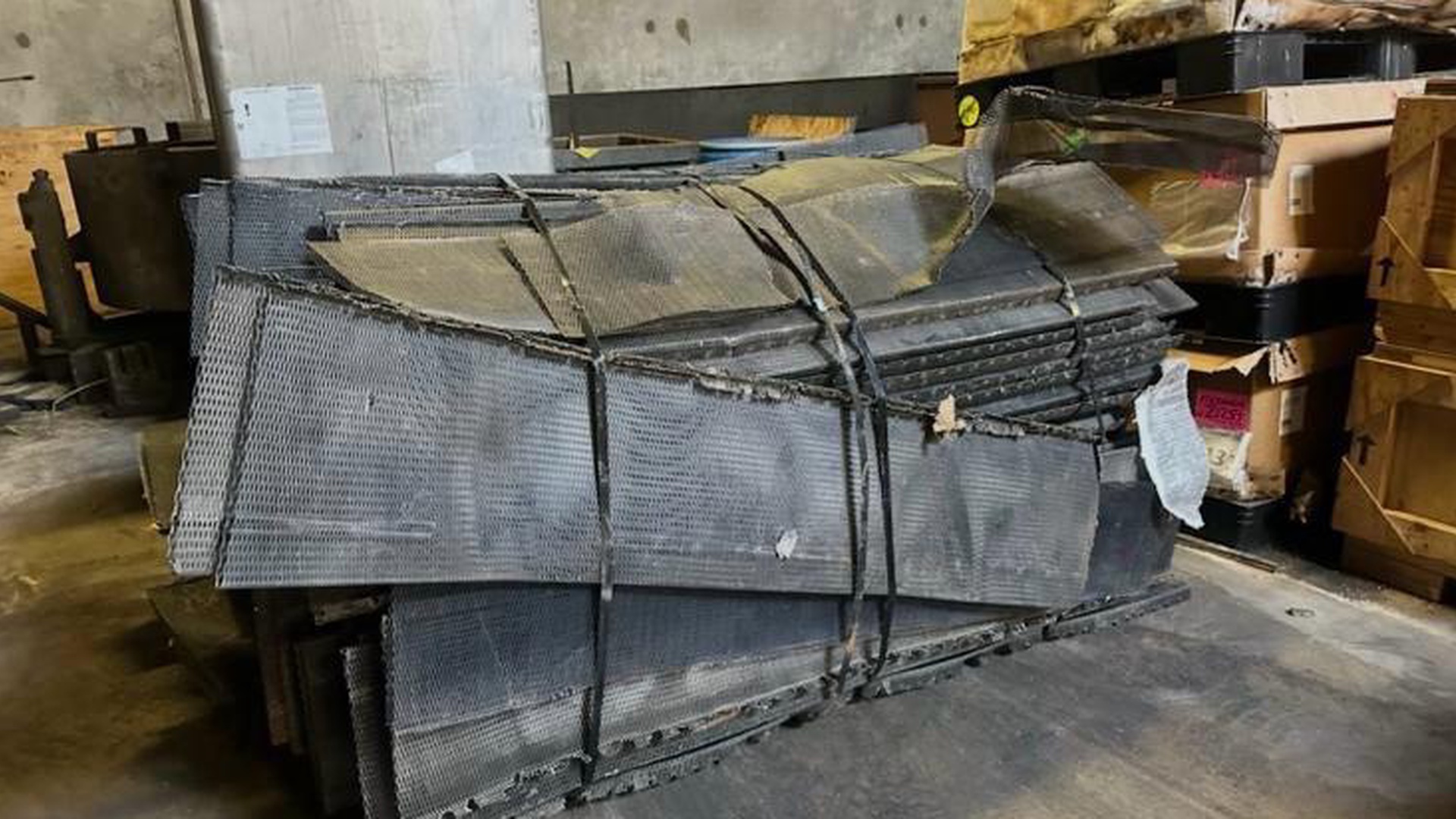
When titanium-ruthenium (Ti/Ru) screens reach the end of their operating life, replacement can seem straightforward: remove the exhausted anodes, purchase new assemblies, and dispose of the old equipment. But declining electrochemical performance does not necessarily mean the entire screen has lost its value. Spent screens may still contain recoverable ruthenium and, depending on the coating formulation, iridium on a titanium substrate suitable for reuse. Before authorizing disposal, operators should evaluate whether precious metal refining and substrate recoating offer a better return. For chlor-alkali plants, water electrochlorination facilities, and other electrochemical operations, that assessment can turn a disposal expense into an asset-recovery opportunity.
Mixed metal oxide (MMO) anodes combine a corrosion-resistant titanium structure with a thin, electrocatalytically active coating. Their introduction helped reduce the high consumption rates and maintenance demands of older graphite electrodes while lowering energy requirements for chlorine production. Titanium provides mechanical strength and dimensional stability. Ruthenium oxide promotes the chlorine evolution reaction, while iridium oxide can improve coating durability. Titanium oxide may also form part of the coating matrix, supporting its structure and stability. Although these assemblies are designed for demanding service, their catalytic coatings have finite lives. Service periods commonly range from approximately two to eight years, depending on coating design, current density, electrolyte composition, temperature, and operating practices.
Over time, catalytic material dissolves, coatings crack or detach, and electrolyte reaches the titanium interface. An insulating titanium dioxide layer can then develop beneath the remaining coating, increasing electrical resistance and reducing performance. Importantly, an anode can become electrochemically ineffective while retaining both precious metal content and a serviceable titanium structure. Functional failure is therefore not the same as complete material exhaustion.
The financial case for recovery rests on two distinct assets: the residual precious metals and the fabricated titanium substrate. Ruthenium and iridium are platinum group metals with significant, fluctuating commodity values. Although individual coatings are thin, the recoverable inventory across a large screen bank can justify professional evaluation. Its actual value depends on representative sampling, assay results, recoverable metal quantities, processing charges, and agreed settlement prices, not simply the original coating specification.
The titanium structure can be equally important. Expanded mesh, plates, tubes, welded connections, and custom assemblies require costly fabrication. Reusing a qualified substrate avoids purchasing and manufacturing an entirely new structure.
In favorable cases, refurbishment may reduce expenditure substantially, with potential savings approaching 50% compared with new assemblies. Treat that figure as a project-specific possibility, not a guarantee. Substrate condition, residual coating content, freight, refining fees, recoating requirements, and turnaround time all influence the outcome. Even when a substrate cannot be reused, its remaining coating may still warrant precious metal recovery before the titanium enters an appropriate recycling stream.
A recovery program begins with inspection and characterization. The processor evaluates screen dimensions, weld integrity, corrosion, deformation, contamination, and remaining coating content. These findings determine whether the assembly is suitable for refurbishment or should proceed to materials recovery only.
For reusable screens, controlled stripping separates the depleted MMO coating from the titanium. Chemical methods can help preserve substrate geometry, although the appropriate process depends on the coating and substrate condition. Preserving the metal is an engineering objective, not an automatic outcome. The separated coating is processed through specialized refining routes. These may combine chemical leaching, oxidative treatment, thermal processing, and selective separation to recover ruthenium and other valuable metals.
Some ruthenium processes involve ruthenium tetroxide, a highly toxic, volatile oxidant. Such work belongs in properly engineered facilities with suitable containment, emission controls, and trained personnel, not in improvised on-site recovery systems. Meanwhile, qualified titanium substrates undergo cleaning and surface preparation before receiving a new catalytic coating. MMO recoating typically uses repeated applications of precursor solutions followed by thermal treatment to form the required metal oxides. The formulation must match the intended service. A coating optimized for chlorine evolution is not interchangeable with one designed for oxygen evolution in acidic conditions. Final quality checks should verify coating loading and distribution, dimensional conformity, and electrochemical performance. Agree on inspection and testing requirements with the recoater before processing begins.
Operators can sell spent screens outright or arrange toll refining, under which they retain ownership of the recoverable precious metals and pay for processing.
In a closed-loop arrangement, recovered metal is credited to the operator's account and can help offset the metal required for new coatings. This reduces exposure to market purchases, but it does not eliminate them: metal lost during service or processing must be replaced.
A sound agreement should specify sampling and assay procedures, payable recovery terms, fees, settlement timing, ownership, and dispute-resolution provisions. The comparison should also include replacement lead times, spare-screen inventory, and downtime risk. A favorable refining credit has limited benefit if an unplanned delay disrupts production.
Spent anodes should not automatically be treated as ordinary scrap. Their classification depends on composition, contamination, physical form, intended recovery operation, and the laws governing the shipment. International movements may fall under the Basel Convention and national waste-shipment rules. Clean metal scrap and certain cleaned precious-metal-bearing catalysts may qualify for less restrictive classifications, but you cannot assume this for every coated screen or stripping residue. Where hazardous-waste controls apply, permits, manifests, approved transporters, and prior written consents may be required. Facilities in the Philippines, for example, must evaluate applicable requirements under RA 6969 and current DENR-EMB regulations.
The best time to plan recovery is before the next replacement shutdown. Recording coating specifications, monitoring performance, and retiring screens before severe substrate damage occurs can preserve refurbishment options. A spent Ti/Ru screen is not necessarily a disposable consumable. With verified assays, qualified processing, and compliant logistics, it can become a source of recovered precious metals and a reusable production asset, reducing replacement costs while keeping valuable materials in circulation.