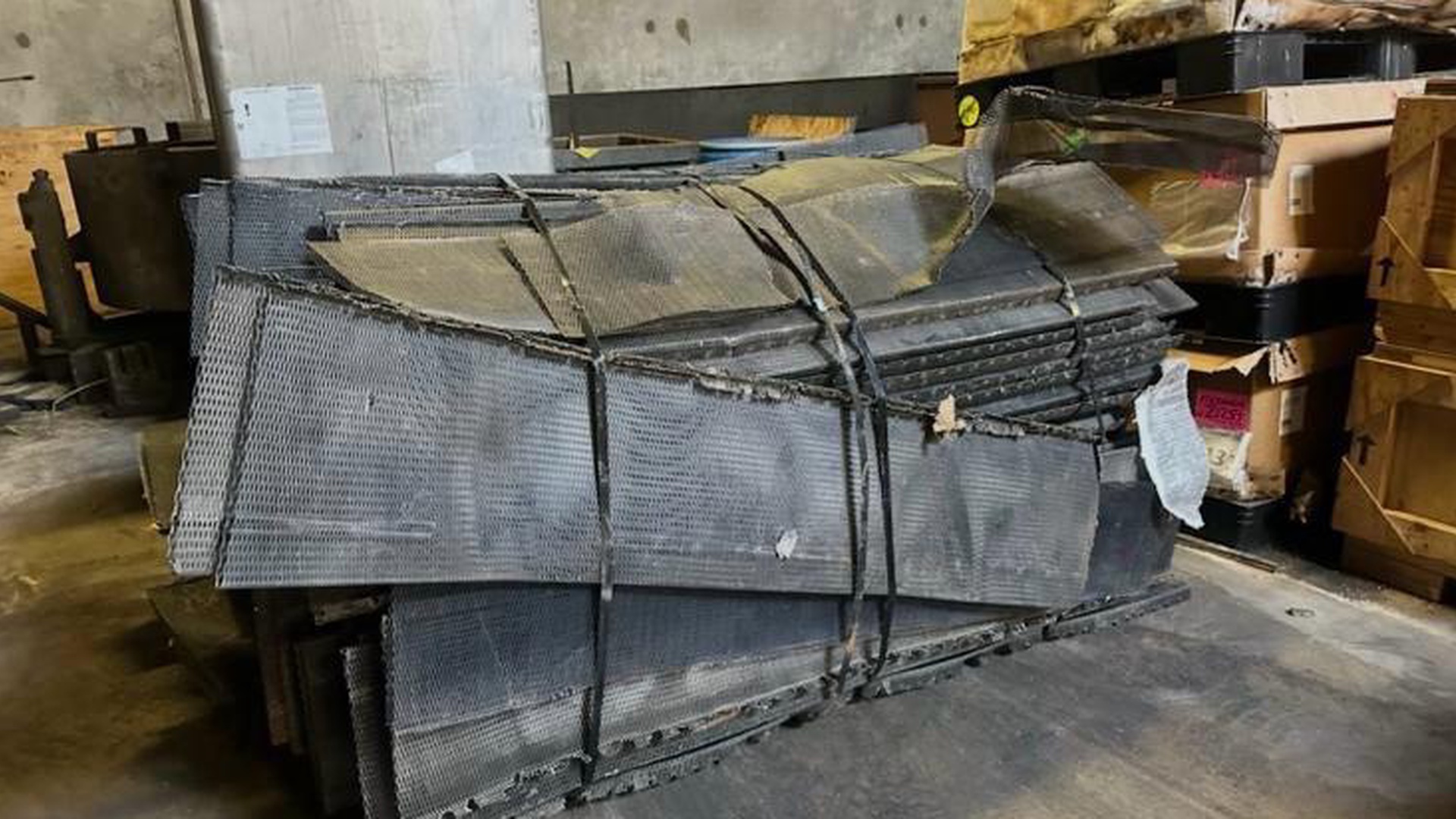
Facilities often treat mixed metal oxide and dimensionally stable anodes as ordinary titanium scrap after removing them from service. Many facilities place retired mesh panels, plates, and anode assemblies in laydown yards, bundle them with titanium offcuts, and sell them by weight. That approach overlooks the real source of value: the thin catalytic coating bonded to the titanium surface. These coatings contain ruthenium, iridium, and other specialized metal oxides used to drive chlorine or oxygen evolution reactions in demanding industrial environments. Even after an anode reaches the end of its operating life, a substantial portion of its original precious-metal coating may remain. For that reason, treat spent anodes as a recoverable secondary metal resource rather than simply used titanium hardware.
Among the three most common coating families, iridium-tantalum anodes are generally the most valuable, ruthenium-iridium anodes usually occupy the middle tier, and ruthenium-titanium anodes remain valuable but tend to rank lower on a per-area basis. The final value of any specific lot depends on its original coating loading, active surface area, service history, contamination level, remaining coating inventory, and refinery assay.
An anode is considered "spent" when it can no longer operate efficiently in its intended process. That does not necessarily mean the catalytic coating has disappeared. Often, the principal cause of retirement is passivation of the titanium substrate beneath the coating. During years of operation, electrolyte can enter tiny pores, cracks, or weak points in the coating. As a result, the titanium substrate forms an insulating oxide layer. That layer raises electrical resistance between the titanium and the catalytic surface. The cell then requires more voltage to maintain the same production rate, increasing power consumption and creating operational limitations.
Eventually, the facility removes the anode because it no longer meets its electrical or production requirements. Yet much of the original coating can remain on the surface. Mechanical erosion, gas-bubble activity, chemical dissolution, and flaking do gradually reduce the coating over time, but many electrodes are retired before those mechanisms fully consume the precious-metal layer. This is why operating history matters so much. Anodes removed because of increasing cell voltage may retain significant recoverable metal, even if they appear dark, worn, discolored, or heavily scaled.
Iridium-tantalum-coated titanium anodes are widely used in acidic oxygen-evolution applications. They are commonly used in copper, cobalt, nickel, and zinc electrowinning; copper foil production; acid electroplating; and some specialized water-treatment systems. These anodes are engineered for highly aggressive service conditions. Iridium provides the catalytic activity and durability needed for oxygen evolution in low-pH electrolytes, while tantalum-based components improve coating stability and help protect the titanium substrate. Because these anodes often use substantial iridium loadings, they are generally the highest-value category of spent MMO material. In particular, copper electrowinning anodes can have significant coating inventories because they must withstand continuous operation in acidic solutions and demanding current-density conditions.
A facility replacing several thousand electrowinning anodes may therefore be handling a meaningful secondary source of iridium. The titanium structure itself has relatively little value compared with the recoverable metal in the surface coating. For this reason, segregate, document, and send Ir-Ta material for specialized evaluation rather than mixing it into standard titanium scrap streams.
Ruthenium-iridium-coated anodes are used in applications where chlorine and oxygen evolution can occur together or where process conditions change over time. Common uses include on-site hypochlorite generation, seawater electrochlorination, ballast-water treatment, saline water disinfection, and other variable brine services. Ruthenium provides strong chlorine-evolution performance, while iridium improves durability when oxygen evolution becomes more significant or when the process environment is less stable. These coatings may also include titanium-based or other valve-metal oxides that improve adhesion, extend service life, and reduce the amount of precious metal required in the formulation.
From a recycling perspective, Ru-Ir anodes occupy an important middle position. They contain both recoverable ruthenium and iridium, making them more valuable than ruthenium-only systems in many cases. However, they often contain less iridium than an Ir-Ta electrowinning anode, so their total value usually falls below that of high-loading Ir-Ta material. The economic importance of Ru-Ir anodes is frequently overlooked because the coating is visually thin and may be partially covered with scale or process residue. Large quantities of screens from a hypochlorite or electrochlorination system can nevertheless represent a significant recoverable precious-metal inventory when aggregated and properly assayed.
Ruthenium-titanium-coated anodes are among the most widely used electrode systems in industrial brine electrolysis. They are common in chlor-alkali production, chlorine generation, hypochlorite systems, pool chlorination, water treatment, and other applications requiring chlorine evolution.
This coating category is widely recognized as the original industrial workhorse of dimensionally stable anode technology. Ruthenium provides catalytic activity for chlorine generation, while titanium-based oxide components help create a stable coating structure on the titanium substrate. Ruthenium-titanium anodes are usually less valuable per unit area than Ir-Ta or Ru-Ir systems because they do not include iridium. However, their extensive use across chlor-alkali and water-treatment industries means that the total recoverable inventory in a large turnaround can still be substantial. A major chlor-alkali facility may replace thousands of square meters of titanium mesh during a scheduled maintenance event. Even if each square meter has a lower precious-metal concentration than an electrowinning anode, the total quantity of ruthenium retained across a large volume of material can be meaningful. These lots should not be dismissed as low-value titanium scrap simply because they are associated with chlorine service.
The difference between Ir-Ta, Ru-Ir, and Ru-Ti coatings isn't always obvious by appearance. All three may look dark gray, black, brown, or dull metallic after years of industrial use. Surface scale, manganese deposits, lead residues, mineral salts, corrosion films, and process dragout can make visual assessment even less reliable.
A yard inspection cannot reliably determine whether an anode contains high-value iridium, a ruthenium-iridium mixture, or only ruthenium. Visual inspection also cannot establish how much catalyst remains after service. Two anodes that look similar may have dramatically different recovery potential because of their original coating specifications and operating history.
The most reliable starting point is documentation. Facilities should preserve manufacturer information, purchase orders, coating certificates, asset tags, cell-service records, and records of previous recoating. The anode's active surface area is also critical because catalyst loading is typically specified by area rather than total substrate weight. After reviewing the documentation, specialized screening and refinery assay can establish the actual composition and remaining precious-metal inventory. This is especially important for mixed lots accumulated over many years, where different anode generations may have been stored together.
General scrap processors typically value spent anodes according to titanium weight, cleanliness, and physical form. They may classify coated titanium mesh as low-grade or contaminated titanium because the coating complicates conventional metal recycling. Their pricing model generally does not account for the precious metals bonded to the surface. This is not necessarily because the material lacks value. Conventional scrap yards often lack the analytical tools, chemical processing capability, or precious-metal refining channels needed to recover ruthenium and iridium from catalyst coatings.
Specialized refining requires representative sampling, chemical or thermal separation, analytical testing, and controlled recovery processes. A qualified precious-metal recycler evaluates the material based on verified metal content rather than titanium weight alone. That distinction can fundamentally change the outcome of a turnaround disposition decision. For plant operators, the practical lesson is simple: do not combine spent MMO anodes with general titanium scrap until you identify the coating chemistry and a qualified refiner evaluates the material.
Spent MMO and DSA anodes should not be evaluated by titanium weight alone. Whether the material is iridium-tantalum from electrowinning, ruthenium-iridium from hypochlorite or electrochlorination service, or ruthenium-titanium from chlor-alkali operations, the catalytic coating may retain significant recoverable precious-metal content after the anode has reached the operational end of life.
The right disposition strategy begins with identifying the coating chemistry, separating material by process origin, retaining available manufacturer and operating records, and cleaning the anodes of bulk process residues before shipment. Most importantly, facilities should obtain an assay-based evaluation rather than accepting a generic titanium scrap offer.
Phoenix Refining buys spent MMO and DSA titanium anodes, including Ir-Ta, Ru-Ir, and Ru-Ti coated materials from electrowinning, chlor-alkali, electroplating, hypochlorite generation, water treatment, and related industrial operations. Phoenix Refining helps sellers evaluate coating type, organize turnaround lots, assess recoverable precious-metal content, and route material through a specialized refining process rather than a conventional scrap channel.
If your facility has retired titanium mesh, anode screens, plates, baskets, or electrode assemblies in storage, contact Phoenix Refining before selling them as base-metal scrap. Providing photographs, dimensions, estimated active surface area, manufacturer information, process history, and approximate quantities can help begin the evaluation process.