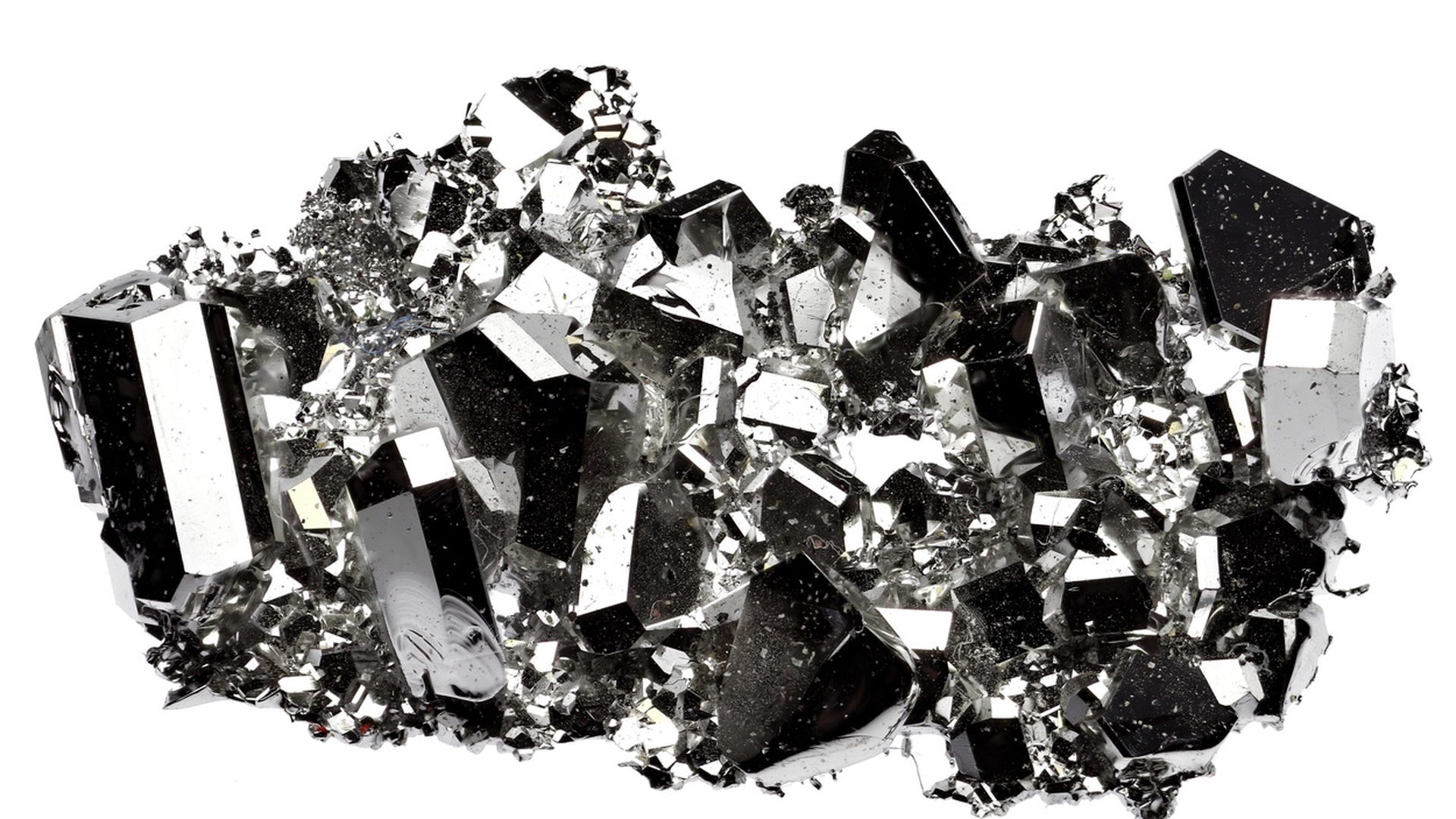
Ruthenium's price spike has highlighted a fairly obscure element of AI infrastructure: the hard disk drives that store so much data. The investment case isn't simply that more data centers will require more of the metal. Ruthenium is mined alongside the other PGMs, and miners generally expand production at the mine based on platinum and palladium economics. Demand for a small co-product can rise far faster than supply.
CMP's ruthenium reference price was $1,780.14/oz on 13 October 2026 (a 109.43% increase over the prior 12 months). This is a different period than the earlier increase from around $560 to $1,750/oz over the 12 months to March 2026. Either way, it's a very significant price increase. It should be noted that reference prices are reference prices and can vary depending on the specification, delivery terms, and assessment date. They are not necessarily the prices paid in every transaction.
Ruthenium has a role in HDD components (the thin films in the recording media and the magnetic heads). In conventional perpendicular magnetic recording, it's used as an underlayer to help orient the magnetic grains, which in turn supports both density and reliability.
The IEA forecasts electricity use in data centers worldwide to rise from 485 TWh in 2025 to 950 TWh in 2030. That scale of growth in data storage is one reason this metal is such an important area of interest.
It doesn't, however, guarantee that total ruthenium consumption will keep rising. In its May 2026 outlook, Johnson Matthey expected data center growth to push demand for ruthenium in hard disks to a five-year high, while overall ruthenium demand fell by around 6% as chemical sector consumption declined. New recording technology could also affect the amount of metal required per unit of storage.
HAMR (heat-assisted magnetic recording) uses considerably less ruthenium than current hard drive technology, according to the IPGMA. Increased storage capacity and greater material efficiency could therefore be working in opposite directions.
For 2026, Metals Focus projects a 203k-ounce ruthenium deficit. Johnson Matthey has a separate view, with primary supply at 977k and demand of 1.193m (a 216k-ounce gap according to their definitions). Neither forecast implies that industrial demand will necessarily go unfilled, as inventories and recycling can help close the gap. What they do show is how tight the market is.
The constraint is essentially geological and economic. Ruthenium is always found with the other PGMs, so a mine's output is dominated by platinum and palladium. A higher ruthenium price won't make the orebody produce more ruthenium per tonne. It won't necessarily justify a new mine without bigger revenue streams from the other metals to cover the costs of building and operating it.
Supply is geographically concentrated. USGS estimates show that South Africa, Russia, and Zimbabwe accounted for over 90% of mined platinum and palladium in 2025. Johnson Matthey estimates that South Africa alone accounts for over 85% of primary ruthenium supply. Decisions on production and disruptions in a small number of mining regions therefore significantly affect buyers globally.
Automotive demand is also a factor. Catalytic converters remain a major end use of the PGMs, which in turn supports platinum and palladium production. JM expects platinum demand to outstrip supply in 2026, with palladium moving to a small surplus as gasoline vehicle production falls and recycling increases. If weak automotive demand makes a host mine unattractive, a strong ruthenium price may not be enough to maintain or expand output.
Recycling helps, but the extent of its help must be properly defined. Recovering ruthenium from spent industrial products can reduce the need to mine new ruthenium. Furuya Metal, for instance, has a refining and recycling capacity of 25-30 tonnes of ruthenium per annum.
Capacity is not the same as actual recovery, and in a closed-loop system the metal may simply return to the original owner rather than become available to another buyer. Recycling of catalytic converters is not the answer either, as those units are predominantly a source of platinum, palladium, and rhodium rather than the ruthenium required for data storage applications.
Ruthenium's supply issue has a parallel in the heavy rare earths. You can't build a light rare earth mine and expect to get any dysprosium, terbium, or yttrium, as those elements aren't present in the orebody. Magnet manufacturers need suitable sources and processing that can deliver material their customers will accept. Energy Fuels announced that a major magnet manufacturer outside of China has qualified the terbium oxide produced at its White Mesa Mill, illustrating the importance of an existing processing facility. Product acceptance is a step toward sales that a resource estimate cannot achieve.
For mining investors, the same principle applies in reverse. A valuable co-product can generate revenue at very low additional cost if it can be recovered from material that's already going through an operating plant or a tailings stream. Sovereign Metals' Kasiya project illustrates this principle, with definitive feasibility study economics based on rutile and graphite and potential heavy rare earth recovery providing further upside that is not included in that study.
That upside is still subject to a demonstrated recovery route and to commercially viable costs and should not be regarded as assured revenue. At an earlier stage, ValOre Metals' Pedra Branca project could provide PGM supply from outside the main producing regions. The current inferred resource is 2.198 million ounces of Pd, Pt, and Au. A planned resource update and preliminary economic assessment are due to define the scale and initial economics. The resource potential cannot become an actual mine supply until the work is completed and a project is funded and built.
For shareholders, good co-product grades or prices can help project viability, but a developer with limited capital may still need additional finance. Issuing shares may raise that finance, which would, of course, dilute existing shareholders. Government price floors and strategic stockpiles can mitigate some market risk, but they don't cover the cost of a host mine or prove that the byproduct can be recovered and sold.
The move in the ruthenium market therefore reflects supply tightness rather than any expectation of a big ramp-up in production. AI infrastructure may in fact support demand even as the technology changes and metal consumption per drive falls. The real value will be in host-mine economics, recoverable volumes, processing quality, and the ability to finance development, rather than the spot price of the co-product.