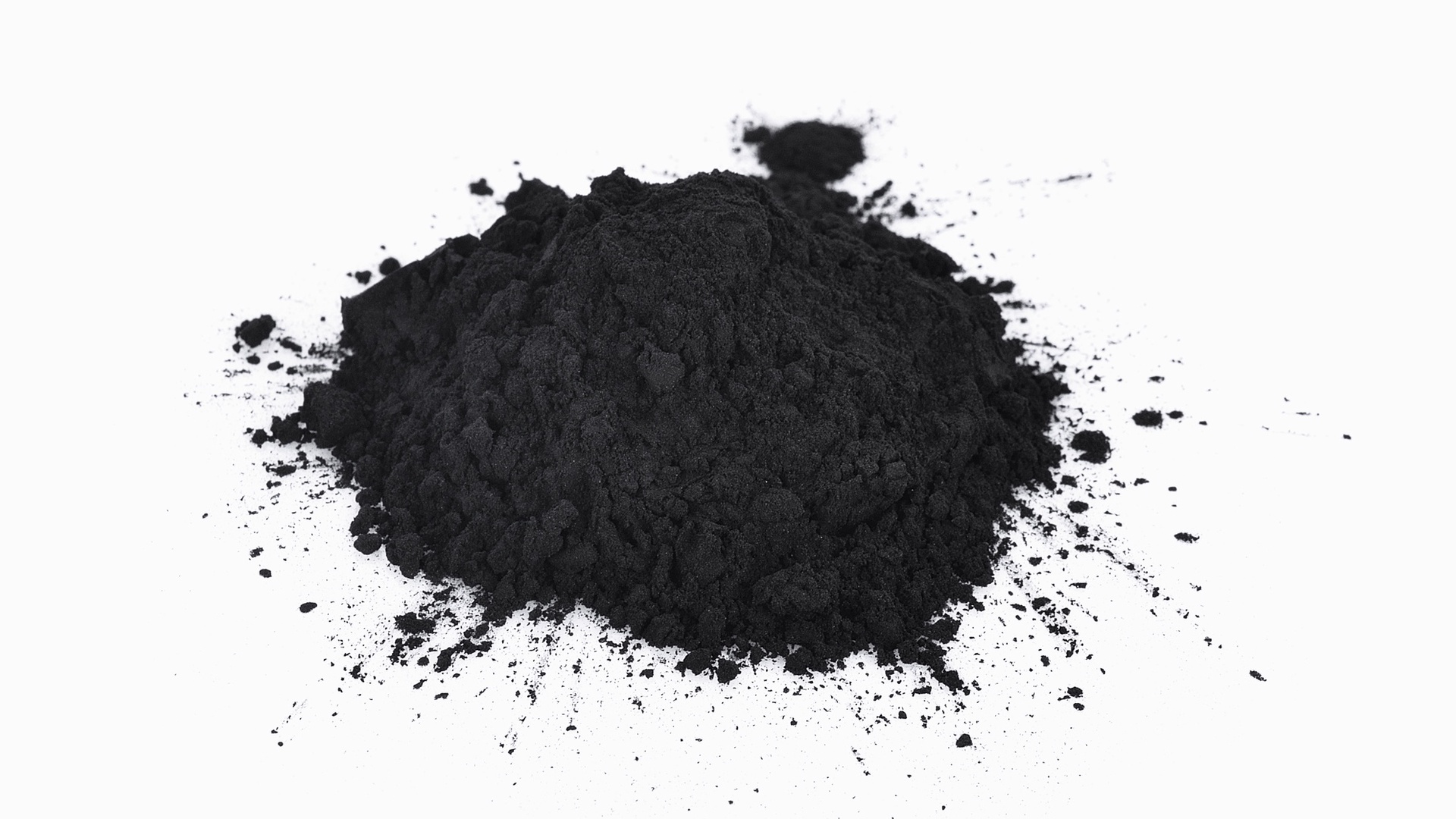
Ruthenium is one of the rarest elements in Earth’s continental crust, with an estimated abundance of only 0.6 parts per billion. This is considerably lower than platinum and palladium, which are each present at approximately 1.5 parts per billion. More importantly, large or concentrated deposits of ruthenium that can be mined economically on their own are rare.
Instead, it occurs in tiny quantities within platinum-group-metal (PGM) deposits and nickel-copper sulfide ores. It may exist as microscopic mineral particles, inclusions inside other minerals, or solid solutions associated with iron, nickel, and copper sulfides. Important sources include South Africa’s Bushveld Complex, Zimbabwe’s Great Dyke, Russia’s Norilsk-Talnakh deposits, Canada’s Sudbury Basin, and the Stillwater Complex in the United States. As a result, a small number of mining regions account for global production. Operational problems, energy shortages, political instability, or trade restrictions in any of these areas can significantly affect the world’s ruthenium supply.
The main reason ruthenium is commercially rare is that it is typically produced as a byproduct of mining other metals. There are no major mines developed primarily to extract ruthenium. Instead, it is recovered as a minor byproduct of mining platinum, palladium, nickel, and copper.
This creates an important economic limitation. A producer cannot simply increase ruthenium output when its demand or price rises. The amount produced depends mainly on how much host ore is mined for other metals and how much ruthenium that ore naturally contains. Generally, it would be uneconomical to open or expand a large platinum or nickel-copper mine solely to obtain a few additional tonnes of ruthenium.
Ruthenium therefore has an inelastic supply. Its production responds slowly to changes in its market because the economics of the host metals control mining decisions. If platinum, palladium, nickel, or copper production decreases, ruthenium supply may also fall—even if demand for ruthenium is increasing.
Recovering ruthenium begins with extracting large quantities of complex ore. The rock is crushed and ground into fine particles, then treated by froth flotation. This process separates valuable sulfide minerals from unwanted silicate rock and produces a concentrated material containing nickel, copper, iron, sulfur, and PGMs.
The concentrate is smelted at high temperatures, producing a dense sulfide matte and a lighter waste slag. The matte collects most of the precious metals, including ruthenium. It is then treated with oxygen to remove much of the iron and sulfur.
Some refineries slowly cool the matte so that it forms separate mineral phases. Ruthenium and the other PGMs preferentially enter a magnetic nickel-copper-iron alloy, which can be separated and processed further. In other operations, particularly those focused on nickel and copper, ruthenium accumulates in the anode slimes produced during electrorefining.
These slimes may also contain gold, silver, selenium, tellurium, arsenic, lead, and other impurities. They require additional leaching, roasting, and smelting before a sufficiently concentrated PGM material is obtained.
Ruthenium is exceptionally difficult to separate because it is chemically resistant and dissolves poorly in ordinary acids. Even aqua regia, which can dissolve metals such as gold and platinum, is often ineffective against metallic ruthenium. Refineries normally use concentrated hydrochloric acid and chlorine gas under elevated temperatures and, in some cases, pressure. This converts the metal into soluble chloride complexes. However, the reaction is slow, and some ruthenium may remain undissolved. Refractory residues must then undergo high-temperature alkali fusion with substances such as sodium hydroxide and sodium peroxide. This treatment is effective but energy-intensive, corrosive, and expensive.
The traditional separation method takes advantage of ruthenium’s ability to reach the unusual (+8) oxidation state. Powerful oxidants convert dissolved ruthenium into volatile ruthenium tetroxide (RuO_4), which can be distilled away from platinum, palladium, rhodium, iridium, and base metals. Although highly selective, this process is dangerous. Ruthenium tetroxide is toxic, strongly reactive, and potentially explosive. Osmium, which often occurs with ruthenium, can form osmium tetroxide, an extremely toxic vapor that can damage the lungs and eyes. As a result, ruthenium separation requires sealed equipment, corrosion-resistant vessels, gas scrubbers, and strict safety controls. Only a limited number of specialized refineries can perform the process safely.
After volatile ruthenium tetroxide is separated, it is captured in a reducing solution containing hydrochloric acid and often ethanol. This changes it back into a stable, nonvolatile ruthenium chloride complex.
Ammonium chloride is then added to precipitate a solid ruthenium salt, commonly ammonium hexachlororuthenate. The salt is filtered, washed, dried, and heated under hydrogen at temperatures of approximately 800–900°C. Hydrogen removes chlorine and other volatile components, leaving behind high-purity ruthenium sponge or powder. Each of these steps must be carefully controlled. If ruthenium is not dissolved or separated during the first pass, it must be recycled through the refinery. This increases costs and delays the release of metal to the market. Because global production is small, even minor losses can have a noticeable effect on supply.
The risks associated with ruthenium tetroxide have encouraged the development of safer separation methods. Solvent extraction uses specialized organic chemicals to bind ruthenium selectively and transfer it from an acidic solution into an organic liquid. Ion-exchange systems use solid resins that capture ruthenium ions from concentrated solutions or dilute waste streams.
These methods can reduce reliance on hazardous distillation and may allow more continuous processing. However, ruthenium often binds forcefully to extractants and resins, making it difficult to recover afterward. Research is also exploring electrochemical deposition and biosorption, in which biological materials capture ruthenium from industrial wastewater. Improving these technologies is important because higher refinery recovery is one of the few practical ways to increase supply without expanding platinum or nickel-copper mining.
Ruthenium is valuable because of its chemical versatility, hardness, conductivity, and catalytic properties. It is used in industrial chemical production, wear-resistant electrical contacts, chip resistors, semiconductor diffusion barriers, and high-capacity storage drives. Ruthenium compounds are also important in catalysts and are being developed for hydrogen production and other clean energy technologies.
Demand from advanced electronics, data centers, chemical manufacturing, and energy systems is expected to grow. However, ruthenium supply cannot expand independently because it remains tied to the production of other metals. This creates a risk of recurring shortages and price volatility. The problem is especially serious because production and refining are geographically concentrated. A disruption at a major mine, smelter, or refinery can remove a meaningful share of global output from an already small market.
Ruthenium is rare for three connected reasons. First, it is naturally scarce and occurs at extremely low concentrations. Second, extracting and purifying it is difficult, expensive, and hazardous. Most importantly, it is available only as a byproduct of platinum-group-metal and nickel-copper mining.
Its byproduct status means that supply is controlled by the economics of other metals rather than by ruthenium demand. Even high prices cannot quickly lead to new production. As demand grows in catalysis, clean energy, semiconductors, and data storage, future availability will depend on improving refinery yields, recovering ruthenium from waste streams, and expanding the recycling of catalysts and electronic products.