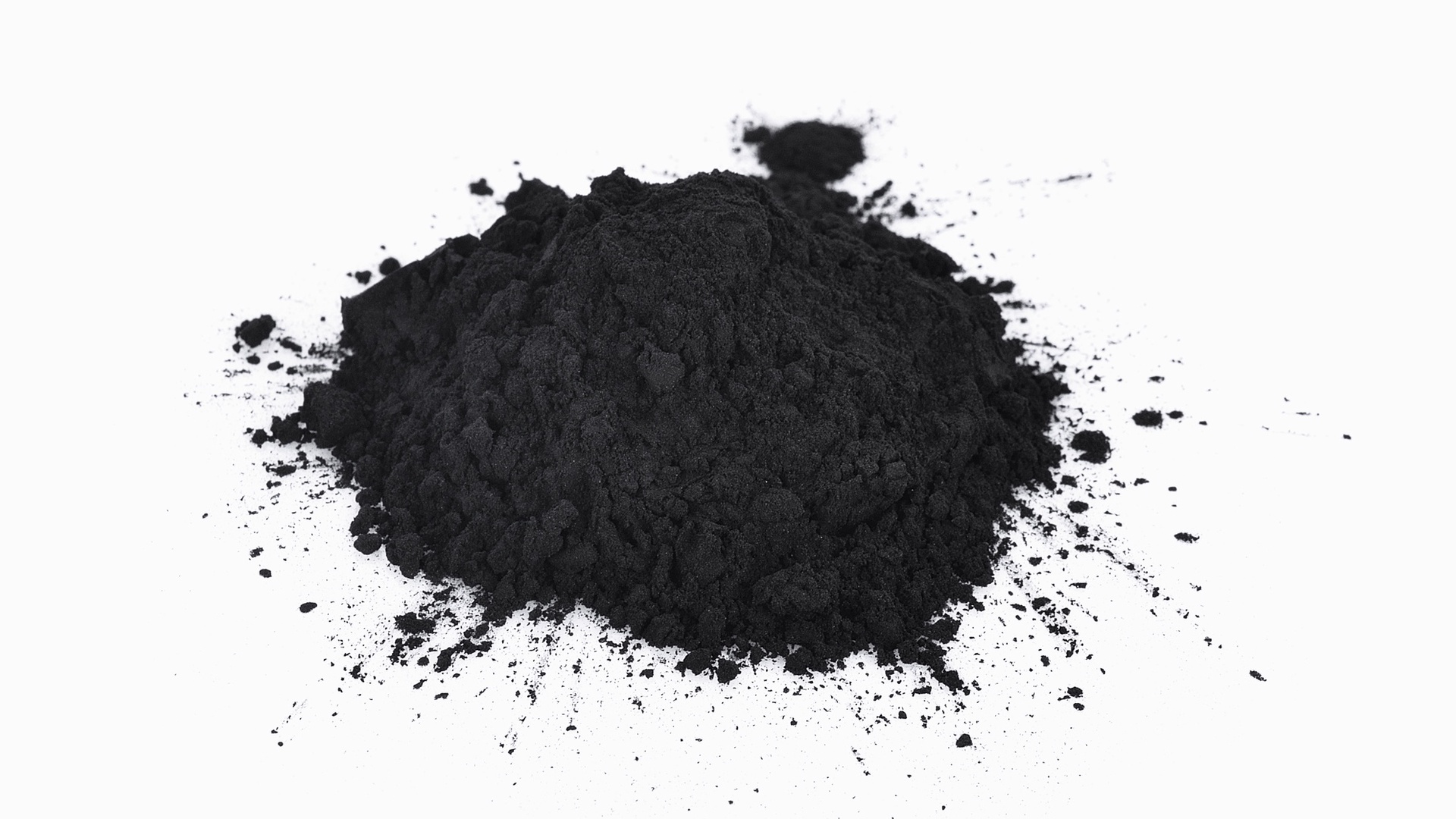
Among the six platinum group metals that pass through our refining operations, few have undergone a transformation as dramatic as ruthenium. Discovered in 1844 at Kazan State University by Karl Ernst Claus, a Russian-born scientist of Baltic-German ancestry who named the element after the Latin word for Russia, Ruthenia, ruthenium spent more than a century relegated to niche metallurgical roles.
Today it stands at the center of advanced catalysis, renewable energy, data storage, and next-generation medicine. With a crustal abundance of just 0.001 parts per million, it is one of the rarest elements on Earth, and every gram recovered from spent catalysts, electronic scrap, and industrial residues carries growing strategic and economic weight for anyone holding platinum-group materials.
Ruthenium is never mined for its own sake. It occurs as a minor component in platinum ores, historically in the Ural Mountains and today primarily in South Africa and the Americas, as well as in pentlandite deposits in Sudbury, Ontario, and pyroxenite formations in South Africa.
Because primary supply arrives only as a byproduct of platinum, palladium, and nickel mining, it cannot flex in response to sudden surges in demand, and that inelasticity makes secondary recovery through refining an increasingly critical pillar of global supply.
Purification of the metal exploits one of its most distinctive traits: residual matter from platinum ore processing is fused with alkali nitrate salts to convert the ruthenium into soluble sodium ruthenate, and treatment with chlorine gas then allows the metal to be distilled off as volatile ruthenium tetroxide, a yellow compound in which ruthenium occupies the remarkable +8 oxidation state, cleanly separating it from other heavy metals.
Ruthenium is the only 4d transition metal capable of reaching this state, a fact that underpins both its refinability and its extraordinarily potent chemistry.
Ruthenium, atomic number 44, sits in Group 8 of the periodic table alongside iron, osmium, and hassium, yet it defies the Aufbau principle. Rather than holding two electrons in its outermost s orbital as its congeners do, it promotes one electron into the 4d subshell, adopting a [Kr] 4d⁷ 5s¹ ground-state configuration in which the energetic cost of pairing d electrons is offset by minimized electron repulsion and maximized exchange energy.
This anomaly signals an extraordinary flexibility in the metal's valence shell, the fundamental prerequisite for its ability to accommodate oxidation states spanning an unmatched range from minus two to plus eight and to adopt a vast array of ligand geometries—which, in practical terms, is why ruthenium ranks among the most powerful catalytic elements known.
Physically, it is a hard, brittle, silvery-white metal crystallizing in a hexagonal close-packed lattice, with an atomic weight of 101.07, a density of 12.37 grams per cubic centimeter, a melting point of 2334 degrees Celsius, a boiling point of 4150 degrees Celsius, and a Mohs hardness of 6.5.
Its exceedingly high melting point makes the pure metal difficult to cast or reshape, and it displays the high thermal and electrical conductivity typical of the platinum group while remaining paramagnetic, magnetizing only in an external field and losing that property the instant the field is removed.
Chemically, it stands alongside osmium as one of the most noble of the platinum metals, refusing to tarnish in air and resisting even boiling aqua regia, yet its nobility is not absolute: above 800 degrees Celsius it oxidizes readily, it succumbs to halogens at elevated temperatures, it can be attacked at room temperature by aggressive oxidizers such as sodium hypochlorite, and it dissolves in fused alkalis to yield ruthenate anions.
These specific vulnerabilities are precisely what make controlled dissolution and recovery possible in professional refining. Natural ruthenium comprises seven stable isotopes, led by ruthenium-102 at roughly 31.6 percent abundance, while thirty-four synthetic radioactive isotopes are known, the most stable being ruthenium-106 with a half-life of 373.59 days; lighter unstable isotopes decay by electron capture into technetium, while heavier ones undergo beta decay into rhodium.
Nowhere is ruthenium's value more visible than in catalysis. Olefin metathesis, the redistribution of carbon-carbon double bonds, earned Grubbs, Schrock, and Chauvin the 2005 Nobel Prize in Chemistry, and it was ruthenium that democratized the reaction after earlier molybdenum and tungsten catalysts proved intolerant of most functional groups.
The Grubbs catalyst family evolved through deliberate ligand engineering, starting with the air- and moisture-stable phosphine-ligated carbene of 1995, advancing through a second generation with an N-heterocyclic carbene ligand that dramatically accelerated rates and broadened tolerance toward esters, amides, and amines, continuing with the phosphine-free and highly recoverable Hoveyda-Grubbs variants, and culminating in a third generation with labile pyridine ligands that initiate almost instantaneously to enable living polymerizations with tightly controlled polydispersity.
Spent metathesis catalysts from pharmaceutical and polymer manufacturing now represent a significant and recoverable ruthenium stream. The metal has also become the second-generation standard for ammonia synthesis, outperforming the traditional iron catalysts of the Haber-Bosch process under significantly milder conditions by cleaving the formidable dinitrogen triple bond through pi-backdonation of electron density into nitrogen's antibonding orbitals; promoted with cesium and barium and supported on engineered carbons or oxides, these systems function like a chemical capacitor that enriches active sites with electrons while alleviating hydrogen poisoning.
Its influence extends deep into photochemistry as well, where the tris(bipyridine)ruthenium complex, affectionately called the fruitfly of photophysics, anchors modern visible-light photoredox catalysis by forming a long-lived triplet excited state that acts as both a powerful oxidant and reductant.
That same photophysical prowess powers dye-sensitized solar cells, where ruthenium dyes like the benchmark N3 and N719 sensitizers harvest light and inject electrons into titanium dioxide in ten to twenty-five femtoseconds, achieving conversion efficiencies over eleven percent.
In the hydrogen economy, ruthenium is a strong alternative to platinum at about one-quarter the cost: phosphorus-doped ruthenium-on-carbon catalysts achieve hydrogen evolution overpotentials of just 31 millivolts with more than double platinum's mass activity, while moderately calcined ruthenium oxide resolves the notorious activity-stability paradox of the oxygen evolution reaction at the anode.
Meanwhile, the metal's traditional strongholds endure, from hardening platinum and palladium alloys for durable electrical contacts to thick-film resistors and hard disk platters feeding the global data center boom; to aqueous-phase hydrogenation of biosourced molecules such as glucose into sorbitol; to medical applications as luminescent diagnostic probes, photoactivated antimicrobials, and anticancer agents that accumulate selectively in tumor cells rather than in healthy tissue.
These expanding applications collide with a supply chain that cannot respond in kind, and ruthenium's pricing dynamics reflect that tension.
Recent years have brought significant upward price pressure and volatility, driven by the proliferation of data centers, the rapid scaling of fuel cells and water electrolyzers, and expanding chemical manufacturing coupled with intensive inventory restocking.
While ruthenium remains far more affordable than rhodium, iridium, palladium, or platinum, its transition from niche alloying agent to mission-critical energy transition metal ensures acute price sensitivity as we advance.
Industry is responding with single-atom catalysts and highly dispersed support architectures that maximize turnover per gram of metal, but every such efficiency gain also raises the value of recovering the ruthenium already in circulation.
For our clients and partners, the implications are clear: ruthenium-bearing materials are more valuable than ever, and responsible recovery is both an economic and a strategic necessity.
Spent metathesis and hydrogenation catalysts, ammonia synthesis charges, electrolyzer components, electronic scrap, sputtering targets, and process residues all represent recoverable streams.
Given the element's chemical nobility, recovery demands specialized expertise, including the controlled oxidative dissolution and tetroxide distillation chemistry that few refiners can execute safely and at high yield.
Our processes are engineered precisely for these challenges, ensuring maximum recovery from even complex, low-grade feedstocks.
Ruthenium ultimately exemplifies how fundamental atomic nuances can be leveraged to solve macroscopic industrial challenges.
From Nobel Prize-winning catalysts and revolutionary ammonia synthesis to solar energy harvesting, green hydrogen production, and targeted cancer therapy, this once-overlooked byproduct has become one of the most vital catalytic elements in the modern scientific arsenal.
As demand increases and supply remains constrained, refining and recycling will become more important, and we are ready to help our partners capture the full value of every gram.