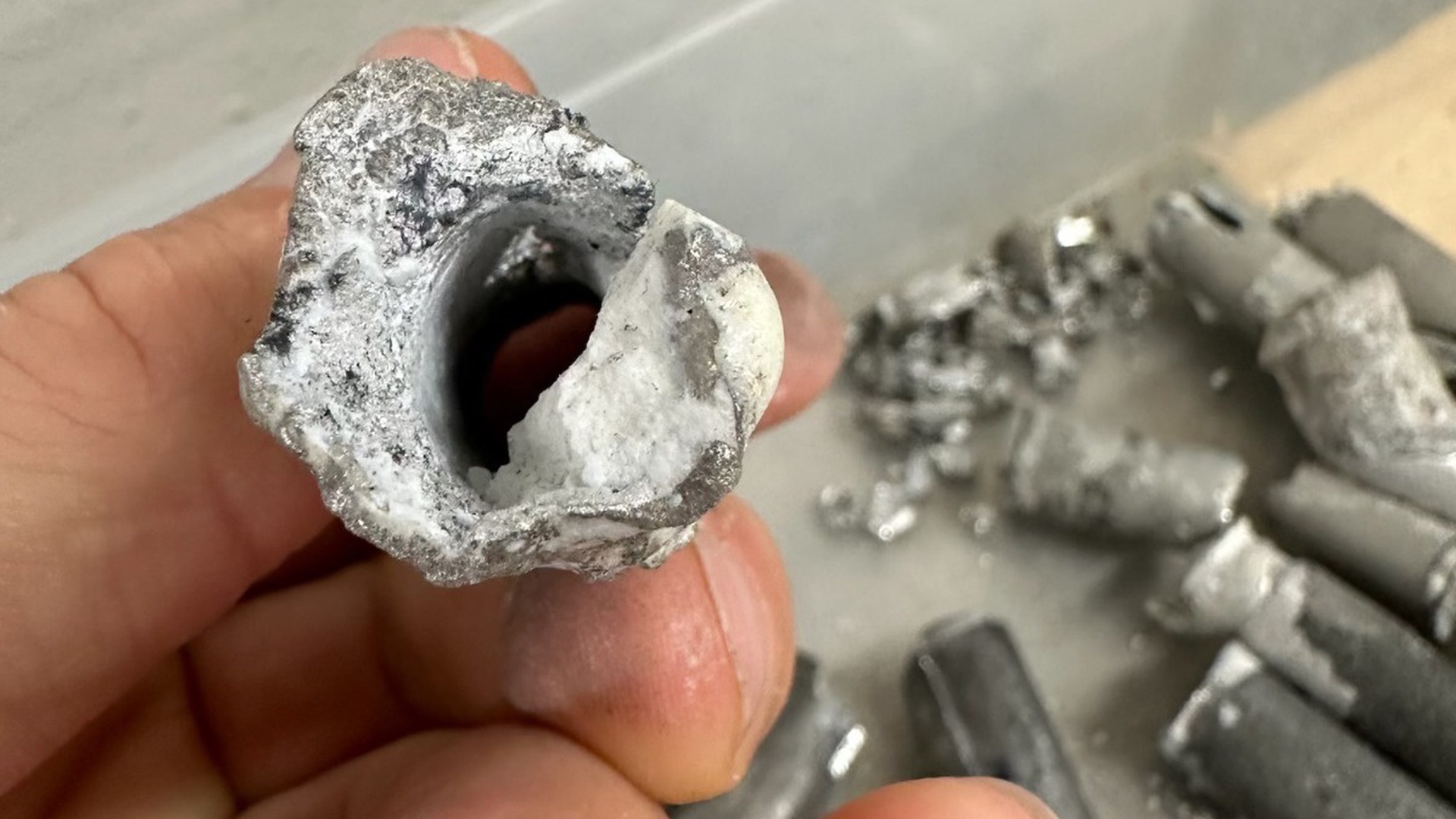
For sapphire and YAG crystal growers, the iridium crucible is both a production tool and a significant iridium reservoir. It's the vessel that holds the oxide melt at the very high temperatures (near 2,000°C) required for crystal growth, and it's used to pull the single crystals that go on to be used in LEDs, lasers, and all manner of optical systems. When it cracks, bulges, or otherwise loses its shape and geometry and the growth process can no longer be maintained, it's at the end of its working life. The iridium in it is not, however. The same is true of other retired furnace components. After the heater, seed holders, and other bits and pieces, the lids may well contain a significant amount of iridium or other PGMs. It makes sense to collect and account for the whole retired assembly, not just the obviously valuable bits, and send it back to the refiner. That way, the refiner can recover the iridium value, and the grower has a much better basis for the next hardware purchase.
Sapphire and YAG growth subjects the crucibles to extreme heat and repeated thermal cycling. Iridium's high melting point and compatibility with severe oxide-growth conditions make it suitable as a melt container where platinum (with its much lower melting point) would not be viable. This scenario, of course, is one where service degrades the component. The crucible walls can warp, cracks can form, and oxide can stick to the metal. A component may have to be pulled out before total failure, as shape changes or shifts in thermal behavior could compromise crystal quality.
Retirement should be a recovery procedure, not a scrap-bin decision. A dented lid or a broken afterheater section may seem minor in the context of a crucible, but small items can add up in metal weight. Seed holder bits and the like are easy to miss during a cleanout and should be assessed rather than thrown in the scrap bin on the assumption that only the crucible is valuable.
A practical recovery process starts at the furnace. As you remove each component, identify it, take a photo, and record its gross weight. Keep all detached bits, broken sections, and associated hardware with the retirement lot. Pack the pieces so fragile bits and fines don't get lost, and label the containers to maintain the link between each piece and the growth run/furnace it came from.
Individual weights and a complete return serve different functions. Individual weights create an inventory that can be matched against the refiner's receiving weights. A complete return to the refiner gives them the full picture of the assembly being retired and minimizes the risk of small, valuable parts being lost in a stream of separate scrap. It may also help the grower match the metal committed to the original hardware with the metal actually recovered. A gross weight is, of course, not a pure iridium weight. The retired parts may well have sapphire or YAG residue, refractory material, fasteners, and other contamination. Some of the associated hardware may not even be iridium. The inventory tells you what was shipped. The inspection, prep, sampling, and assay tell you what metals the lot contains. The grower and refiner should agree in advance on how to separate components, how to treat residues and processing losses, and whether any items will go down a different refining stream.
Sorting retired hardware isn't always that easy. Handheld XRF is useful for quick, nondestructive screening because it can tell you what elements are present at a point on a component. The problem is that it reads only a very shallow surface region, not the full wall of a crucible. Adhered oxides, coatings, service-related surface changes, and the general difficulty of resolving the Pt and Ir signals all complicate interpretation. A surface reading alone should not determine a component's metal content in service.
Hydrostatic density testing is a useful complementary check. You take the solid piece, weigh it in air, then weigh it when fully submerged in water, and calculate its bulk density. Iridium is so much denser than many possible substitute materials that this method can flag a plated part or an unexpected alloy that a surface scan might have missed. Density has its limitations, of course: hollows, cracks, trapped air, porosity, and any attached low-density residue will all affect the result. Neither test can replace a properly designed refining assay for final settlement. The right approach is to use the right test to answer the right question. Documentation and receiving weights establish custody and quantity. XRF is useful for surface screening. Density (where the piece is of a suitable shape and condition) can check bulk plausibility. The refiner's agreed assay and metal accounting will determine the final payable recovery.
Many growers won't just sell a retired crucible for cash. Under a toll-refining or metal-account arrangement, the refiner will process the lot, determine how much iridium it contains, and credit that metal to the grower's account under the agreed refining terms. The grower can then draw down that credit when ordering a new crucible, lid, afterheater, or any other fabricated item. Separate commercial terms include refining fees, fabrication charges, any additional metal required, and the timing or basis of settlement.
That distinction is important. A returned kg of used hardware is not the same as a kg of new hardware. A whole range of residues and non-iridium material will add to the shipping weight, and defined yields and charges will apply to processing. A fully documented return lets the grower and refiner reconcile those differences rather than guess. For the laser, LED, and optics crystal grower, the iridium recovery is therefore more than just end-of-life disposal. A disciplined practice of weighing each piece, keeping the fragments, and returning the retired assembly in full will protect the iridium, enable accurate metal credit, and, in fact, turn yesterday's growth hardware into tomorrow's.