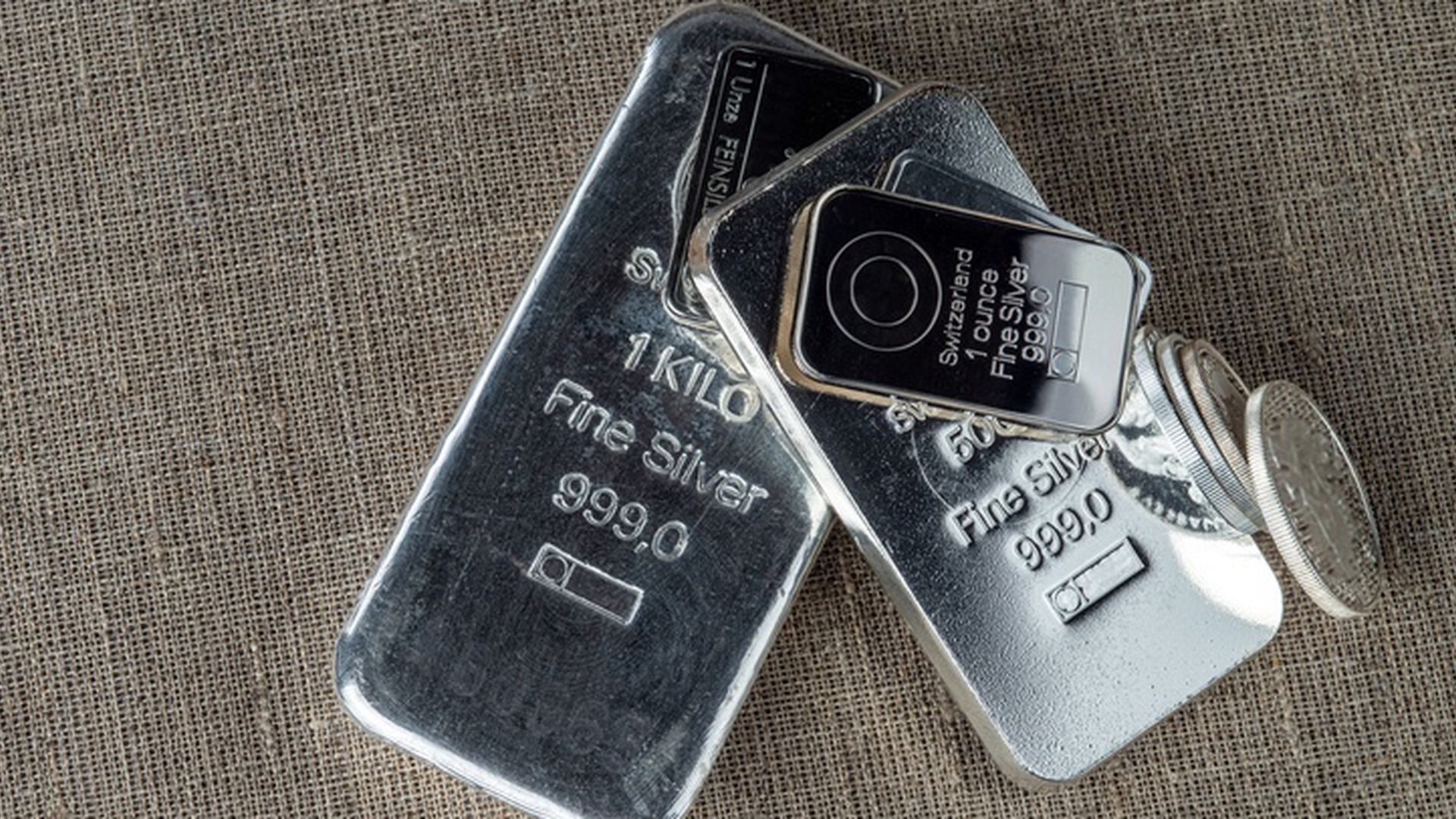
Silver's historic rally has run into a completely unique reality. After soaring more than 130% in 2025 and reaching an all-time high of $121.78 an ounce on Jan. 29, 2026, silver looked like one of the clearest winners of the energy-transition trade. Solar panels needed it. Electric vehicles needed it. AI data centers needed it. For a metal long overshadowed by gold, silver finally seemed to be in the spotlight.
But that moment has faded quickly. The shift occurred on Jan. 30, when Kevin Warsh was nominated as the next Federal Reserve chair. His more hawkish tone changed the interest-rate outlook almost overnight. Silver plunged more than 27% in three weeks and has struggled to find stable footing since. Now JPMorgan is warning that the next phase for silver may look far less explosive than the last one.
JPMorgan's Gregory Shearer, head of base and precious metals strategy, now expects silver to average $60 to $65 an ounce through the rest of 2026, according to Reuters. That is a major downgrade from the bank's earlier forecast of $81 an ounce for the year, including a projected fourth-quarter high of $85. Silver futures recently fell near $57 before recovering toward the low $60s.
The downgrade reflects pressure from both sides of the silver market. Investor demand has weakened after the Fed rate shock. At the same time, industrial demand, which accounts for roughly 60% of annual silver consumption, is softening in some of the same sectors that powered the 2025 rally. "On silver, we're much more apprehensive, just because we don't necessarily trust that you have potentially shaken the full amount of froth out of this price," Shearer said on JPMorgan's research podcast. He also warned that silver's volatility remains much greater than gold's. "You could have a down day in gold, say, one or 2%, and that translates into almost a 10 to 15% drop in silver," Shearer said.
For much of the rally, solar demand was the foundation of the bullish silver thesis. That case is now under pressure. Silver historically represented less than 5% of solar panel costs. But as prices surged above $80 and $90 an ounce, silver's share of panel pricing climbed above 30%. That forced manufacturers to accelerate efforts to reduce or eliminate their reliance on the metal.
Several major Chinese solar companies have already moved in that direction. Longi Green Energy has discussed replacing silver with copper in back-contact cells. Jinko Solar has made a similar shift. Shanghai Aiko Solar has already launched silver-free cells. BloombergNEF estimates silver demand from solar installations will fall to about 194 million ounces in 2026, down 7% from the prior year, even as global solar capacity grows by roughly 15%.
That is the problem for silver investors: solar growth is continuing, but silver intensity may be falling. The Silver Institute also expects global silver industrial fabrication to decline about 2% in 2026 to a four-year low. "Long term, the largest risk we see for silver comes from more widespread adoption of silver-free technology, such as the cadmium telluride thin-film technology," Shearer said. He added that silver's price spike has likely accelerated substitution. "We've already seen some of the larger solar panel manufacturers in China announce thrifty plans to move into copper and other base metals, or even to advance silverless solar panels as we look forward," he said.
Silver's other problem is structural: it does not have the same institutional support as gold. When gold falls, central banks often step in. China's People's Bank, for example, increased reported purchases from about one tonne per month to eight tonnes by April 2026. Sovereign buyers view gold as a reserve asset, creating a consistent source of demand during periods of weakness. Silver does not benefit from that same backstop.
Central banks do not hold silver reserves of meaningful size. Typically, governments do not treat it as a monetary reserve asset. That means when investors sell, and industrial users pull back, silver has no central-bank floor underneath it. "I don't think it's likely that central banks will move on from gold into other precious metals like silver," Shearer said. This means that you don't have a situation like gold, where central banks have been the biggest and most consistent dip buyers throughout this entire rally. Silver, that's not there. "That helps explain why silver fell more than 27% after the Warsh nomination while gold declined roughly 10%. The catalyst was similar, but silver's downside was far more violent.
The latest pressure on precious metals came after President Donald Trump said the U.S.-Iran peace deal was "over," sending crude oil and interest-rate expectations higher. Silver dropped more than $2 an ounce within 45 minutes of the remarks, falling to near $58. Gold also declined sharply, losing about $80 an ounce within two hours before stabilizing around $4,041. Crude oil jumped as much as 6.7%, with Brent briefly moving back above $74 a barrel. The move fed inflation concerns and pushed U.S. Treasury yields higher, with the 10-year yield rising above 4.58%, its highest level in nearly six weeks.
Rate expectations also shifted. Markets moved to price in a greater chance of a Fed rate hike at the July meeting, with the odds of a rate increase by September rising meaningfully. That is relevant for silver because higher rates and a stronger dollar tend to weigh on precious metals. Silver, given its speculative positioning and industrial exposure, often reacts more sharply than gold.
JPMorgan is not the only major bank dialing back expectations. ING commodity analyst Ewa Manthey lowered the bank's silver forecast in June, citing weaker solar demand, higher yields, a stronger dollar, and softer investor flows. ING now expects silver to trade around $68 an ounce in the third quarter and $74 in the fourth quarter, down from a prior fourth-quarter estimate of $84.
Goldman Sachs remains more constructive on the broader precious-metals complex, forecasting gold at $4,900 by year-end, supported by central-bank buying and sovereign demand. But that thesis favors gold more directly than silver because silver lacks the same reserve-asset demand. JPMorgan's Marko Kolanovic has also warned that silver could fall back toward $50 if speculative positioning unwinds before fundamentals improve.
For the rest of 2026, silver investors will likely need to watch three key forces. First, interest rates. A more hawkish Fed would likely keep pressure on silver, especially if Treasury yields and the dollar continue rising; second, solar substitution. The faster manufacturers reduce silver content, the weaker the industrial-demand case becomes. Third, investor flows. Without central-bank buying, silver needs ETF investors, futures traders, and industrial users to return. So far, that has not happened in a convincing way.
JPMorgan still sees some recovery later in the year, but its revised forecast shows how much the outlook has changed. Strong investor demand and powerful industrial growth built the silver rally. Both are now under simultaneous scrutiny. Silver may still have a long-term role in electrification, AI infrastructure, and the energy transition. But after one of the greatest commodity runs in recent memory, JPMorgan's message is clear: the easy part of the silver trade is over.