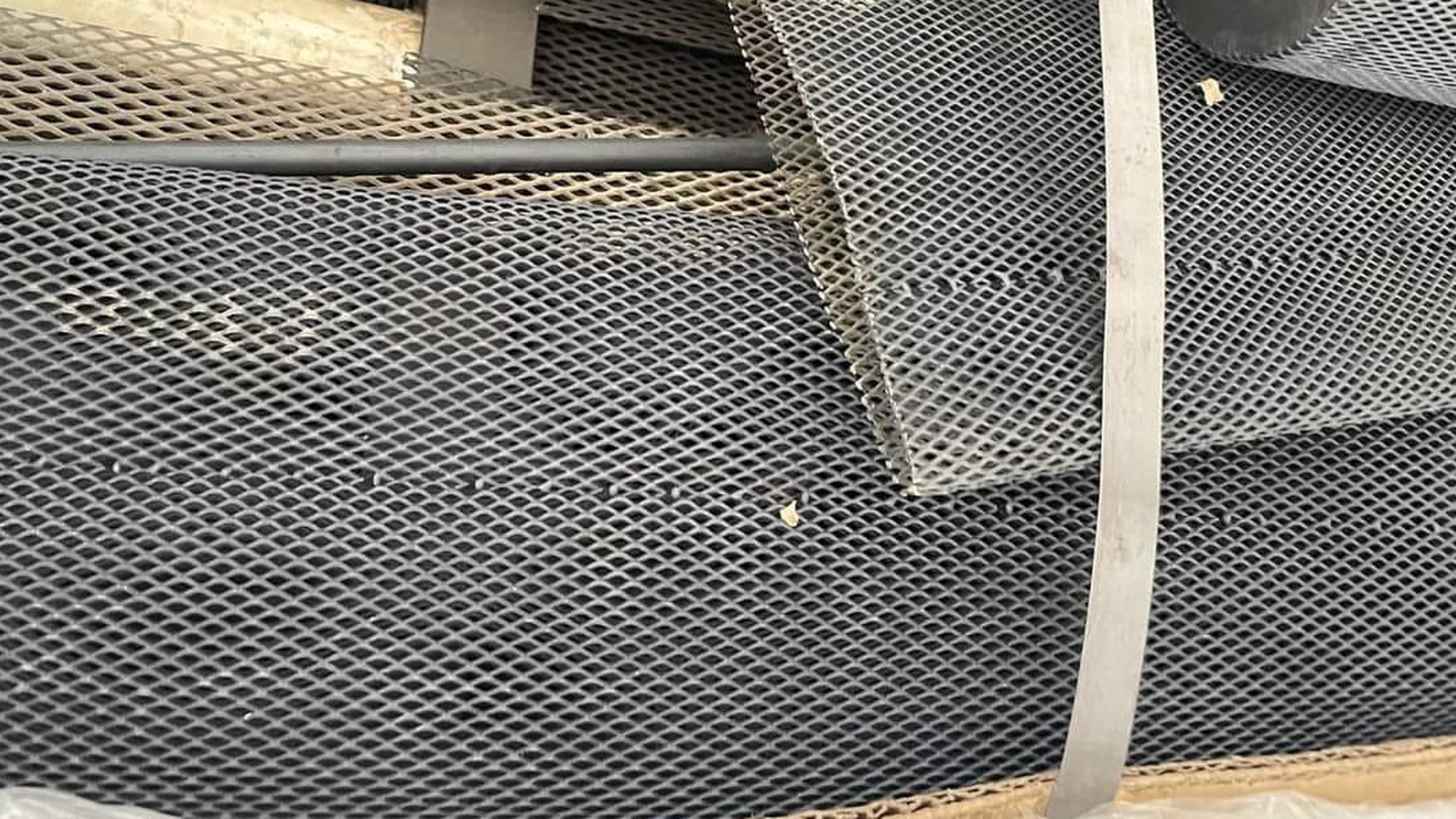
Procurement managers in electrochemical manufacturing, chlor-alkali production, water treatment, and electroplating are facing a serious capital expenditure problem: the rising cost of rhenium-coated titanium anodes. These dimensionally stable anodes are essential in corrosive electrolytic environments because titanium provides structural durability, while rhenium-based catalytic coatings improve conductivity, reduce overpotential, and support efficient chlorine and oxygen evolution. But as rhenium prices have surged and titanium costs have continued to rise, replacing Re-Ti mesh has become a major financial event rather than a routine maintenance purchase.
Rhenium's unusual supply structure largely drives the pressure. Rhenium is one of the rarest industrial metals and is recovered mainly as a byproduct of molybdenum and copper production, meaning supply cannot quickly expand when demand rises. Aerospace and defense demand for rhenium-bearing superalloys, combined with strategic stockpiling and geopolitical uncertainty, has pushed prices sharply higher. By 2026, rhenium pricing had climbed several times above 2020 levels, dramatically increasing the embedded metal value in every new coated anode.
The traditional procurement model makes this problem worse. Most facilities buy new anodes at full market price, operate them until performance declines, then sell the spent mesh to local scrap dealers. Those dealers usually value the material only as titanium scrap because they lack the specialized refining systems needed to recover thin rhenium coatings from titanium substrates. As a result, companies may receive only a few dollars per spent anode while abandoning hundreds of dollars in residual rhenium value.
This is the core flaw in the linear model: an anode is considered operationally dead long before its rhenium is gone. Re-Ti anodes fail when the catalytic coating wears out, cracks, or becomes passivated, which lets insulating titanium dioxide form on the substrate and disrupt current flow. Yet many decommissioned anodes still retain 60% to 80% of their original rhenium loading. In a conventional scrap sale, that remaining metal is financially invisible. In a closed-loop model, this remaining metal is transformed into a recoverable asset.
The anode lifecycle loop solves this problem by connecting procurement directly to specialized critical-metal refiners, such as Phoenix Refining. Instead of sending spent Re-Ti mesh to generic scrap channels, the facility ships decommissioned anodes to a refiner capable of hydrometallurgically stripping and recovering rhenium while preserving the titanium substrate. The recovered rhenium is assayed, refined into a marketable form, and valued against an agreed index. After toll-refining fees, the proceeds are returned as cash or applied as a direct credit toward the next purchase of new anodes.
The financial impact can be substantial. A new industrial Re-Ti mesh anode containing 100 grams of rhenium may cost roughly $950 when rhenium, titanium, and fabrication are included. For a 500-anode replacement cycle, gross CAPEX can approach $475,000. Under a traditional scrap model, titanium-only recovery might return only about $1,500 total, leaving nearly the entire cost exposed. But if each spent anode has 70 grams of rhenium and a specialized refiner recovers 95% of it, the recovered rhenium credit after fees can exceed $430 per anode. Including titanium recovery, total scrap returns can approach $240,000 across the replacement cycle, reducing net procurement cost by roughly half.
The technology behind this loop matters. High-temperature pyrometallurgical processing can destroy titanium substrates and consume significant energy. Advanced hydrometallurgical refining is more selective, using chemical leaching, solvent extraction, and ion exchange to recover rhenium as perrhenate-based products while keeping the titanium mesh intact for higher-value recycling or possible recoating. This makes the process both economically and environmentally superior to generic scrap disposal.
To implement the lifecycle loop, procurement teams must treat spent anodes as strategic metal inventory rather than waste. That requires tracking original rhenium loading, estimating wear rates, qualifying a specialized refiner, negotiating transparent toll-refining terms, and ensuring recovered value is credited directly against new anode purchases. If the shipment crosses borders, export control and environmental paperwork must also be taken care of. This is because rhenium and some titanium alloys may be subject to dual-use or hazardous-material regulations.
As rhenium remains constrained and expensive, companies can no longer afford to discard residual metal value at the end of life. The anode lifecycle loop transforms spent Re-Ti mesh into a procurement subsidy, reducing replacement costs, improving supply chain resilience, and aligning industrial purchasing with circular economy principles. For facilities dependent on rhenium-coated titanium anodes, the smartest capital strategy is not simply to buy better; it is to recover better before buying again.