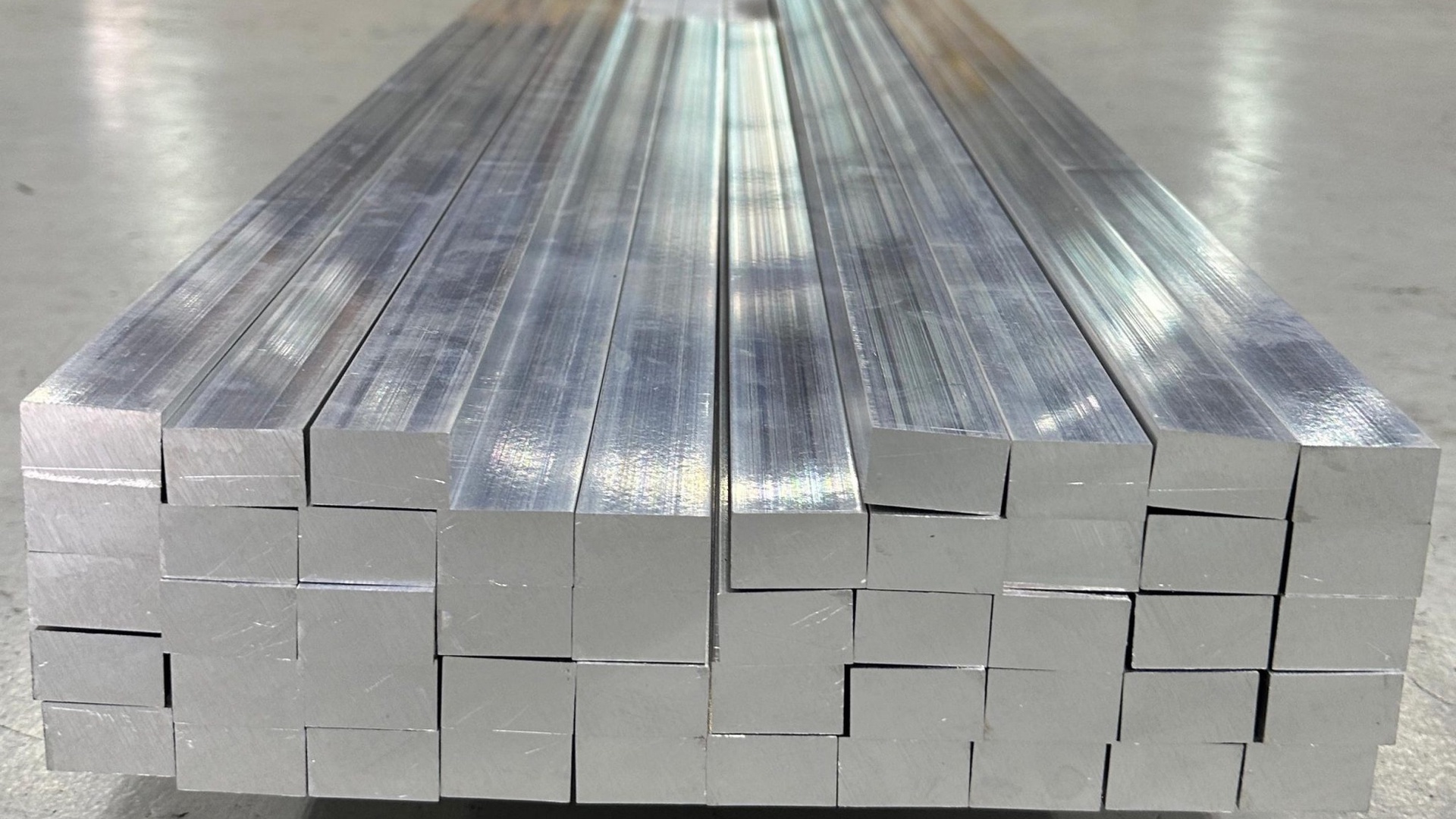
Dimensionally Stable Anodes, or DSAs, are essential to modern electrochemical industries. They are used in chlor-alkali production, seawater treatment, electroplating, electrowinning, and many other high-demand industrial processes. Their performance comes from a carefully engineered structure: a durable titanium substrate provides strength and corrosion resistance, while a thin catalytic coating drives the electrochemical reaction efficiently.
Most DSAs use mixed metal oxide coatings based on ruthenium, iridium, and tantalum. Ruthenium-iridium coatings are widely used where chlorine evolution is the main reaction, such as brine electrolysis and sodium hypochlorite generation. Iridium-tantalum coatings are preferred in more acidic, oxygen-evolving environments because they offer stronger chemical stability. However, some electrochemical environments are even more aggressive. Hard chrome plating, aerospace finishing, and specialized metal-recovery systems can expose anodes to intense acid attack, high anodic polarization, abrasive wear, and thermal cycling. In these demanding applications, standard MMO coatings may degrade too quickly. This is where rhenium-coated titanium anodes become valuable.
Rhenium is one of the rarest stable elements on Earth and one of the most important refractory metals used in advanced industry. It has an extremely high melting point, exceptional hardness, strong wear resistance, and excellent stability in harsh chemical environments. When applied as a coating on titanium, rhenium creates a conductive, durable surface that can withstand conditions that would rapidly damage standard anodes. Rhenium is also valuable electrochemically. It can help tune reaction dynamics, lower overpotential, and improve long-term efficiency in specialized acidic systems. These advantages make Re-Ti anodes highly useful in niche but critical electroplating and finishing operations.
Producing these anodes is difficult. Rhenium electrodeposition is technically complex because it competes with hydrogen evolution and can easily produce brittle, porous, or poorly adherent coatings if not carefully controlled. High-quality rhenium coatings often require specialized pulse-reverse deposition methods and proprietary chemistry. This manufacturing complexity, combined with rhenium’s scarcity, makes Re-Ti anodes expensive assets.
Rhenium is not mined directly. It is recovered mainly as a byproduct of molybdenum processing, which is itself often tied to copper mining. Because of these factors, rhenium supply is highly inelastic: increased demand cannot quickly produce increased supply. Demand is driven largely by aerospace and petrochemical industries. Rhenium is used in nickel-based superalloys for jet engine turbine blades and in platinum-rhenium catalysts for petroleum refining. As aerospace production and strategic stockpiling increase, rhenium prices can rise sharply. In recent tight-market conditions, rhenium has traded at several thousand dollars per kilogram, with reported values exceeding $6,000 to $7,000 per kilogram. That means even a thin coating on a spent titanium anode can contain significant recoverable value.
At the end of their service life, rhenium-coated titanium anodes are often sold as ordinary titanium scrap. This is a major financial mistake. To the naked eye, a Re-Ti anode may look almost identical to a standard MMO-coated titanium anode. Most of its weight is titanium, so general scrap yards typically value it by gross weight and titanium grade. Commercially pure titanium scrap may only bring a few dollars per pound. A spent industrial anode might, therefore, be purchased for a small fraction of its real value. The hidden value is in the coating. Depending on the remaining rhenium loading and current market prices, the recoverable metal value can far exceed the base titanium value. When these anodes enter ordinary scrap channels, industrial operators may unknowingly lose hundreds, thousands, or even tens of thousands of dollars.
Many scrap yards rely on portable X-ray fluorescence, or pXRF, to identify metals. While XRF is useful for sorting common alloys, it is often unreliable for valuing complex catalytic coatings. XRF is a surface-level test. Spent anodes are often covered with scale, oxides, electrolyte residue, and industrial contamination. These layers can hide the rhenium coating from the analyzer. XRF can also struggle with spectral overlap among heavy metals such as rhenium, platinum, iridium, and osmium. In addition, the thin coating sits on a much larger titanium substrate, creating matrix effects that can distort results. As a result, pXRF may confirm that the item is titanium while missing or underreporting the valuable rhenium layer.
Accurate valuation requires advanced laboratory analysis. Inductively Coupled Plasma Mass Spectrometry, or ICP-MS, is far better suited for determining rhenium content. Unlike XRF, ICP-MS does not simply scan the surface. The material is chemically digested into a liquid solution, allowing the laboratory to analyze the actual metal content. The sample is then ionized in an extremely hot plasma and measured by mass spectrometry. This method can detect trace metals at very low concentrations and can accurately quantify rhenium, platinum, iridium, ruthenium, and other valuable elements in complex coatings. For high-value anodes, ICP-MS provides the scientific basis needed for fair settlement.
Rhenium-coated titanium anodes are advanced electrochemical components designed for some of the harshest industrial environments. Their titanium structure may look ordinary, but their rhenium coating can carry substantial hidden value. Selling these anodes as standard titanium scrap can result in serious financial loss, especially when portable XRF testing fails to detect or quantify the coating correctly. Specialized refining and ICP-MS analysis are essential to recover their true worth. In a market where rhenium can command thousands of dollars per kilogram, spent Re-Ti anodes should never be treated as ordinary scrap. With the right refiner, they can become a significant source of recovered value.