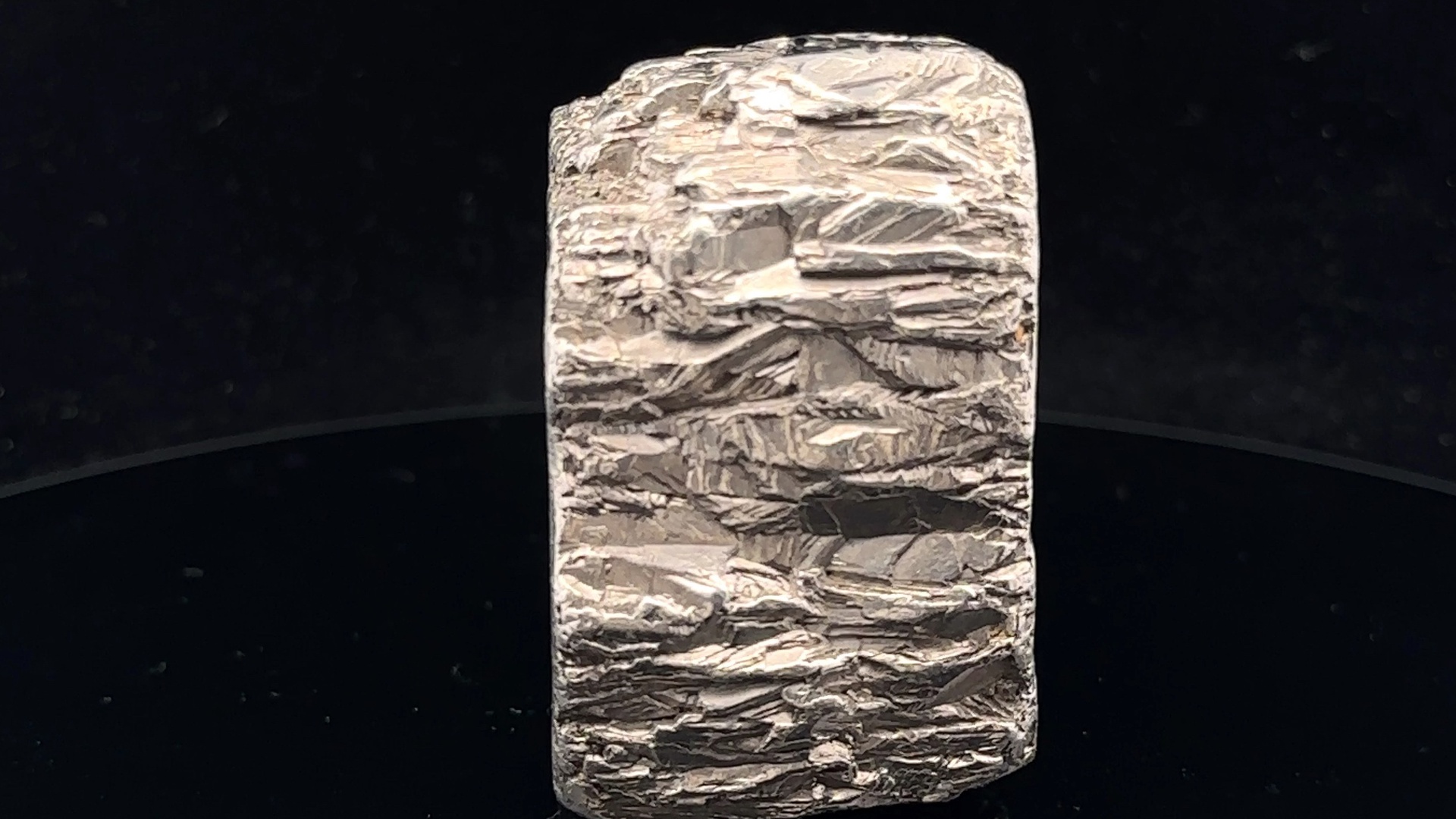
Iridium occupies a paradoxical position in the global energy transition. It is one of the rarest elements in Earth’s crust, with annual primary production measured in only a few tons. Yet, it is increasingly important to technologies expected to operate at an enormous scale. Most notably, iridium is the only commercially proven catalyst that can sustain the oxygen evolution reaction in water electrolyzer systems using proton exchange membranes, which are key to many plans for producing green hydrogen from renewable electricity.
Demand for iridium can rise rapidly, but supply cannot respond in kind. Iridium is not mined as a primary commodity. It occurs in trace concentrations within platinum-group-metal deposits and is recovered only as a byproduct of mining for platinum, palladium, nickel, copper, and other metals. Its production is therefore governed less by its price than by the geology and economics of a small number of large mining districts.
This is the essence of iridium’s inelasticity: even a dramatic price increase does not necessarily result in more metal reaching the market. Expanding output would require mining and processing far more ore while simultaneously producing much larger quantities of platinum and palladium, for which equivalent demand may not exist. As the world attempts to build a multi-gigawatt green hydrogen industry, this byproduct constraint is becoming one of the most consequential material bottlenecks in the clean-energy economy.
Annual primary iridium production is estimated at 6,800 to 9,000 kilograms, with more than 95 percent of this supply coming from South Africa and Russia. This creates a significant geographic concentration of production. South Africa alone supplies approximately 80 to 83 percent of global primary output, contributing around 6,000 to 7,000 kilograms annually. Russia follows, accounting for an additional 11-12 percent of total production. Zimbabwe also plays a role in the market, contributing an estimated 5-8 percent. Meanwhile, countries like Canada, the United States, and Finland, along with other jurisdictions, collectively produce only trace amounts of iridium.
Specifically, South Africa's contribution comes primarily from the Bushveld Complex, where iridium is a byproduct of platinum and palladium mining. In Russia, the Norilsk-Talnakh region is the primary geological source of iridium, produced as a byproduct of nickel and palladium mining. Zimbabwe's supply originates from the Great Dyke, also producing iridium as a byproduct of platinum and palladium mining. Lastly, Canada and other nations have less than 2 percent of the primary supply. Iridium was found as a trace byproduct in nickel, copper, and PGM mining operations in regions like Sudbury and Stillwater.
This concentrated production landscape makes the iridium market particularly vulnerable to a variety of risks, including power shortages, labor disputes, sanctions, trade restrictions, infrastructure failures, and logistical interruptions. Given the market's small size, even a minor operational issue can significantly reduce supply.
The center of the iridium supply chain is South Africa’s Bushveld Igneous Complex, a vast layered geological intrusion covering approximately 65,000 km². It contains more than 85 percent of the world’s known PGM resources and hosts three principal mineralized horizons: the Merensky Reef, the UG2 Chromitite Reef, and the Platreef.
For much of the past century, the Merensky Reef was the dominant source of South African PGMs. It offered favorable metallurgical recovery, attractive mining conditions, and valuable nickel and copper credits. Over time, however, intensive extraction depleted many of its shallower and more accessible sections. Producers have consequently shifted toward the deeper and more technically demanding UG2 Reef.
That transition has important implications for iridium. UG2 generally contains fewer nickel and copper credits than the Merensky Reef, but it is richer in minor PGMs such as rhodium, ruthenium, and iridium. Geological estimates indicate that approximately 230 metric tons of iridium may be contained in UG2 resources, compared with about 51 metric tons in the remaining Merensky resource base.
In principle, the transition toward UG2 could support greater iridium recovery. In practice, deep-level mining costs, worker safety, infrastructure requirements, energy availability, and the economics of the entire PGM basket constrain the availability of those resources. A large geological resource does not translate automatically into flexible annual production. A limited number of producers, including Anglo American Platinum, Impala Platinum, Sibanye-Stillwater, and Northam Platinum, also concentrate South African output. Their decisions concerning shaft closures, maintenance, investment, and production rates can therefore affect the global iridium market.
Iridium’s supply problem begins with its exceptionally low concentration in ore. In South African PGM deposits, the ratio of platinum to iridium may be roughly 70 to 1, while raw-ore iridium grades commonly fall below 0.1 grams per tonne. At such concentrations, an iridium-only mine is neither technically nor economically realistic. Instead, producers evaluate deposits according to their “basket price”: the combined value of all recoverable metals. A representative South African production mix might consist primarily of platinum, palladium, and rhodium, with smaller quantities of gold and only a fraction of a percent of iridium. The precise mixture is determined by the ore body’s natural mineralogy, often described as its prill split. Miners cannot freely alter this ratio. Producing more iridium means mining more ore and recovering all the associated metals. A sharp rise in the iridium price may improve the basket’s value. Still, iridium’s tiny share of total output means that the increase may not be sufficient to justify reopening a shaft or expanding a mine.
This produces a dangerous mismatch between supply and demand. If palladium demand declines as battery-electric vehicles displace internal-combustion vehicles, the profitability of some PGM mines may deteriorate. Producers may close shafts or defer investment to avoid oversupplying palladium and platinum. When they do so, iridium output falls simultaneously even if iridium itself is experiencing an acute shortage and record prices. The result is an unusually steep supply curve. In the short and medium term, higher prices rather than greater mine production primarily reflect increased iridium demand.
Outside South Africa, opportunities for diversification remain limited. Russia’s iridium is recovered mainly from the Norilsk-Talnakh mining district, where Nornickel produces nickel, copper, palladium, platinum, and other metals. Iridium is again a minor byproduct, so its availability depends on the economics and processing rates of a much larger polymetallic operation. Sanctions and altered trade routes have added uncertainty by forcing some PGM flows through more complex logistical and warehousing networks.
Zimbabwe’s Great Dyke represents the most significant secondary source after South Africa and Russia. Its production, however, remains small compared with that of the Bushveld Complex and is likewise dependent on platinum and palladium mining. Canada’s Sudbury Basin, the Stillwater Complex in the United States, and other deposits produce only small quantities. New projects in these jurisdictions could improve supply resilience at the margin, but they are unlikely to eliminate the fundamental byproduct constraint.
The difficulty of measuring iridium accurately compounds its scarcity. Traditional fire assay methods use lead fluxes and high temperatures to collect precious metals as beads or prills. These techniques are effective for major precious metals but can understate minor PGMs. Under extreme assay conditions, losses of iridium, osmium, and ruthenium may occur, introducing errors into reported grades and metallurgical balances.
More precise measurement therefore requires methods such as inductively coupled plasma mass spectrometry, supported by carefully calibrated sample preparation and quality control. In a global market measured in only a few tonnes per year, small analytical discrepancies can have material consequences. Errors may distort reserve estimates, affect mine valuations, complicate refinery accounting, and create uncertainty about how much recoverable iridium is actually available.
Unlike gold, silver, platinum, or palladium, iridium does not trade on a major centralized futures exchange. There is no widely used physical iridium exchange-traded fund, central order book, or deep derivatives market. Trading occurs primarily through bilateral, over-the-counter transactions. Refiners and specialist chemical dealers, including Johnson Matthey, Heraeus, and BASF, publish indicative prices and negotiate directly with industrial consumers. The number of meaningful market participants may be fewer than one hundred worldwide.
This structure makes price discovery difficult. Published quotations may not represent the price at which large quantities could actually be traded. Inventories are not fully transparent, and there is no large exchange stockpile capable of absorbing sudden increases in demand. Operational risks in South Africa intensify this vulnerability. Deep-level mines depend on reliable electricity, water, ventilation, transport, and labor. Grid instability, aging infrastructure, safety stoppages, water outages, and industrial disputes can all disrupt production. Releases of work-in-progress inventory may temporarily conceal weak mine output, but inventories cannot permanently substitute for new production.
The price behavior of iridium and its sister metals demonstrates what happens when new demand encounters rigid supply. Rhodium, another PGM byproduct, rose to nearly $30,000 per troy ounce in early 2021 before losing more than 80 percent of its value as market conditions changed. Ruthenium has also experienced sharp increases when emerging technologies created sudden demand in a very small market.
Iridium followed a similar pattern. Before 2020, prices were relatively stable around $1,500 per troy ounce. In early 2021, enthusiasm surrounding advanced electronics and green hydrogen contributed to a severe supply squeeze, driving the price toward $6,000 per ounce within a matter of weeks.
When high costs, financing difficulties, permitting issues, and supply chain constraints delayed hydrogen projects, the market entered a corrective phase. Prices nevertheless remained far above their earlier baseline. Such volatility is not an anomaly. It is the expected behavior of a small, thinly traded byproduct market with almost no ability to increase output quickly.
Because conventional mining cannot solve the problem quickly, the most direct response is "thrifting," reducing the amount of iridium required per kilowatt while preserving performance and durability. Advanced characterization techniques, including X-ray absorption spectroscopy and electrochemical mass spectrometry, allow researchers to observe iridium catalysts during operation. This work has shown that reactive oxygen species on the catalyst surface play a central role in oxygen production. Such understanding enables scientists to design catalysts at the atomic scale rather than relying primarily on trial and error.
Atomically dispersed catalysts are especially promising because they maximize the proportion of iridium exposed as active sites. Earlier designs suffered from agglomeration, in which isolated iridium atoms migrated and formed larger, less efficient clusters. New stabilization methods using engineered titanium dioxide supports have demonstrated the potential to reduce iridium requirements substantially while maintaining high activity. Other approaches include core-shell particles, nanoscale catalyst layers, controlled hydration of iridium oxides, and alternative support materials. Some experimental architectures point toward precious-metal reductions of 70 to 90 percent.
However, laboratory success does not guarantee industrial durability. Commercial electrolyzers must operate for years under fluctuating loads, elevated pressures, water impurities, and demanding maintenance schedules. A catalyst that performs well for hundreds of laboratory hours may not remain stable for tens of thousands of operating hours. The industry therefore faces a difficult trade-off: it must reduce iridium loading quickly enough to permit large-scale deployment without shortening equipment life and increasing replacement demand.
Recycling is the second essential response. Iridium’s high value and chemical stability make recovery economically attractive, particularly from concentrated industrial products. Spent catalysts, crucibles, electronic components, spark plugs, and electrolyzer assemblies can all become secondary sources.
Recycling cannot immediately eliminate the shortage, however. Much of the iridium installed in new equipment will remain in service for years before becoming available as scrap. Collection networks are fragmented, product designs are not always optimized for disassembly, and recovery from dilute materials can be technically difficult.
A mature hydrogen economy will require closed-loop systems in which catalyst manufacturers, electrolyzer producers, project operators, and refiners track iridium throughout its life cycle. Metal-leasing arrangements could encourage recovery, while design-for-recycling standards could reduce losses.
Over time, recycling could create a substantial circulating inventory and reduce dependence on primary mining. During the initial buildout, however, new installations will continue to depend heavily on newly mined or previously accumulated metal.
Iridium scarcity is sometimes treated as a conventional mineral-supply problem that can be solved through exploration and higher prices. That interpretation overlooks the metal’s defining economic structure. Higher prices can encourage better recovery, additional recycling, inventory releases, and investment in PGM operations. They may also improve the economics of deeper UG2 projects. But prices cannot alter the natural ratio of metals within an ore body.
Various interconnected factors will influence the future of iridium supply. The profitability of the overall platinum group metal (PGM) basket is the most important factor, as it determines investment and output levels. Additionally, the transition from Merensky to UG2 mining in South Africa will have major consequences for production strategies. Moreover, the operating conditions in deep mines, including power availability, labor relations, water resources, safety standards, and overall infrastructure, will affect the efficiency and output of iridium extraction. Another key element is the operating rate of Russian nickel and palladium production, which can impact the global supply dynamics.
Refining capacity and processing lead times are also critical considerations, as they determine how quickly iridium reaches the market. Equally important is the recovery of iridium from industrial scrap and end-of-life equipment, which can supplement primary production. The pace at which manufacturers of proton exchange membrane (PEM) technologies reduce catalyst loadings will further shape demand. Additionally, manufacturers must take into account competition from alternative technologies, such as alkaline and solid-oxide electrolysis. Lastly, the development of hydrogen sources that do not rely on electrolysis will play a pivotal role in shaping the future landscape of iridium supply.
Iridium represents an extreme case of commodity inelasticity. It is indispensable to one of the leading technologies for green hydrogen production, yet it is never mined as a primary product. More than 95 percent of primary supply comes from two countries, and more than four-fifths is tied to the deep-level PGM mines of South Africa’s Bushveld Complex. Fixed ore ratios govern the availability and economics of platinum and palladium, as well as long refining pipelines, operational risks, and a small, opaque over-the-counter market. These constraints explain why iridium prices can rise sharply without producing a proportionate supply response.
The green hydrogen industry cannot rely on conventional mining expansion alone. It will need a coordinated strategy built on lower catalyst loadings, durable atomically engineered materials, closed-loop recycling, alternative electrolyzer technologies, and hydrogen sources that do not require iridium-intensive electrolysis. Iridium will not prevent green hydrogen growth, but it will influence which technologies scale, how quickly they are deployed, and at what cost. The decisive breakthrough is unlikely to be the discovery of an iridium mine capable of responding freely to price. It will be learning how to build the hydrogen economy with far less iridium and eventually recover nearly all of the metal already in use.