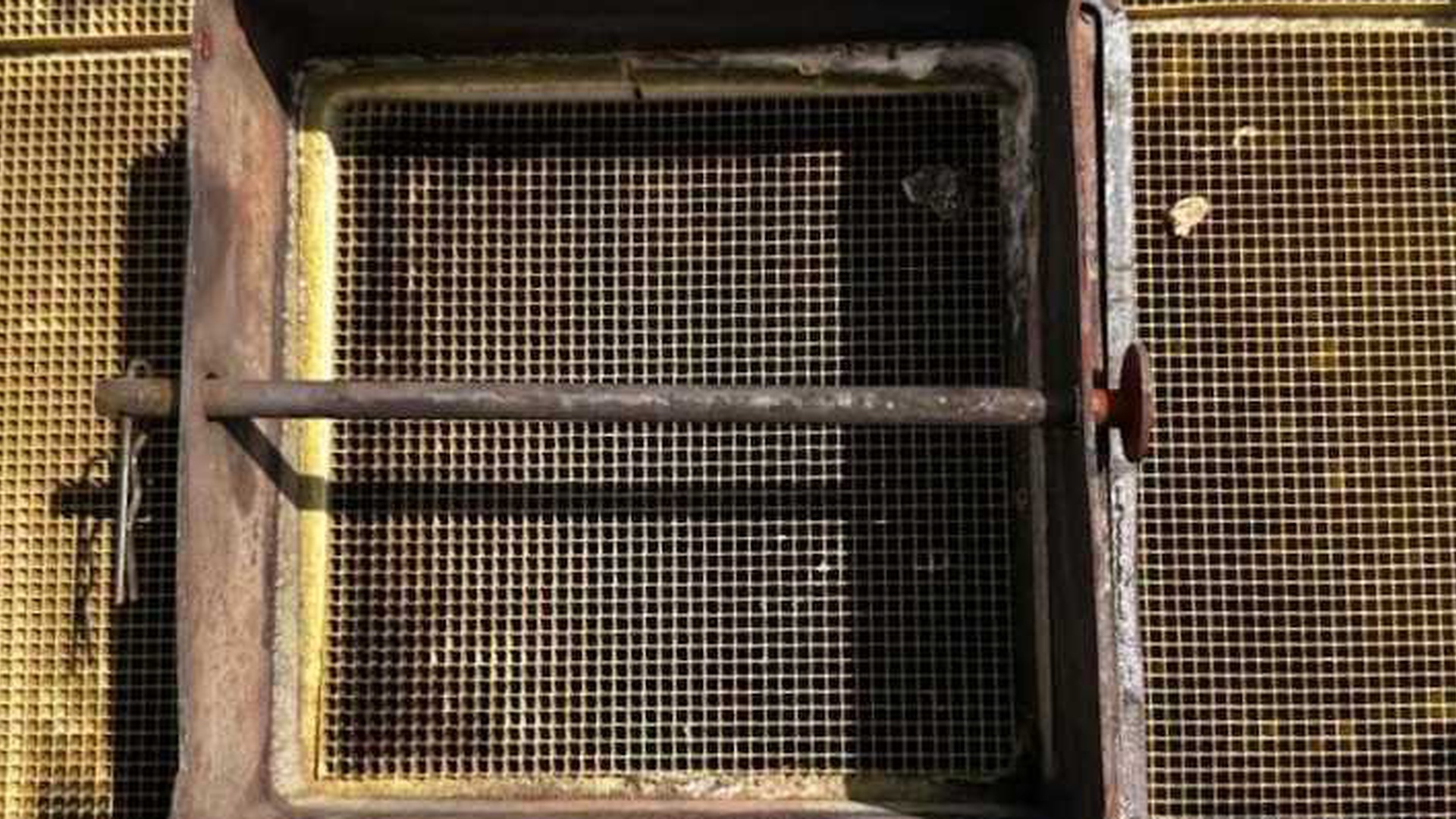
The catalytic converter did not fully solve automobile pollution. The first converters fitted to American cars in the 1975 model year addressed two major exhaust pollutants, carbon monoxide and unburned hydrocarbons, but left a third, nitrogen oxides, largely untouched. Solving that problem required a new kind of catalyst, a new way to control the engine, and a metal that had previously played a relatively minor role in the automotive industry: rhodium.
By the 1960s, vehicle exhaust had become a central concern in the fight against urban smog. In sunlight, nitrogen oxides (NOx) and hydrocarbons help form ground-level ozone; carbon monoxide poses a more direct health hazard. The U.S. Clean Air Act Amendments of 1970 set demanding emissions-reduction targets, pushing automakers beyond engine adjustments toward exhaust treatment.
Catalytic converters also required unleaded gasoline: lead deposits on the catalyst's active surfaces can render it ineffective. The first widely adopted devices were two-way, or oxidation, catalysts.
Platinum and palladium on a coated substrate helped convert carbon monoxide into carbon dioxide and unburned hydrocarbons into carbon dioxide and water. Those reactions benefited from oxygen in the exhaust. Reducing NOx, however, called for the opposite condition: an exhaust stream with little free oxygen. Early proposals used separate catalyst beds and added air between them, but the resulting systems were cumbersome. The challenge was to perform oxidation and reduction efficiently in one device.
At Engelhard Corporation, Carl Keith, John Mooney, and their colleagues developed the three-way catalyst to do just that. Its three functions were to oxidize carbon monoxide, oxidize hydrocarbons, and reduce NOx primarily to harmless nitrogen gas. The breakthrough depended on more than the catalyst alone. All three reactions could proceed effectively when the engine kept its air–fuel mixture close to stoichiometric, at about 14.7 parts of air to one part of gasoline by mass.
An oxygen, or lambda, sensor in the exhaust made closed-loop control possible: the fuel system could continually correct the mixture as driving conditions changed. Volvo was an early adopter. It introduced cars combining a three-way catalyst and lambda-sensor feedback to the U.S. market in 1976, ahead of broader adoption as NOx limits tightened. Keith and Mooney later received the National Medal of Technology and Innovation for their work.
The invention established a durable partnership between exhaust chemistry and engine electronics: the converter treated pollutants, while the control system kept the exhaust within the converter's narrow operating window. Bosch's history of the lambda sensor and the National Science and Technology Medals Foundation document these developments.
The shift from two-way to three-way catalysts changed what automakers needed from platinum-group metals (PGMs). Platinum and palladium were effective at the oxidation reactions central to the first converters.
Rhodium became especially valuable because it could efficiently promote NOx reduction, helping break the strong nitrogen–oxygen bond so that nitrogen atoms could combine into nitrogen gas. In practice, catalyst formulations use these metals in different proportions and arrangements, but reliable NOx control made rhodium a strategic automotive material rather than a minor by-product.
The metals also had to keep working as the exhaust composition swung slightly between rich and lean. Later improvements to the catalyst coating, or washcoat, incorporated ceria and then more thermally durable ceria–zirconia materials.
These can store oxygen when it is plentiful and release it when it is scarce, buffering the fluctuations created by fuel-control feedback. Layered coatings can also keep palladium and rhodium apart, helping preserve their distinct catalytic roles as the converter ages.
The commercial consequence was profound. Rhodium is not generally mined on its own; it is recovered alongside platinum, palladium, and other metals. Much of its primary supply comes from South Africa's Bushveld Complex. Its Merensky and UG2 reefs yield different PGM mixtures, with UG2 generally containing a greater proportion of rhodium. Processing UG2 also presents metallurgical difficulties because of its high chromite content. Thus, rising demand for rhodium could not simply be met by opening a dedicated rhodium mine.
Supply depended on the economics and practical constraints of mining and refining an entire basket of metals. That mismatch made the market unusually sensitive to disruptions. Automakers needed rhodium to meet emissions rules, while mine output could respond only slowly to a higher rhodium price. The tension was stark in 2021, when rhodium prices approached $30,000 per troy ounce amid strong demand and constrained supply.
Prices later fell sharply, demonstrating that the metal's scarcity does not guarantee a permanently high price; changes in vehicle production, inventories, recycling, and catalyst design all matter. Even so, Johnson Matthey's 2024 market outlook forecasts a rhodium deficit, albeit a smaller one than in preceding years.
High prices have made thrifting with less precious metal, without sacrificing emissions performance, a continuing priority. Manufacturers are refining washcoat architecture, adjusting PGM loadings, and seeking ways to expose more active metal surfaces to exhaust gases. Researchers are also investigating catalysts in which rhodium is dispersed as isolated atoms rather than conventional nanoparticles. Such approaches are promising, but laboratory results alone do not establish that a material can meet the cost, durability, and manufacturing demands of mass-produced vehicles.
Recycling offers a more established supply source. Spent converters contain recoverable platinum, palladium, and rhodium, although extracting them from a heat-resistant ceramic substrate requires specialized processing. Recovery reduces reliance on newly mined metal, but it cannot eliminate the need for primary supply while new converters are being made and older vehicles remain on the road.
The three-way catalyst's achievement was therefore both chemical and economic. It sharply improved gasoline vehicles' ability to control the pollutants behind urban smog while turning rhodium into an essential input for emissions compliance. For as long as gasoline engines, including those in many hybrid vehicles, remain in use, that connection will endure. The industry's task is to maintain the air-quality gains of the three-way catalyst while using its most supply-constrained metal more efficiently.