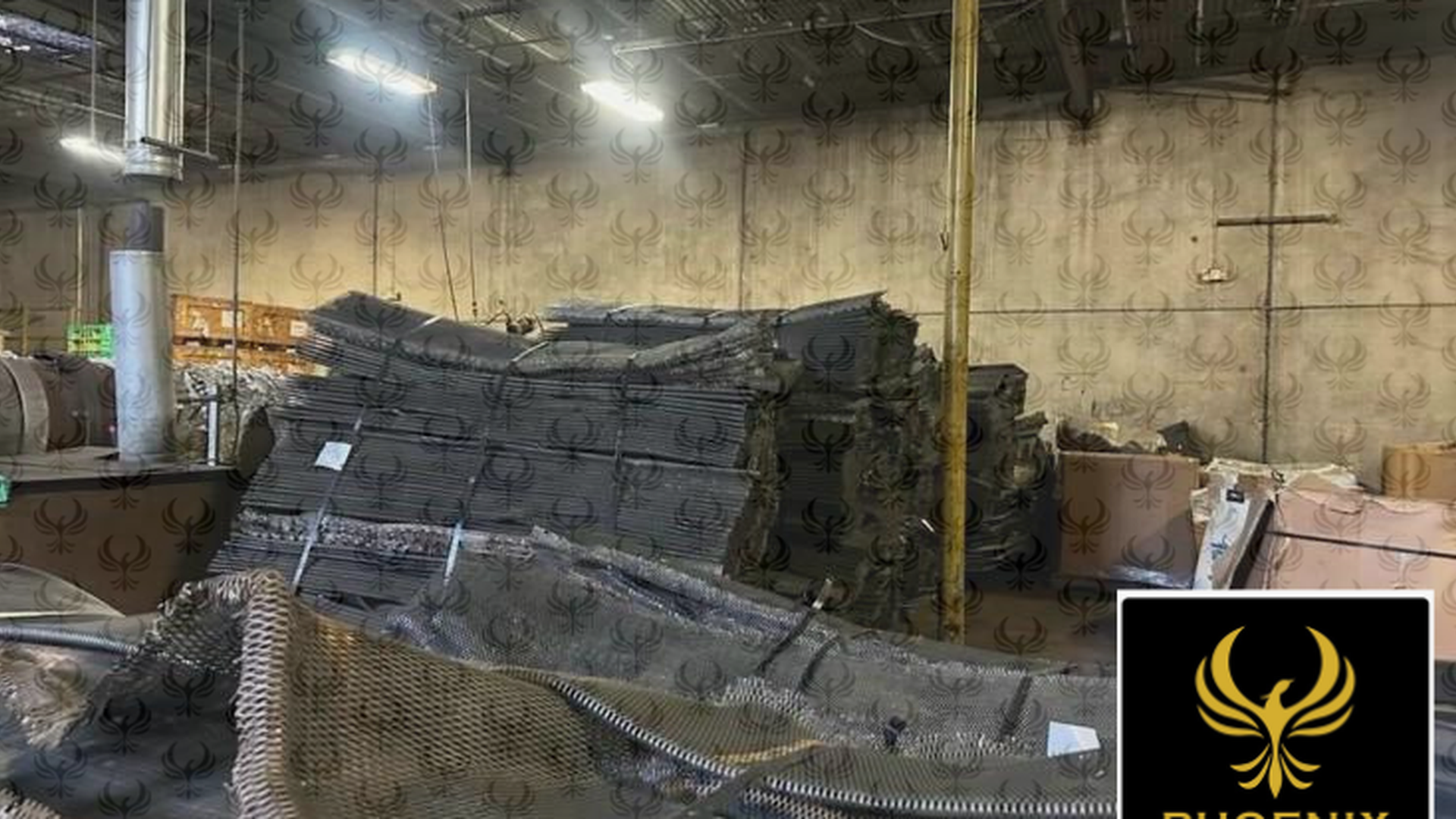
When a titanium screen reaches the end of its operating life, it may look like ordinary industrial scrap. For chlor-alkali plants, electrochlorination systems, water treatment facilities, and certain printed circuit board manufacturing operations, that retired equipment can contain an overlooked source of value: precious metals. Mixed Metal Oxide (MMO)-coated titanium screens, often called dimensionally stable anodes, use thin catalytic coatings containing ruthenium, iridium, or other specialized metal oxides. Although these coatings make up only a small fraction of the screen's total weight, their recoverable precious-metal content can significantly increase its scrap value.
At Phoenix Refining, that is why we actively buy decommissioned Ti/Ru and other PGM-bearing MMO scrap. We see these materials not simply as discarded titanium but as potential sources of recoverable platinum-group metals. For facility managers and procurement teams, the opportunity is straightforward: before selling spent MMO screens as titanium scrap, find out what remains in the coating.
MMO anodes combine a corrosion-resistant titanium substrate with a thin, electrically active coating. Ruthenium dioxide is commonly used in coatings designed for chlorine evolution, while iridium dioxide features prominently in many oxygen-evolving applications. The exact formulation depends on the electrode's intended service.
During operation, these coatings face demanding chemical and electrical conditions. Over time, wear, dissolution, fouling, and changes at the coating–substrate interface reduce performance. One important failure mechanism is passivation, where an electrically resistive titanium oxide layer forms between the substrate and the catalytic coating. As resistance rises, the system may need more voltage to maintain production. Eventually, operating costs or performance needs justify removing the anode from service.
That does not mean all the precious metal has disappeared. A screen can become operationally uneconomical while still retaining recoverable ruthenium or iridium. The residual amount varies with its original coating, operating conditions, maintenance history, and failure mechanism. Instead of assuming a fixed recovery percentage, facilities should have their material evaluated. The essential distinction is simple: electrochemical usefulness and remaining metal value are not the same.
Ruthenium and iridium are rare industrial metals with special uses in electrochemistry, electronics, catalysis, and energy technologies; they are mainly produced alongside other platinum-group metals, and their supply is concentrated in a few regions.
This makes recycling an important complementary supply source. Iridium is significant in conventional proton exchange membrane water electrolyzer anodes, while ruthenium has established industrial uses and is being studied for additional catalyst applications. Prices for these metals can fluctuate substantially, so no screen should be valued using an assumed market price or its original coating specification alone. Nevertheless, recoverable PGMs can make decommissioned MMO material much more valuable than a bare-titanium offer suggests.
We purchase this scrap because a specialist evaluation and refining process can recover value that a typical base-metal transaction might miss. For industrial sellers, this can change a maintenance byproduct into an asset-recovery opportunity.
Neither appearance nor gross weight tells the full story. Anode coatings do not necessarily wear evenly. Edges, central areas, electrical connections, and regions exposed to different flow conditions can retain different amounts of precious metal. A single convenient sample may therefore misrepresent an entire shipment. Handheld X-ray fluorescence, or XRF, is useful for identifying metals and screening incoming materials, but thin coatings, surface deposits, mesh geometry, and instrument calibration can make quantitative measurements difficult. Therefore, an unvalidated handheld reading should not be regarded as a full measure of the amount of PGMs that can be recovered from a batch.
To obtain a reliable valuation, conduct representative sampling and use an analytical method appropriate for refractory metal oxides. For different materials, specialist laboratories might apply validated decomposition procedures and then use techniques such as ICP-OES or ICP-MS. Sampling quality, preparation thoroughness, calibration, and quality-control implementation all affect result reliability. Another distinction matters at settlement: oxide weight is not elemental metal weight. Ruthenium dioxide contains approximately 76% ruthenium by mass; iridium dioxide contains approximately 86% iridium. Manufacturer coating records are useful background, but they do not establish the remaining elemental metal content of a used screen.
Good recovery starts at the plant, not at the refinery. Separate the coated screens from bare titanium and all other scrap. Do not grind, blast, or vigorously brush, since these operations remove the valuable coating. Keep the manufacturer's specifications, coating records, service histories, photographs, and lot weights. Before cutting the samples, ask the receiving refiner for instructions. Because the screens may still contain process residues, handling, packaging, transportation, and waste classification must comply with relevant safety and environmental requirements. For international shipments, verify customs classification with a qualified specialist rather than assuming it based on the substrate.
Decommissioned MMO screens should not automatically enter the same scrap stream as uncoated titanium. Their working life may be over, but their precious metal value may remain. If your facility has retired Ti/Ru or Ti/Ir screens, contact Phoenix Refining before accepting any offer for base metal scrap. Provide them with the material details, arrange an evaluation, and get a better idea of what your shipment might be worth. The next source of recoverable capital may already be sitting in your maintenance yard.