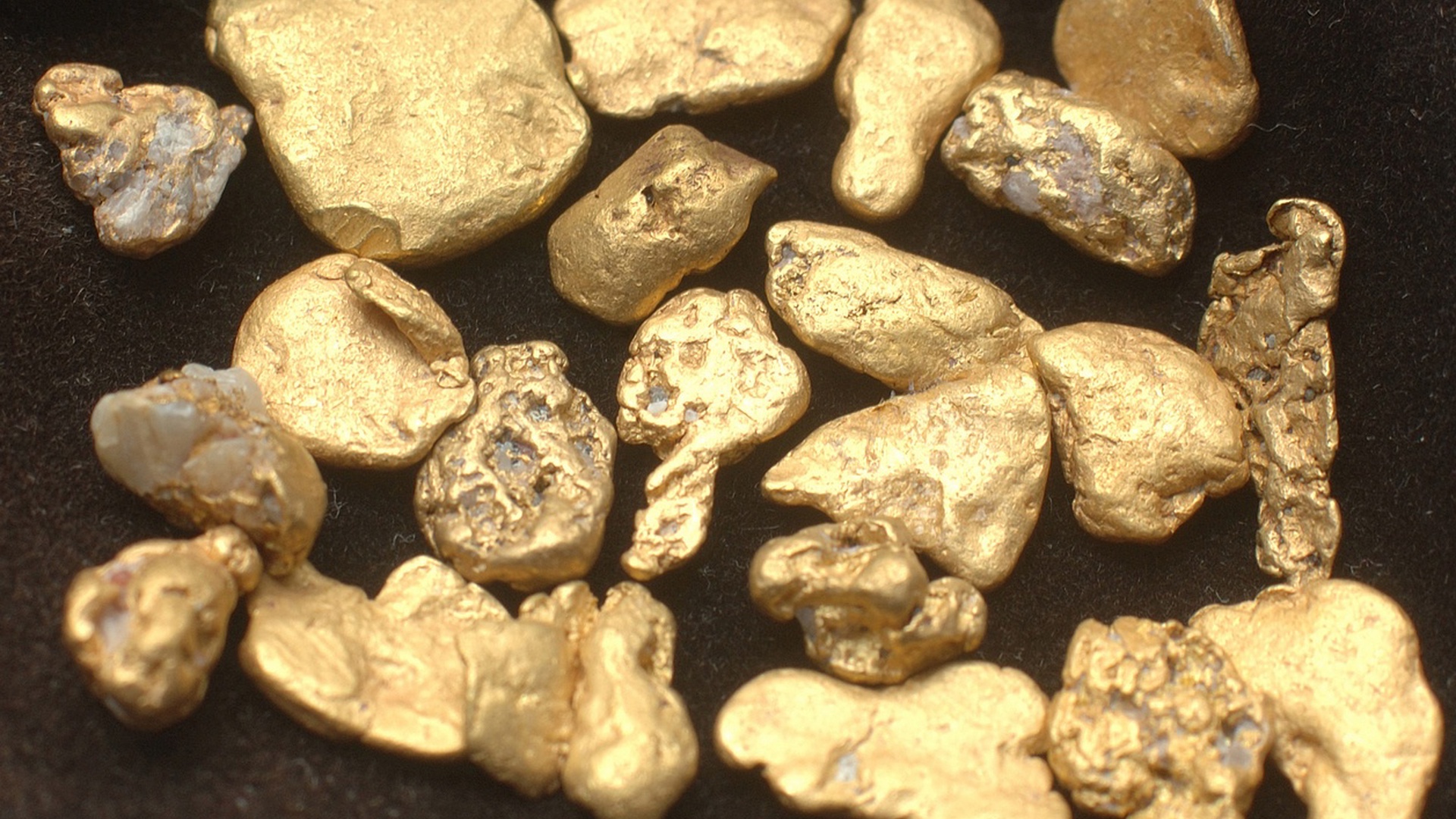
President Donald Trump’s administration has issued a license authorizing the sale of certain Venezuelan-origin gold into the United States. The decision, announced Friday by the U.S. Treasury Department, marks a pivotal step in Washington’s effort to gain greater access to Venezuela’s vast mineral wealth while reshaping the geopolitical balance around critical resources. The license, issued by the Treasury’s Office of Foreign Assets Control (OFAC), permits specific transactions related to the sale, storage, transportation, refining, resale, or export of Venezuelan gold within the United States. It authorizes dealings with Venezuela’s state-owned mining company, Minerven, and its subsidiaries, provided strict conditions are met. Contracts must be governed by U.S. law; payments to sanctioned individuals (with limited exceptions, such as local taxes or permits) must flow through U.S.-controlled Foreign Government Deposit Funds; and transactions involving debt swaps or Venezuelan government-issued digital currency remain prohibited.
Additionally, the license explicitly bars participation by individuals or entities from countries aligned with Venezuela’s previous leadership, including Russia, Iran, North Korea, and Cuba. Joint ventures involving China are also excluded, indicating that Washington’s strategy extends beyond economic engagement into the realm of strategic competition.
The announcement followed a two-day visit to Venezuela by U.S. Interior Secretary Doug Burgum, who also heads the National Energy Dominance Council. Burgum met with interim President Delcy Rodríguez and traveled with more than two dozen U.S. mining and minerals companies, many of which previously operated in the country before nationalizations and sanctions drove them out.
The visit and subsequent licensing decision highlight a notable thaw in relations after U.S. forces captured President Nicolás Maduro in January, effectively ending his rule. With Rodríguez serving as acting president, both nations have signaled the restoration of diplomatic ties. Burgum praised Rodríguez’s efforts to open Venezuela’s oil and mining sectors to foreign investment, citing a forthcoming mining reform modeled on recent changes in the oil sector. Those oil reforms reduced taxes, expanded ministerial authority, and granted greater autonomy to private producers. Similar measures are expected in the mining sector, where decades of underinvestment, nationalizations under Hugo Chávez, and international sanctions have crippled production.
Despite possessing enormous reserves of gold, iron ore, bauxite, and coltan, Venezuela’s mining output operates at a fraction of its potential. Rodríguez reported that gold production reached 9.5 tons in 2025, modest for a country with such vast deposits. Infrastructure decay, limited exploration, and minimal foreign investment have left state-run companies such as Minerven and Corporación Venezolana de Guayana (CVG) struggling to modernize. Experts suggest that gold exports could rebound relatively quickly compared to oil production, which requires more extensive rehabilitation. However, they caution that meaningful long-term gains will demand massive capital injections, technical expertise, and regulatory stability, possibly exceeding the scale of investment required in the oil sector.
The Trump administration appears to view this opening not merely as an economic opportunity but as part of a broader strategic realignment. Venezuela’s mineral reserves include critical materials essential for electronics, defense technologies, and renewable energy systems. By facilitating U.S.-governed transactions and excluding geopolitical rivals, Washington aims to counter China’s growing dominance in critical mineral supply chains and limit the influence of adversarial states in Latin The license does not represent a blanket lifting of sanctions. Instead, it creates a tightly controlled channel for gold transactions, maintaining pressure while encouraging compliance with U.S. legal and financial frameworks. By requiring contracts under U.S. jurisdiction and funneling payments through American-controlled accounts, the administration ensures oversight and leverage.
Security concerns also loom large. Illegal armed groups and smuggling networks have long plagued Venezuela’s mineral-rich regions. Burgum said Rodríguez’s government provided assurances regarding security for foreign companies, an essential condition for attracting serious investment. At the same time, the exclusion of actors from Russia, Iran, North Korea, and Cuba, and of joint ventures involving China, underscores the administration’s intent to prevent adversarial governments from benefiting indirectly from Venezuela’s reopening.
For Venezuela, the move offers a lifeline to alleviate crippling dollar shortages exacerbated by years of restricted oil exports. For the United States, it represents a calculated gamble: engaging economically to stabilize a strategically located, resource-rich nation while asserting influence over its reform trajectory. Whether the policy succeeds will depend on Venezuela’s ability to implement credible reforms, maintain security, and restore investor confidence. If managed effectively, the gold license could become the foundation of a broader mineral partnership and a template for reengagement built not only on diplomacy but on strategic resource alignment in an increasingly competitive global landscape.