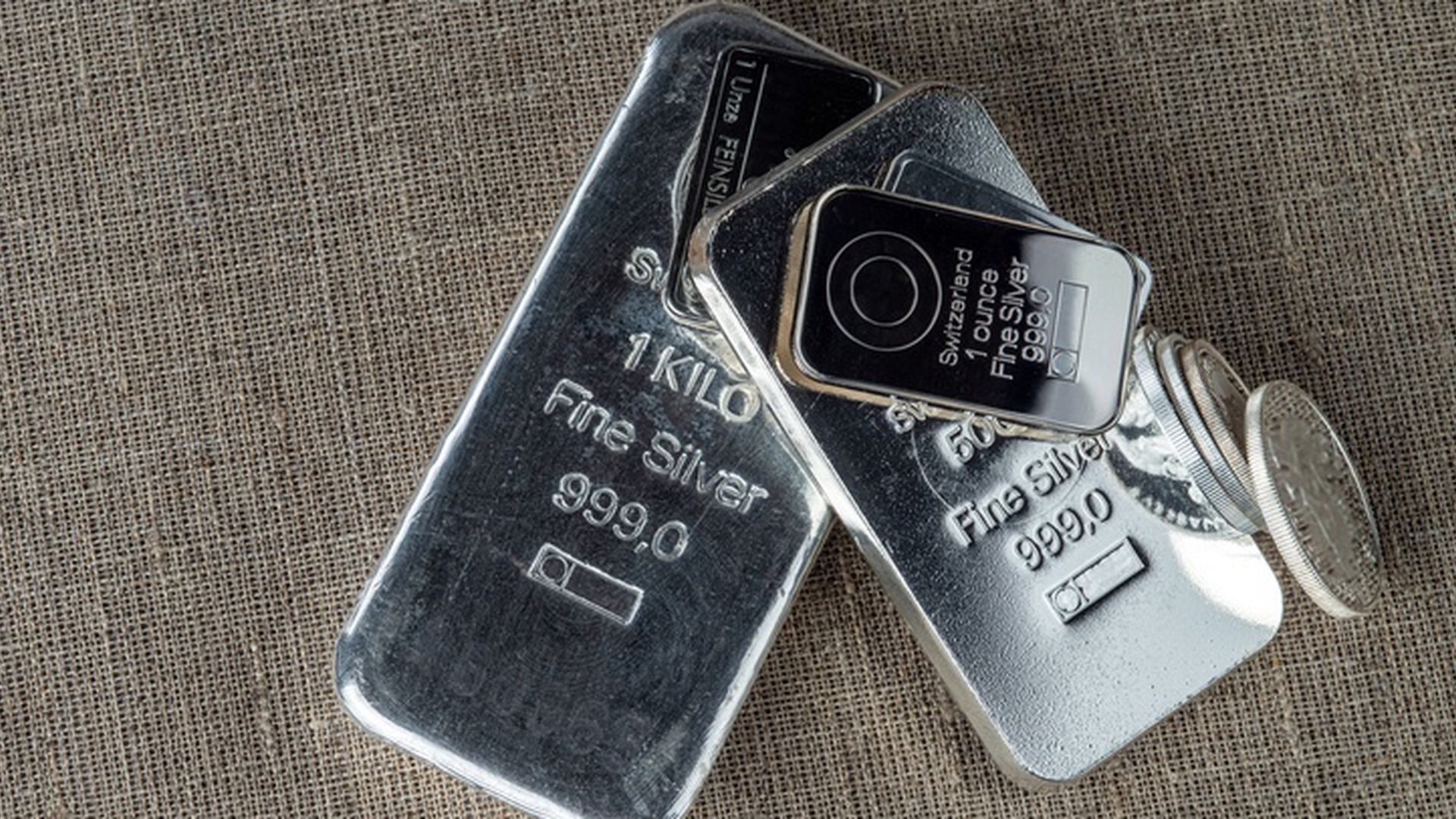
The United States' recent decision to classify silver as a "critical mineral" marks a profound shift in policy that could significantly reshape investor behavior, global supply chains, and domestic mining initiatives. This new designation, announced in the U.S. Geological Survey’s (USGS) 2025 Critical Minerals List, recasts silver from merely a precious metal and monetary asset to a strategic industrial resource essential to national security and economic vitality. The implications of this reclassification are vast, tightening supply, stimulating investment in safe jurisdictions, and amplifying silver’s appeal as both an industrial and financial asset.
Traditionally viewed as a safe-haven asset and ornamental metal, silver has increasingly transcended its role in jewelry and coinage. With over 60% of demand now driven by industrial applications such as photovoltaic solar panels, electric vehicles, 5G technologies, semiconductors, and even defense and medical systems, silver has emerged as a linchpin for the technologies driving the clean energy transition and digital economy.
The 2025 update to the USGS Critical Minerals List, which included silver alongside copper, metallurgical coal, and potash, acknowledges the metal’s growing indispensability. This shift wasn’t just symbolic. It reopened conversations on national security, economic competitiveness, and the urgency of domestic resource development, all of which have implications across the investment landscape.
Silver’s critical role in low- and zero-emission technologies has elevated its strategic importance. Each solar panel uses approximately 20 grams of silver, and electric vehicles require up to twice the amount of silver compared to internal combustion engine vehicles. Moreover, silver is vital for high-performance electronics within military-grade systems, from satellite communications to missile guidance systems and clean water tech for field operations.
Despite its importance, the U.S. remains heavily import-dependent, producing only about 30% of its domestic silver needs. Compounding this issue is the fact that a significant share of global refining capacity is concentrated in China, a scenario that raises red flags for policymakers focused on material security in geopolitically uncertain times.
The critical mineral designation comes with a suite of policy tools that could greatly influence silver supply and demand dynamics. Government backing in the form of strategic stockpiling, akin to uranium or rare earth reserve programs, presents a new layer of sustained demand not tied to normal economic cycles.
Funding mechanisms under legislation such as the Infrastructure Investment and Jobs Act (IIJA) and the Inflation Reduction Act (IRA), as well as recently launched government grant programs totaling $1 billion, open the door to project-level financing, production subsidies, and new R&D initiatives. Altogether, this government intervention may establish a base layer of demand, helping stabilize prices and reduce market volatility. In addition to funding, the U.S. may also offer accelerated permitting and potential tax incentives for domestic projects, reducing the execution risk and upfront capital hurdles traditionally associated with developing new mines.
Silver’s classification as a critical mineral is likely to disrupt established global supply chains and reroute investor capital toward mining companies operating in geopolitically stable jurisdictions such as the United States, Canada, and Australia.
Countries like Mexico and Peru, which account for a large share of global silver production, are experiencing growing resource nationalism. Proposed mining reforms, increasing royalty rates, and tax changes are creating operating uncertainty and may deter future investment or restrict exports. These headwinds underscore the growing strategic advantage held by developers and producers in jurisdictions with political stability, streamlined permitting, and strong regulatory frameworks.
Added to that, the average ore grade in global silver mining has fallen roughly 30% over the last decade. Combined with longer development timelines and greater capital expenditures for new mines, which now regularly exceed $500 million, the risks associated with new global supply are rising. This creates a valuation premium for low-cost, advanced-stage projects in supply-secure nations.
The designation of silver as a critical mineral comes at a pivotal time, with the silver market entering its fifth consecutive year of structural deficit. In 2025 alone, the deficit is expected to reach 95 million ounces, with cumulative shortages exceeding 820 million ounces over the past five years, enough to match an entire year’s global production.
Even with silver prices surging to a record high of $54.48 per ounce in 2025, up more than 74% from the previous year, mine output remains stagnant. Global production continues to hover around 813-814 million ounces annually, far below the 2016 peak of 900 million ounces. Recycling adds only modest relief, and without new production coming online, drawdowns of above-ground stocks are expected to continue. This imbalance is compounded by pronounced leasing rate spikes (above 34%) and physical silver shortages, especially in key trading hubs like London. The divergence between New York and London inventories has already contributed to increased backwardation in futures markets and higher spot prices.
As silver’s industrial importance gains recognition, institutional and retail investors alike are recalibrating their exposure. Holdings in silver-backed ETFs have surged 18% in 2025, approaching the equivalent of 40% of annual mine output. ETFs such as the iShares Silver Trust (SLV) and Sprott Physical Silver Trust (PSLV) are seeing record inflows, buoyed by both industrial demand themes and silver’s long-standing role as an inflation hedge and dollar diversification tool.
Silver-focused mining equities have seen a surge in interest as well. Development-stage and producing companies with low all-in sustaining costs (AISC), strong balance sheets, and assets in stable jurisdictions are attracting significant capital. For instance, firms like Dolly Varden Silver (TSXV:DV), Regency Silver (TSXV:RSMX), and Silver North Resources (TSXV:SNAG) are being closely followed by analysts and institutional investors alike, given their potential to participate in America's new silver future.
These firms benefit from both the leverage of rising silver prices and tailwinds from government policy. Many also hold exploration upside or near-term catalysts such as resource expansion drilling, feasibility studies, or construction decisions, providing defined inflection points for equity valuation.
Higher silver prices are pressuring solar panel manufacturers to reduce silver content through thrifting or potentially switching to copper-based technologies. However, experts caution that successful large-scale copper substitution is likely still years away, and any such shift would require massive reengineering of electrical systems and reliability testing. Until then, silver remains the gold standard for solar conductivity, a bottleneck that continues to reinforce high demand despite modest declines in 2025 due to global economic uncertainty and price-driven thrifting.
With traditional mining challenged by cost and environmental concerns, innovative models are taking shape. Reprocessing historical tailings and mine waste, often still rich in recoverable metals due to outdated technology, is becoming an attractive, lower-risk alternative to new greenfield projects. Companies like Cerro de Pasco Resources are pioneering this model, noting tailings that contain silver equivalent grades above modern underground mine averages.
Parallel to that, enhanced recycling initiatives and R&D funding may become a third supply pillar, particularly if supported under the Biden or Trump administration’s critical minerals infrastructure strategy.
The U.S.’s inclusion of silver on its Critical Minerals List is far more than a bureaucratic reshuffle; it’s a transformative policy statement that reframes silver’s role in the global economy. This designation unleashes a spectrum of government support tools that could permanently alter supply-demand dynamics and elevate silver’s profile as a dual-purpose asset, one that is both a store of value and an industrial cornerstone.
For investors, this shift creates a multi-layered opportunity. It opens doors to public and private capital influx, drives price support through strategic stockpiling and policy incentives, and enhances the appeal of silver-focused equities with secure supply chains. As the geopolitical stakes underpinning supply security grow higher, silver’s investment narrative will no longer be written solely in the context of inflation or central bank policy. Instead, it will increasingly be driven by national interest, technology priorities, and industrial resilience, truly redefining silver’s presence in the portfolio of the future.