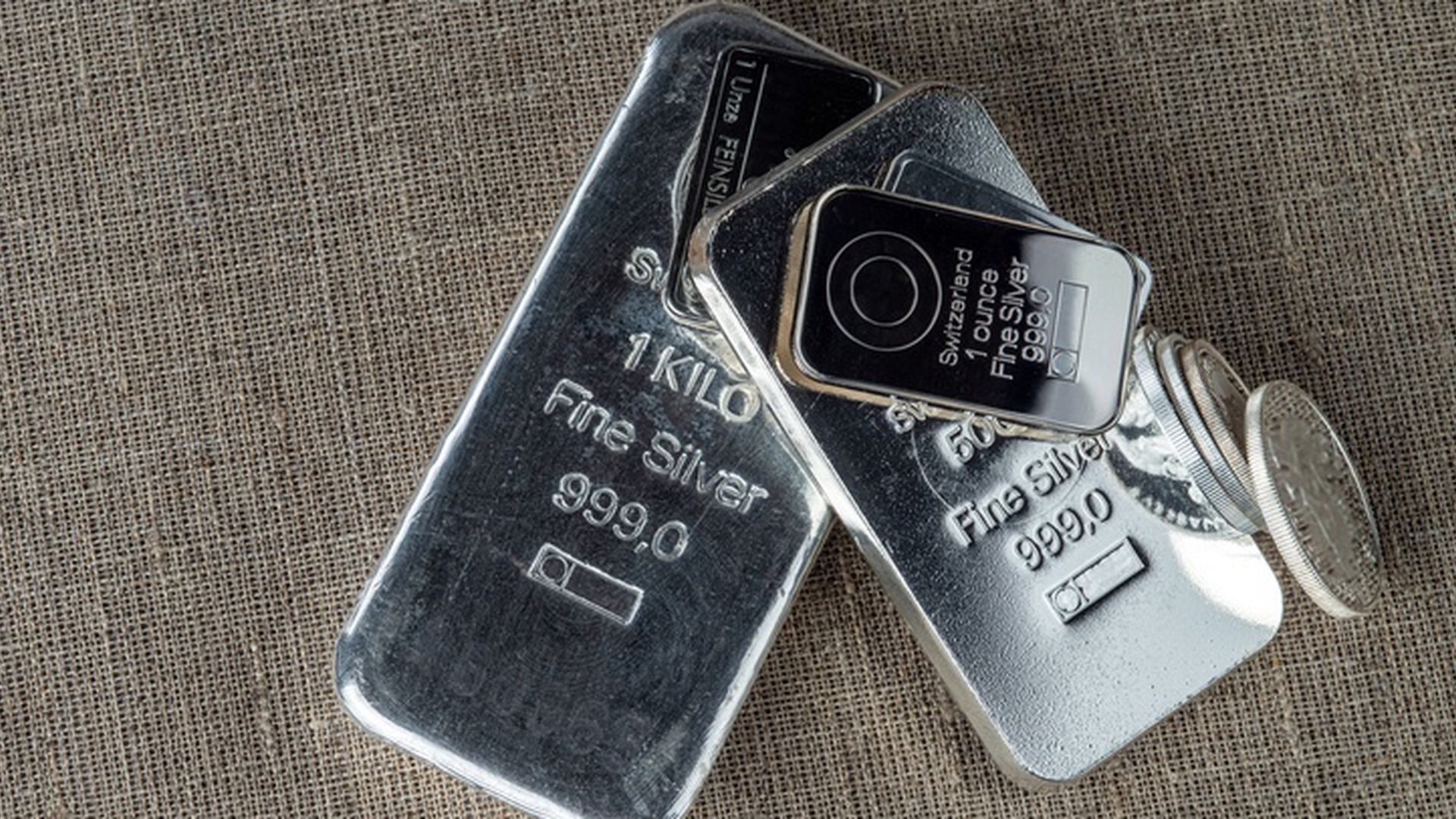
The American Civil War (1861–1865) was not only a defining military and political conflict; it was also a watershed moment in the evolution of the United States' monetary system. One of the most dramatic and immediate consequences of the war was the sudden disappearance of silver and gold coins collectively referred to as “specie” from everyday circulation in the Union. By mid-1862, metallic currency had virtually vanished from commerce, and with it, the foundational trust in the pre-war currency system.
At the heart of this transformation lay a textbook demonstration of Gresham’s Law, "bad money drives out good money," activated by the Union’s urgent need to finance its war effort. The introduction of fiat currency, known as greenbacks, and the resulting depreciation of paper money irreparably altered the economic relationship between bullion and face value. Silver coinage, bearing an intrinsic value now greater than its denominated worth, was hoarded en masse, initiating a period of monetary upheaval whose ripples would shape U.S. financial policy for decades to come.
Before the Civil War, the United States officially adhered to a bimetallic standard, meaning both gold and silver served as the basis for currency value. However, the practical maintenance of a fixed gold-silver ratio proved inherently unstable due to fluctuating global metal prices. This chronic imbalance made the simultaneous circulation of both precious metals difficult, leading to periodic episodes of hoarding, a logical precursor to the more acute crisis that would unfold during the war.
One legislative effort to stabilize small change came in the form of the Coinage Act of 1853, which deliberately reduced the silver content of subsidiary coins such as dimes and half-dollars by around seven percent. This adjustment effectively transformed these coins into fiduciary currency: their face value was now set higher than their intrinsic metal value, discouraging hoarding and permitting stable day-to-day exchanges.
However, the measure was not applied uniformly. The standard silver dollar (412.5 grains) remained unchanged and, by 1853, had already fallen victim to Gresham’s Law, rarely circulating due to its higher bullion value. This pre-existing flaw in the system left it vulnerable. The fiduciary structure relied on a delicate balance that wartime inflation would soon disrupt.
The outbreak of civil war posed an unprecedented fiscal challenge. Treasury Secretary Salmon P. Chase faced the monumental task of funding a war without the support of the seceded Southern states or their tax revenue. Initially, the blow to currency convertibility came not from the government, but from the banking sector. As hostilities escalated, banks suspended specie payments, refusing to redeem paper notes in hard currency. This loss of convertibility triggered immediate public panic. Citizens raced to secure tangible assets, hoarding silver and gold coins in fear that paper promises could not be honored.
The tipping point came in February 1862, when Congress passed the Legal Tender Act. This revolutionary legislation authorized the issuance of a new national currency known as greenbacks: inconvertible paper notes not backed by a gold or silver reserve. Over $300 million of such notes were ultimately issued to fund the war. The sudden surge in money supply led to swift inflation. As the purchasing power of the Greenback declined, the real-world value of silver coins (measured in depreciating Greenbacks) surpassed their stated denominations, rendering them too valuable to spend.
Once the Greenbacks took hold, Gresham’s Law came into full effect. “Bad money” depreciated paper began to circulate, while “good money” metallic coinage disappeared from public use. Individuals and institutions alike recognized that holding silver (and gold) offered a hedge against collapsing paper value. Consequently, even low-denomination, reduced-weight coins authorized by the 1853 legislation, a form of fiduciary money, were hoarded since their minimal metal value still exceeded the worth of the Greenback.
By 1864, a peak period of war-induced inflation, the price of gold in Greenbacks had soared to over $40 an ounce, twice the statutory standard of $20.67. This sharp premium on specie reflected not only monetary depreciation but also market expectations about the Union’s war expenses and chance of victory. The disappearance of silver became more than a monetary oddity; it was a direct barometer of national confidence and a rational market reaction to risk and uncertainty.
The hoarding created a severe shortage of small change, paralyzing everyday transactions. In the absence of coinage, businesses and municipal institutions began issuing unofficial paper substitutes, known disparagingly as “shinplasters.” These private promissory notes, though effective in the short term, alarmed federal authorities concerned about inconsistent standards and economic instability.
In response, Congress banned private shinplasters in 1862 and soon introduced official federal alternatives. Initially, postage stamps were used as ad hoc currency, followed by "Postage Notes" and ultimately a more developed series of fractional currency issued between 1863 and 1876. These paper notes, ranging in value from 3 to 50 cents, replaced silver coins across the nation. Their issuance represented an unprecedented centralization of monetary authority, even in the smallest denominations, and formed the foundation of a fully nationalized fiduciary system.
Although the Civil War ended in 1865, its effects on the American monetary system lingered. The debate between "hard money" (metal-backed currency) and "soft money" (fiat currency) culminated in the Coinage Act of 1873. Known to its detractors as the "Crime of '73," this legislation officially demonetized silver by eliminating the Mint's obligation to coin silver dollars. This codification of a de facto Gold Standard removed any last remnants of silver's parity with gold in the national economy.
The move sparked widespread political backlash from silver-rich western states and indebted agrarian regions, fueling the Free Silver Movement later in the century. Nonetheless, it laid the groundwork for long-term economic stability. The Specie Payment Resumption Act of 1875 marked a return to convertibility, with full redemption of Greenbacks in gold beginning on January 1, 1879. But by then, silver's role had been irrevocably diminished. Though restored as legal tender in limited quantities by the Bland-Allison Act in 1878, silver had been relegated to a subsidiary status, no longer a co-equal pillar of the monetary base.
The disappearance of silver coinage during the Civil War was no anomaly; it was the predictable outcome of economic stress exacerbated by deliberate policy choices. The issuance of unbacked Greenbacks created an inflationary shock that made silver, even in its fiduciary form, worth more as metal than money. Gresham’s Law dictated its retreat from active circulation, and necessity compelled the federal government to embrace fiat substitutes.
This profound monetary reordering gave birth to a modern fiduciary system under centralized control. It also catalyzed the political conflict over metal standards that would dominate the remainder of the 19th century. In the process, the traditional bimetallic framework faded, and the skeletal structure of the Gold Standard emerged, solidified by legislative acts driven as much by wartime exigency as by economic theory.
Thus, the Civil War era forever transformed American money not just in form and composition but in meaning. For the first time, national currency was untethered by metal, reliant instead on policy, confidence, and the centralized power of the federal state. This transformation remains one of the clearest examples in U.S. history of how financial systems bend to the demands of war and the mechanics of economic law.