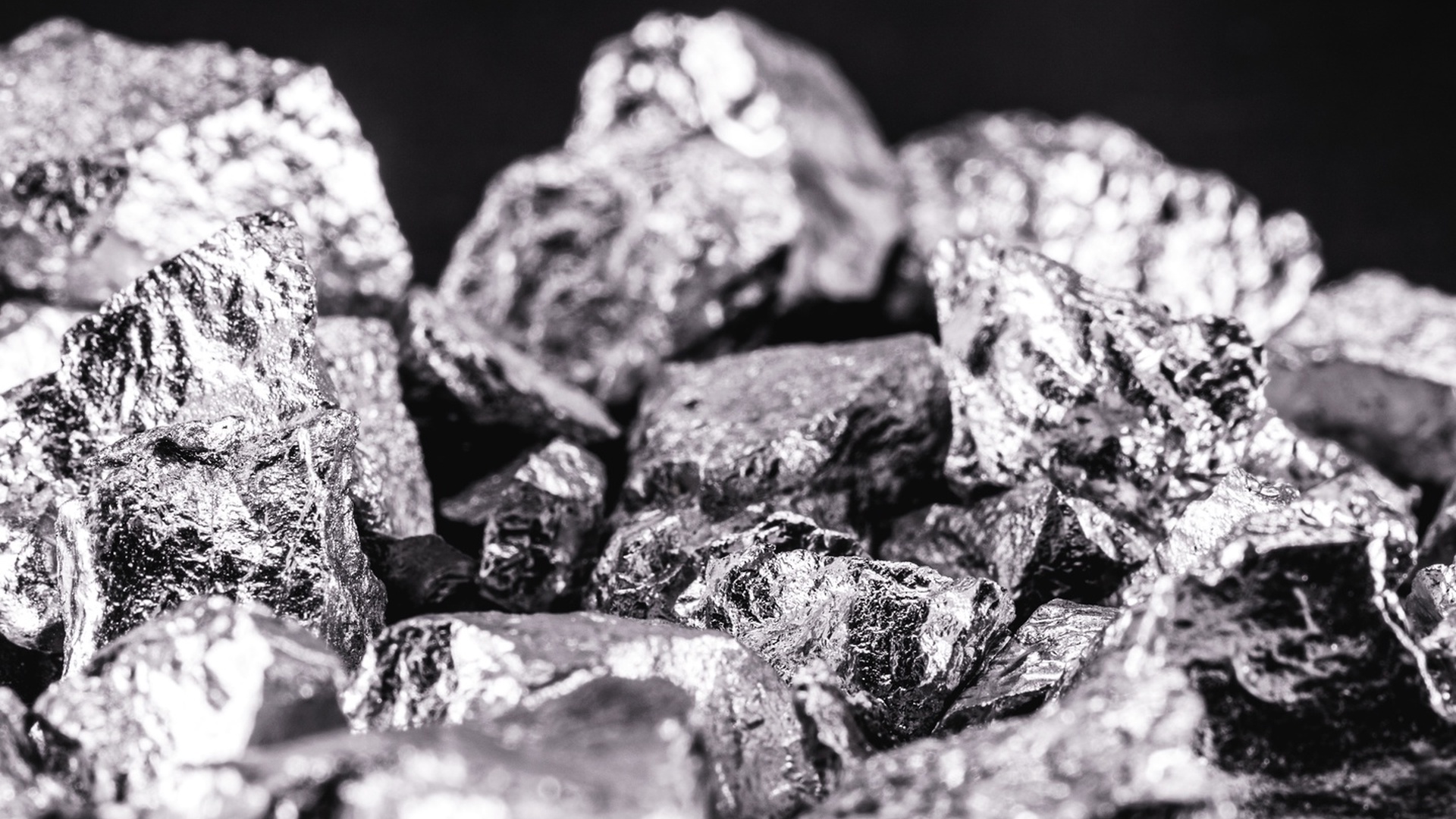
Iridium is one of the rarest and most strategically important metals in the modern economy. It is essential for high-temperature crystal-growth crucibles, chemical catalysts, aerospace components, premium spark plugs, industrial radiography, and, most visibly, proton exchange membrane (PEM) electrolyzers used to produce green hydrogen. Yet the world produces only about 7 to 9 tonnes of primary iridium each year. That volume has remained broadly flat for a decade, and it is tiny compared with other precious metals: global iridium production is several hundred times smaller than newly mined gold output. In such a small market, losing, recovering, or stockpiling even a few hundred kilograms can materially affect availability and price.
The central vulnerability is geographic concentration. Roughly 95% of the world's primary iridium comes from just two countries: South Africa, which contributes about 80–85%, and Russia, which supplies another 11–15%. Nearly all of that material comes from two exceptional geological provinces—the Bushveld Igneous Complex in South Africa and the Norilsk-Talnakh mining region in Siberia. This is not simply a matter of mining economics. It is the result of a geological lottery that is particularly difficult to replicate elsewhere.
Iridium is not mined on its own. No dedicated iridium mines exist because its concentration in ore is far too low, often below 0.003%. Instead, it is recovered as a by-product when producers mine platinum, palladium, nickel, copper, and other platinum-group metals (PGMs). As a result, the iridium supply is determined not by demand for iridium itself, but by the economics of the larger metals with which it occurs.
South Africa's dominance begins with the Bushveld Igneous Complex, a vast layered rock formation created roughly 2.05 billion years ago. Covering approximately 65,000 square kilometers, Bushveld is the world's largest known repository of platinum-group metals. As ancient magma cooled slowly underground, different minerals crystallized and settled into distinct layers, forming PGM-rich horizons such as the Merensky Reef, the UG2 Chromitite Reef, and the Platreef. For iridium, the UG2 Reef is especially important. Although it generally contains less platinum than the Merensky Reef, UG2 is relatively enriched in minor PGMs, including ruthenium, osmium, rhodium, and iridium. Iridium may account for roughly 1.8% of the PGM basket in UG2 ore, a high proportion by global standards. As South African producers increasingly shift from depleted, shallow Merensky reserves toward UG2 mining, the country's central role in iridium supply becomes even more entrenched.
The challenge is that not all future South African PGM projects will maintain the same iridium profile. The Platreef on Bushveld's northern limb is thicker and easier to mine in bulk, making it attractive for mechanized operations. But it is more heavily weighted toward platinum and palladium and contains far less iridium, ruthenium, and rhodium than UG2. South Africa may therefore sustain total PGM production without proportionally increasing the output of the group's rarest members.
Russia provides the second pillar of supply through Siberia's Norilsk-Talnakh region. Unlike Bushveld, which focuses largely on PGMs, Norilsk primarily mines copper and nickel. Iridium is a trace by-product of enormous sulfide ore bodies associated with the Siberian Traps, one of Earth's greatest volcanic events. The deposits formed when sulfur-rich processes within ascending magma created dense sulfide liquids that concentrated nickel, copper, and chalcophile metals such as platinum, palladium, and iridium.
This means Russian iridium production is captive to the output of nickel and copper giant Nornickel. If nickel markets weaken, processing constraints emerge, sanctions disrupt logistics, or lower-grade ore is processed, iridium availability can decline even as demand rises.
Mining concentration is only part of the risk. Iridium is also among the most difficult metals to refine. Its grains are microscopic—often just a few microns across—and commonly occur within complex minerals such as irarsite, laurite, sulfides, and sulfoarsenides. Ore must first be crushed and ground to extremely fine sizes before froth flotation concentrates the PGM-bearing minerals. The concentrate is then smelted above 1,500°C to produce a sulfide matte containing nickel, copper, and PGMs. After converting and base-metal refining, specialized precious-metal refineries receive the remaining precious-metal residue.
There, iridium's famed corrosion resistance becomes a processing obstacle. Aqua regia can dissolve platinum, palladium, and gold, but iridium, rhodium, and ruthenium often remain behind as an inert residue. Refiners must use severe chlorination or high-temperature oxidizing fluxes to convert iridium into soluble compounds. Separation then requires repeated solvent extraction, ion-exchange, and precipitation steps. From ore blasting to refined metal, the process may take six to eight months.
New techniques, such as molecular recognition technology, could help reduce this bottleneck. These systems use highly selective engineered resins that capture particular metal ions—such as iridium—from complex PGM solutions. By replacing some traditional multistage separations with targeted molecular chemistry, these systems can improve purity, reduce chemical use, and lower the amount of metal tied up in refinery inventories.
The greatest consequence of iridium's by-product status is that supply is structurally inelastic. A surge in iridium prices does not automatically create new production. To produce one additional kilogram of iridium, a producer must mine and process much larger quantities of platinum-, palladium-, nickel-, or copper-bearing ore. Mine expansions therefore depend on the profitability of those host metals, not iridium alone. This disconnect has grown as iridium demand expands. PEM electrolyzers, a key technology for green-hydrogen production, require iridium oxide catalysts at the anode. The oxygen-evolution reaction inside a PEM electrolyzer occurs under highly acidic, high-voltage conditions. Iridium oxide remains the only commercially proven catalyst that can operate reliably in that environment for long periods.
The potential mismatch is stark. At older catalyst loadings of 1 to 2.5 grams per kilowatt, deploying 30 gigawatts of PEM electrolyzer capacity could consume multiple years of global iridium production. Manufacturers are responding through "thrifting": reducing iridium loading through nanostructured catalysts, improved coating techniques, and mixed ruthenium-iridium oxides. Some advanced designs can cut iridium use by 50–90%, and leading electrolyzer developers report dramatically improved iridium efficiency. But even with such gains, rapid PEM expansion could place sustained pressure on a market measured in only a few tonnes. Other demand sources are equally difficult to replace. Iridium crucibles are indispensable for growing single crystals of sapphire and specialized oxides used in LEDs, lasers, sensors, and communications equipment. Iridium catalysts support acetic acid production through the Cativa process. Iridium-192 is used in industrial radiography to inspect pipeline welds, aerospace components, and critical infrastructure. Premium spark plugs rely on iridium's exceptional resistance to arc erosion.
Secondary supply now accounts for roughly one-quarter of global iridium availability. Refiners recover metal from spent catalysts, used spark plugs, deformed crystal-growth crucibles, industrial anodes, and specialized aerospace components. Recycling can achieve extremely high recovery rates and is increasingly being integrated into closed-loop supply chains. But recycling cannot immediately solve a sudden shortage. End-of-life material becomes available only after products have completed their service lives. A PEM electrolyzer stack may operate for nearly a decade before its iridium can return to the market. Recycling stabilizes supply, but it cannot quickly match a sharp rise in demand.
Ultimately, the iridium market illustrates how a material can be indispensable yet extraordinarily fragile. Its supply rests on two geological anomalies, two major producing countries, and a long, complex, technically demanding refining chain. Iridium supply security will not come from the discovery of standalone iridium mines. It will depend on improved refining, lower-metal catalyst designs, more efficient use, and high-recovery recycling systems that reduce the world's dependence on the Bushveld Complex and Siberian sulfide deposits.