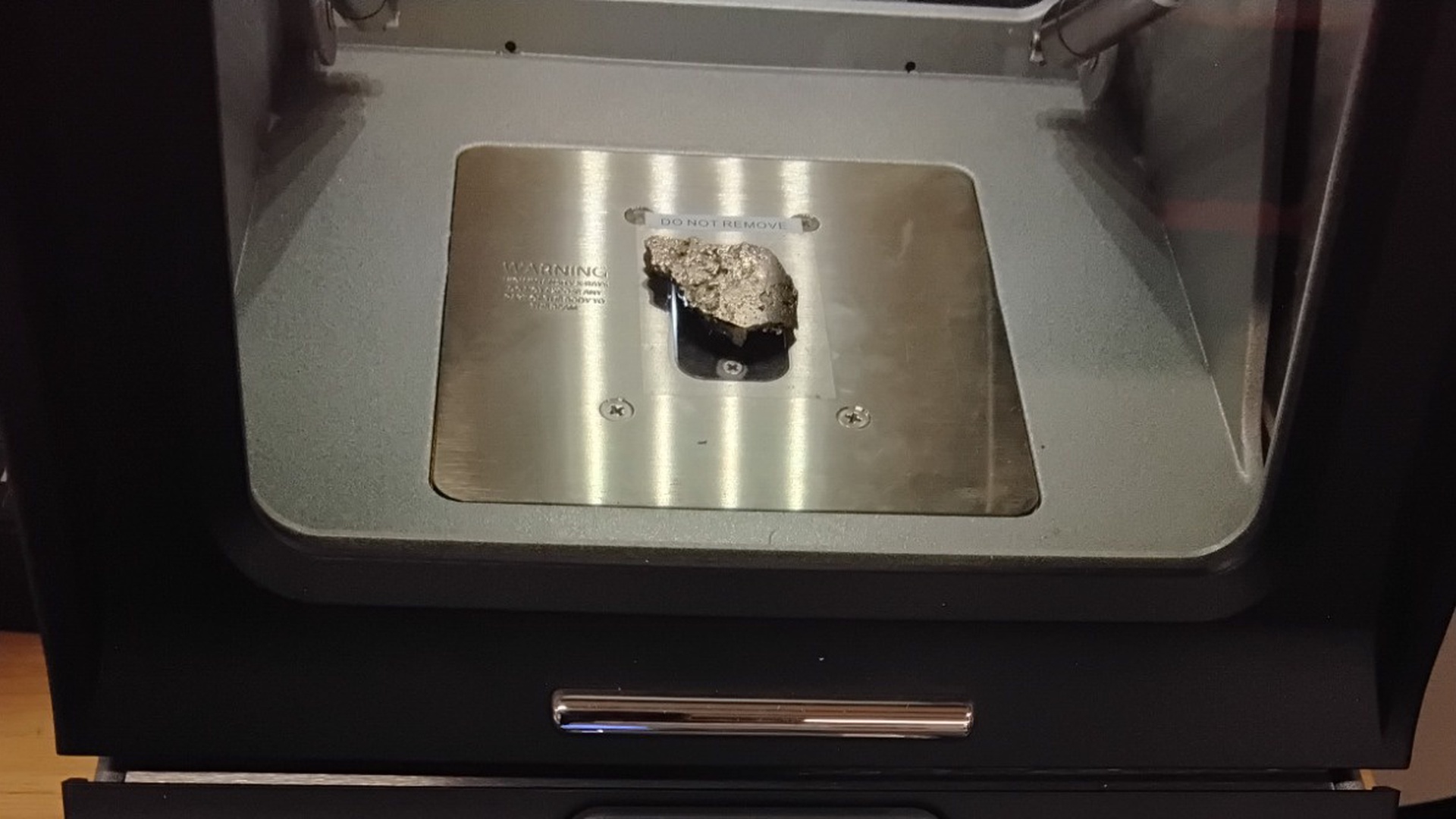
Iridium is one of the rarest, densest, and most chemically resistant metals on Earth. A member of the platinum-group metals, it is valued for its ability to survive conditions that destroy conventional engineering materials. This durability makes iridium essential to proton-exchange membrane water electrolyzers, high-temperature crystal-growth crucibles, aerospace components, medical electrodes, chemical catalysts, and OLED displays. Yet the properties that make iridium so useful also make it extraordinarily difficult to recycle and value accurately. The central obstacle is known as the "Melting Point Problem." Iridium melts at approximately 2,446°C, compared with 1,064°C for gold and 1,768°C for platinum. Most furnaces used by jewelry refiners, scrap yards, and conventional precious-metal laboratories operate between roughly 1,200°C and 1,600°C. They can process gold, silver, and many common alloys, but they cannot fully liquefy iridium. Accurate assaying therefore requires specialized equipment and analytical methods that are unavailable in most commercial laboratories.
Iridium's other properties add to the difficulty. With a density of approximately 22.56 grams per cubic centimeter, it is among the densest naturally occurring elements. It is also hard, rigid, and brittle at room temperature, making it challenging to machine, crush, or mill into a uniform analytical sample. Chemically, bulk iridium is almost impervious to ordinary corrosion. It resists water, oxygen, bases, mineral acids, and even aqua regia, the acid mixture commonly used to dissolve gold and platinum. As a result, both the physical and chemical stages of a conventional precious-metal assay can fail.
A reliable assay begins with a representative sample. For metallic scrap, laboratories normally melt an entire lot into a uniform liquid and withdraw a small dip or pin sample. When the melt is genuinely homogeneous, the sample should contain the same proportion of valuable metals as the entire batch. Iridium disrupts this process because it remains solid when treated in a conventional furnace. Lower-melting metals may form a liquid around unmelted iridium grains, fragments, or particles. The resulting mixture may look molten but is not chemically uniform. Sampling it can produce erratic and financially significant results.
Iridium's extreme density makes segregation particularly severe. Solid iridium-rich particles tend to sink toward the bottom of the crucible. A sample taken from the upper portion of the melt may therefore contain very little iridium and substantially understate the lot's value. A sample that happens to capture a large particle may overstate the content. Neither result provides a defensible basis for settlement. True homogenization may require high-frequency induction systems capable of maintaining temperatures above 2,500°C, along with suitable crucibles and carefully controlled atmospheres. Such equipment represents a major investment and requires expertise in refractory-metal processing. This explains why a laboratory that is highly competent at assaying gold or silver may still be unable to evaluate iridium-bearing scrap accurately.
Lead fire assay has been used for centuries to measure gold and silver. A pulverized sample is mixed with lead oxide, fluxes, and a reducing agent, then heated to produce molten lead. The lead droplets collect the precious metals and settle into a button. During cupellation, the lead is oxidized and absorbed into a porous cupel, leaving a precious-metal bead for weighing or further analysis. Although highly effective for gold and silver, this method is unreliable for iridium. Iridium does not readily form a uniform solution with molten lead under standard fire-assay conditions. Instead, microscopic particles may remain suspended, become trapped in the slag, sink into the crucible lining, or be carried into the cupel. Oxidative heating can introduce further losses. The final bead may therefore contain only part of the iridium originally present, causing the assay to understate the material's true value.
Specialized laboratories generally use nickel sulfide collection when the full platinum-group-metal suite must be measured. In this process, a molten nickel sulfide matte captures iridium and the other PGMs more effectively than lead. The resulting button must then be crushed and chemically treated to dissolve the nickel matrix. The remaining PGM-bearing residue is filtered, digested, and analyzed using instruments such as inductively coupled plasma mass spectrometry or optical emission spectrometry.
Nickel sulfide assay is effective, but it is slower, more expensive, and more technically demanding than lead fire assay. It also requires exceptionally pure reagents because commercial nickel compounds may contain trace PGMs that distort low-level results. Many ordinary refining laboratories do not maintain the equipment, expertise, or contamination controls necessary to perform the method reliably.
Collecting the iridium is only part of the challenge. Instrumental analysis generally requires the metal to be placed into solution, but bulk iridium is insoluble in ordinary aqua regia. Laboratories must therefore use aggressive, non-standard digestion techniques. One established method is alkaline fusion. Finely divided material is mixed with oxidizing salts such as sodium peroxide and sodium hydroxide and heated to approximately 600°C to 700°C. The molten flux attacks the iridium and converts it into oxidized compounds that can subsequently be leached with concentrated hydrochloric acid. Alkaline fusion can produce quantitative results, but it is hazardous, highly corrosive, and demanding on crucibles and laboratory equipment.
Molten-salt chlorination, sometimes called "dry aqua regia," offers another approach. Iridium is treated in a molten chloride mixture that converts the metal into soluble chloride species at temperatures lower than those required for melting. Closed-vessel microwave digestion can also be effective for finely divided catalysts and iridium oxides. By heating concentrated acid and oxidant mixtures under pressure, microwave systems can achieve substantial extraction without an open high-temperature fusion. The correct method depends on the material. A cracked iridium crucible, platinum-iridium aerospace wire, spent electrolyzer electrode, supported catalyst, and OLED manufacturing residue cannot all be treated the same way. Organic iridium compounds, for example, may first require oxidative destruction of their ligands before the metal can be isolated and measured. Accurate analysis therefore depends on understanding both the iridium and the surrounding matrix.
Iridium occurs in the Earth's crust at an average concentration of only about 0.001 parts per million. It is rarely mined as a primary product and is instead recovered as a minor byproduct of platinum, palladium, nickel, and copper production. Annual primary supply is measured in only a few tonnes and is concentrated in a small number of mining regions. This byproduct status makes supply highly inelastic. Even a sharp rise in iridium prices cannot quickly produce additional metal because mining companies cannot expand enormous underground operations solely to recover a small quantity of iridium. At the same time, demand is growing, particularly for iridium catalysts used in PEM electrolyzers for green hydrogen production.
Secondary recovery is consequently essential to the supply chain. However, iridium's high value means that even a modest analytical error can cause a major financial loss. If poor sampling or an unsuitable assay understates iridium content by only 5 or 10 percent, the seller may lose substantial value. Precise analysis is therefore the foundation of fair trade, not an optional laboratory service.
Phoenix Refining addresses this analytical bottleneck by maintaining equipment and expertise intended for refractory platinum-group metals. Its stated capabilities include high-temperature induction processing, specialized collection methods, and advanced digestion techniques selected according to the material's composition. This means that iridium-bearing scrap can be evaluated based on measured metal content instead of visual estimates, assumed alloy grades, or flat-rate purchasing formulas.
Because iridium analysis is destructive, submitted samples cannot necessarily be returned in their original form. Melting, milling, fire assay, fusion, and chemical digestion permanently alter or consume the material. The company's service is therefore intended for genuine refining or sale transactions, not independent appraisal requests. Sellers should review the current terms, non-return provisions, shipping responsibilities, and liability conditions before sending material. Iridium's melting point is only the most visible part of a broader analytical problem. The metal also resists homogenization, lead collection, acid dissolution, and ordinary sample preparation. Solving these challenges requires an integrated combination of ultra-high-temperature equipment, specialized fire assay, aggressive chemistry, and sensitive instrumental measurement. As demand grows and primary supply remains constrained, these capabilities will be increasingly important for returning iridium scrap to the global technology and clean-energy supply chain.