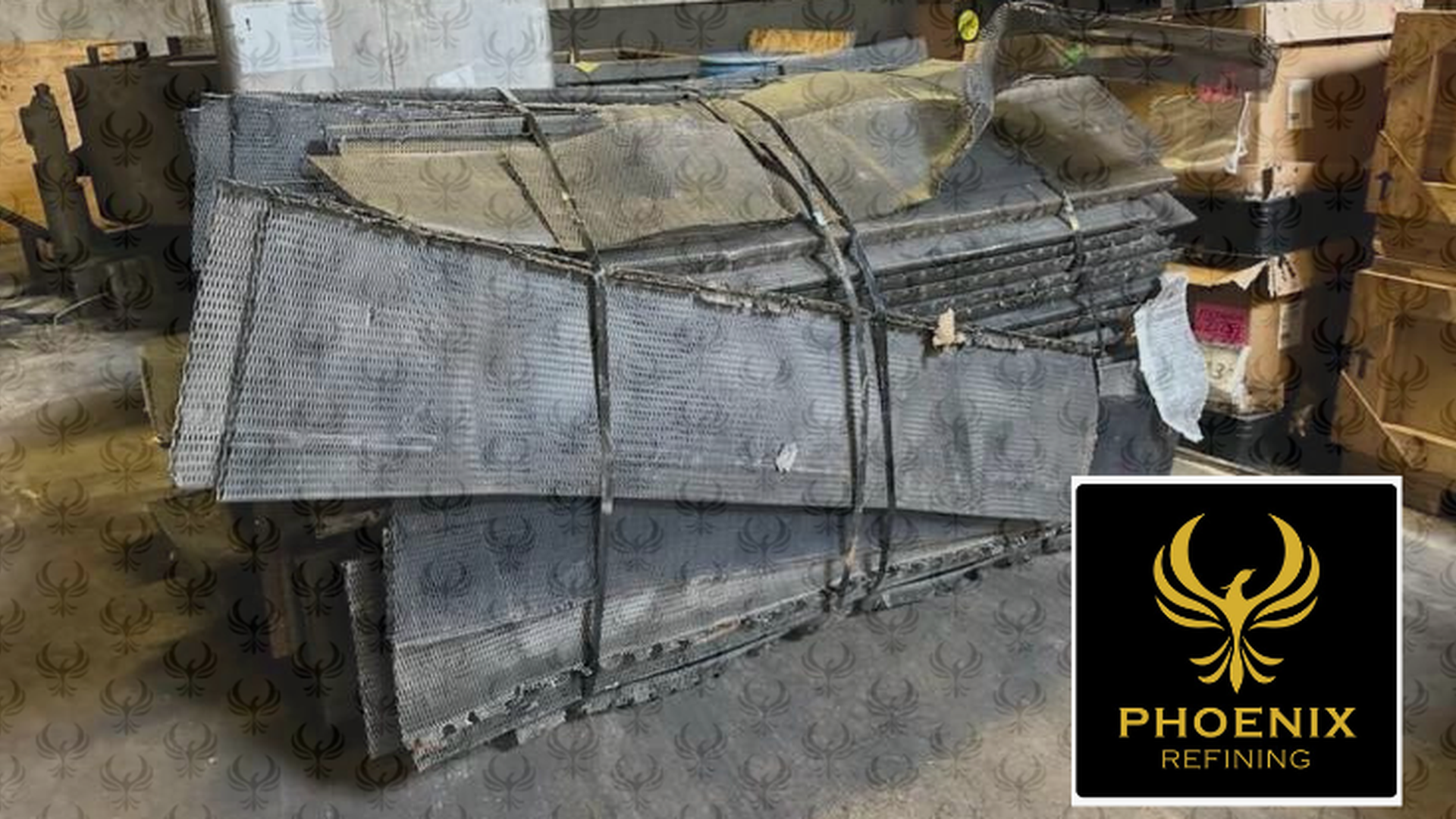
In a chlor-alkali plant, anode performance determines service life. Once the cell voltage rises and electricity use becomes unprofitable, operators must take titanium/ruthenium (Ti/Ru) screens out of service. From the maintenance crew's perspective, the equipment is then considered spent. However, being electrically spent does not mean that it is chemically exhausted. Retired screens can still hold large amounts of ruthenium and, depending on the coating formulation, possibly iridium. In certain instances, as much as 30% to 50% of the original amount of precious metal may still be present when an electrode has reached the end of its electrical life. The explanation lies in an important point of electrochemistry: an anode can stop conducting current efficiently before it loses its valuable catalytic coating. Recognizing this difference can turn a neglected scrap stream into a valuable recovery opportunity.
Ti/Ru screens are part of a group of electrodes called dimensionally stable anodes; they consist of a robust titanium base together with a thin, highly active mixed metal oxide coating. In chlorine-production processes, ruthenium dioxide provides the catalytic activity needed for the chlorine evolution reaction to proceed efficiently. Depending on the design, the coating may also contain iridium dioxide, which enhances durability, and titanium dioxide, which supports the coating's structure and performance.
Although the coating makes up only a small part of the screen's total weight, the valuable metal in it can account for a large share of the material's total recoverable value. This is why treating these screens as mere titanium scrap would be a costly error. The main bulk of the metal is only one element of the asset; the thin surface coating should be assessed separately.
Over time, anodes undergo several types of degradation. Two of the most important of these are catalyst loss and interfacial passivation. Catalyst loss is relatively simple: the ruthenium-containing coating slowly deteriorates through electrochemical dissolution, erosion, or mechanical loss. Operating conditions, coating composition, brine quality, and competing oxygen evolution can influence the rate. When enough of the active coating has disappeared, the electrode can no longer function properly. Passivation is different in that, rather than removing all the catalyst, it cuts off the electrical connection between the titanium substrate and the remaining coating.
Titanium naturally forms a protective oxide layer that makes it resistant to corrosion; however, this layer can also cause problems in an electrode because titanium dioxide is far less electrically conductive than the metallic base material and the active catalyst network. As a result, the oxide layer beneath the coating becomes more resistive and progressively hinders current flow. The screen may therefore cease to be suitable for use even though valuable amounts of ruthenium and iridium are still present on its surface.
Thermally treated mixed metal oxide coatings usually have a microscopic, cracked surface, similar to dried mud. This texture can create a large electrochemically active surface area, enabling efficient operation. Pores and cracks may also allow the electrolyte to reach susceptible regions near the interface between the titanium and the coating. Under anodic conditions, oxidation at that interface can form and grow a resistive barrier.
When electrical contact wears out, a higher voltage is needed to maintain the required production current. Finally, as energy costs rise or operating limits are reached, it becomes impractical to continue using it. A suitable analogy is a light bulb with a faulty electrical connection: the bulb may still have working parts, but it will not function properly if electricity cannot reach them.
Just as a passivated screen can hold onto catalytic material that is effectively cut off from its power supply, passivation does not account for every instance of anode failure, since coating depletion, delamination, substrate damage, and other issues can also play a role. Yet an electrical failure does not prove the precious metals are gone.
The fact that about half of the original precious metal content may remain is a strong reason to test retired screens—though it does not guarantee recovering half of the metal. The amount of residue left depends on the original coating, service length, current density, shutdown history, operating chemistry, and how the screen failed. Moreover, different parts of the same screen may have different remaining loadings. It is just as important to tell the difference between the amount of metal that is retained and the dollar value that is retained. A screen with 50% of its original ruthenium content does not necessarily mean it will receive a payment equal to 50% of its original purchase price.
Its commercial value depends on several factors: the amount of recoverable ruthenium and other precious metals; current market prices for these metals; the processing requirements and recovery efficiency; and the applicable refining charges and settlement terms. Additionally, the original equipment cost includes titanium fabrication, coating application, and other manufacturing expenses separate from precious-metal recovery.
You cannot reliably determine the amount of precious metal left by looking at the surface alone. A screen that appears worn might still have a valuable coating, while a surface that looks fairly good could have a composition or loading that differs from expectations. X-ray fluorescence, or XRF, can detect ruthenium, iridium, and other elements, as well as examine variations across the surface. Yet accurately measuring thin coatings requires proper calibration and representative samples. Further laboratory analysis may be required to reach a reliable commercial agreement.
For plant operators, the practical approach is to keep retired screens segregated from ordinary scrap, preserve available coating and service records, and avoid removing the coating before evaluation. Any cleaning, handling, or shipment should also account for residual process chemicals and applicable safety requirements. Structurally sound anodes may be candidates for refurbishment. Others may be better suited to precious metal recovery. Testing helps inform that decision.
Before selling retired Ti/Ru screens as ordinary titanium scrap, find out what remains in their coatings. Phoenix Refining buys spent Ti/Ru screens and offers free testing, giving material owners a chance to evaluate precious metal content before deciding how to sell them. For chlor-alkali producers, maintenance contractors, and industrial recyclers—that is a practical next step toward recognizing value that electrical performance alone cannot reveal. An anode may finish producing chlorine without finishing the return. Before you scrap it, test it.